A sleeve tattoo is not a big tattoo. It is a 6-to-18-month design project on a limb that bends, stretches, and sits in the sun every day. The ideas below show 21 ways men are covering full arms, but the real value of this article is in the planning sections at the end: why most sleeves stall half-finished, what a full arm actually costs when you count everything, and how each style looks at year ten rather than day one.
Most sleeve guides give you a gallery and a paragraph about pain. This one starts where those end.
Pick Your Commitment Size First
Before any design, decide how much arm you are giving up. The four sizes are genuinely different commitments, not just more of the same.
Quarter sleeve: shoulder cap to mid-upper arm. Hides under short sleeves if you place it high. Typically 3-5 sessions, commonly reported in the $500-1,500 range for black and grey.
Half sleeve: shoulder to elbow. The sweet spot for first-timers. Typically 4-8 sessions, commonly reported $1,200-3,000 black and grey, $2,000-4,500 colour.
Three-quarter sleeve: shoulder past the elbow toward the wrist. Visually the trickiest to finish well, because the forearm-to-wrist transition is the hardest zone to design. Typically 6-12 sessions.
Full sleeve: shoulder to wrist, sometimes with chest or hand extension. Typically 8-15 sessions, 30-60 hours, 6-18 months. Commonly reported $3,000-8,000 black and grey, $5,000-15,000+ colour.
Price ranges above are reported North American ranges, not quotes. Treat them as planning brackets. And the jump from half to full costs more than double, because the inner arm, elbow ditch, and wrist are slower, more painful to tattoo than the outer upper arm.
1. Tropical Sunset and Ocean Sleeve Tattoo for Men
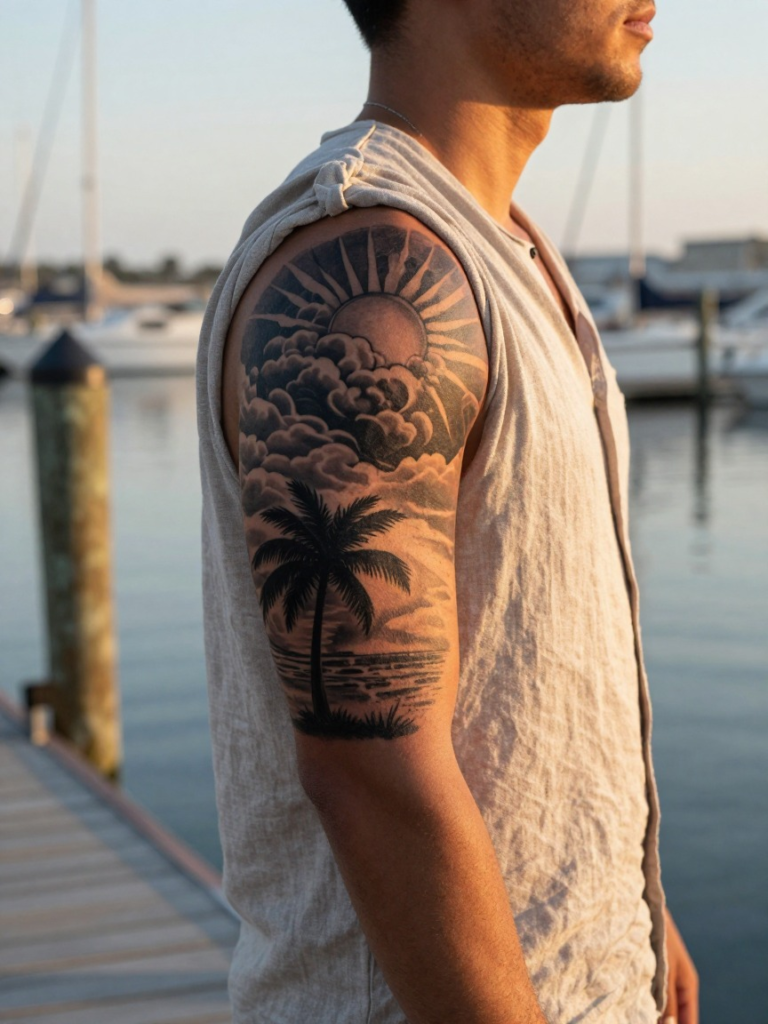
This is the full-colour realism play: a sunset gradient melting into ocean waves, palm silhouettes cutting across it. It photographs beautifully, which is exactly why it needs honest framing. Colour adds roughly 25-50% more hours than the same design in black and grey, and reds and yellows fade fastest in sun. An outer arm that sees daily sunlight will need a touch-up years earlier than the same work on an inner arm.
The design works because the sunset gives the piece one hero subject instead of five competing ones. Waves and palms support it; they don’t fight it.
2. Japanese Dragon Irezumi Sleeve Tattoo for Men
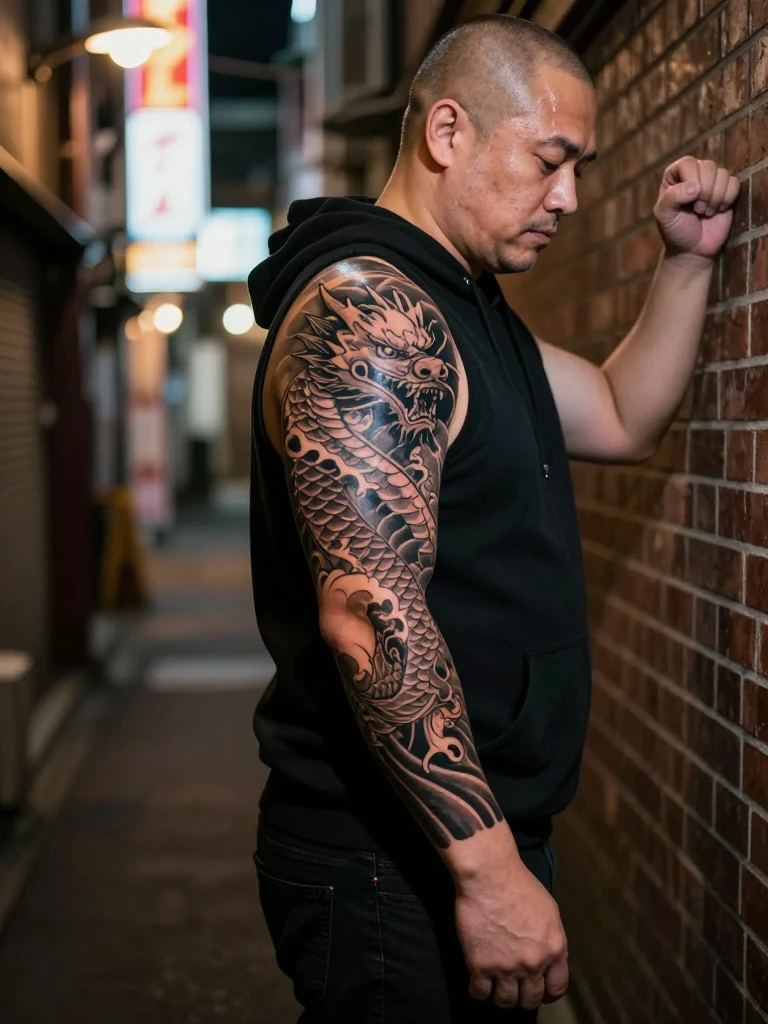
Long, serpentine dragons are the natural citizens of a sleeve. The body routes around the cylinder of the arm in an S-curve, the head lands on the shoulder cap, and the tail tapers toward the wrist. No other subject uses the arm’s geometry this well.
Cylinder logic
This is the design to copy structurally even if your dragon is Western: let the subject’s body do the flowing, don’t force background filler to do it. A coiled or serpentine form solves the elbow transition that breaks weaker sleeves. If dragons are your direction, our dragon tattoos for men guide covers which dragon family fits which style, because mixing traditions is the fastest way to make a dragon look accidental.
3. Polynesian Tribal Sleeve Tattoo for Men With Chest Extension
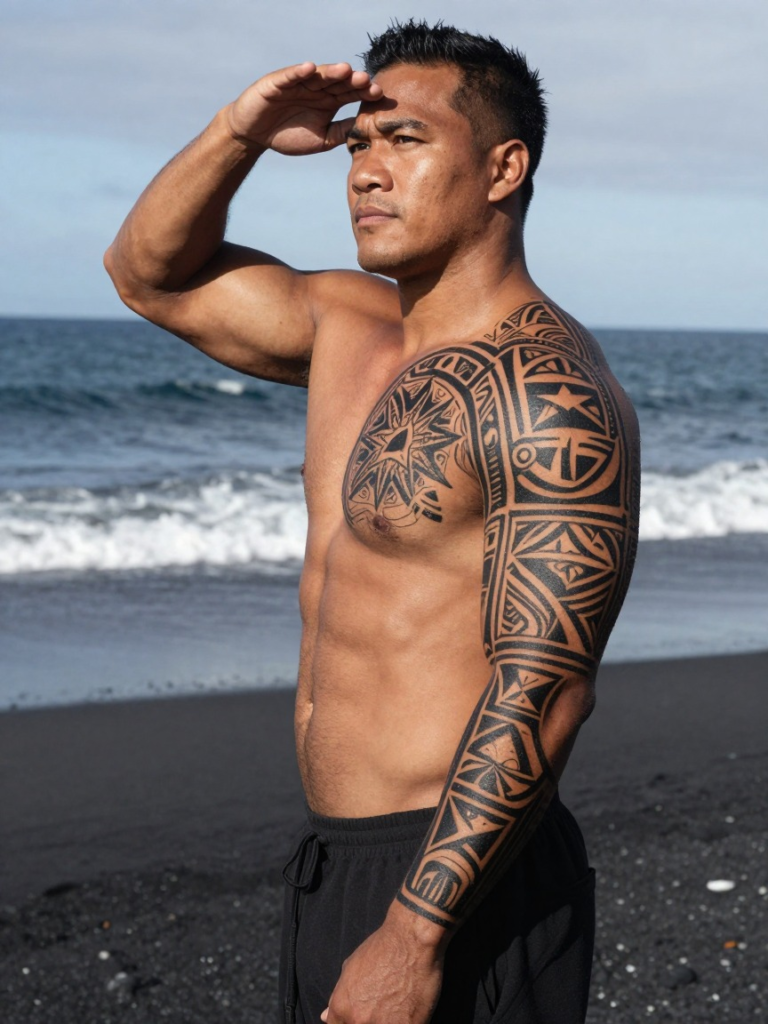
The chest extension changes everything about this one. A sleeve that continues over the shoulder onto the pectoral has to be designed as a single composition from day one. The shoulder cap becomes a hinge between two panels, not a border.
One honesty note: Polynesian-patterned tattoos have real cultural roots. This is worth getting from an artist who knows the tradition, not from a flash sheet. Our tribal tattoos for men guide covers the cultural-honesty checklist before you borrow anything with a lineage.
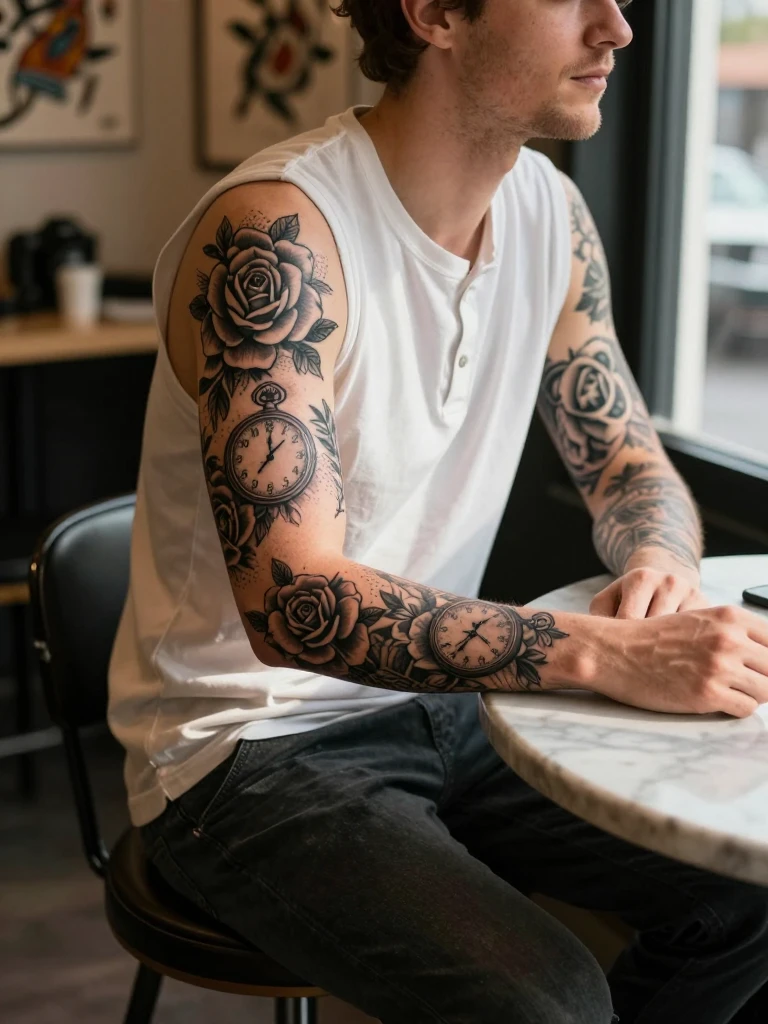
4. Rose and Pocket Watch Sleeve Tattoo for Men
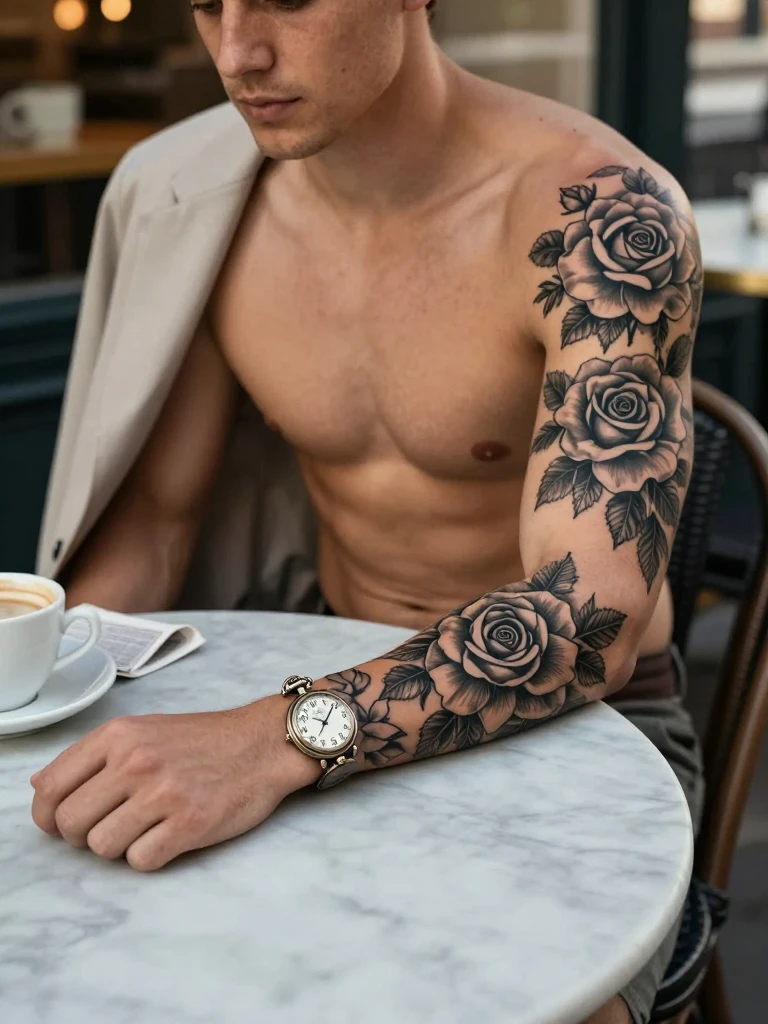
The pocket watch is the hero here; the roses and shading are the supporting cast. This pairing repeats across black-and-grey realism because it solves the two hardest problems at once: the watch gives you a bold central object with readable detail, and the roses give the artist flexible filler that can expand or contract to fit whatever space the arm actually offers.
Hero rule
Every sleeve needs exactly one hero subject. A lion, a watch, a samurai, a skull. Two heroes fight; the sleeve reads as two tattoos. The background and filler exist to make the hero look bigger, never to compete with it.
5. Blue-Black Polynesian Forearm Sleeve Tattoo for Men
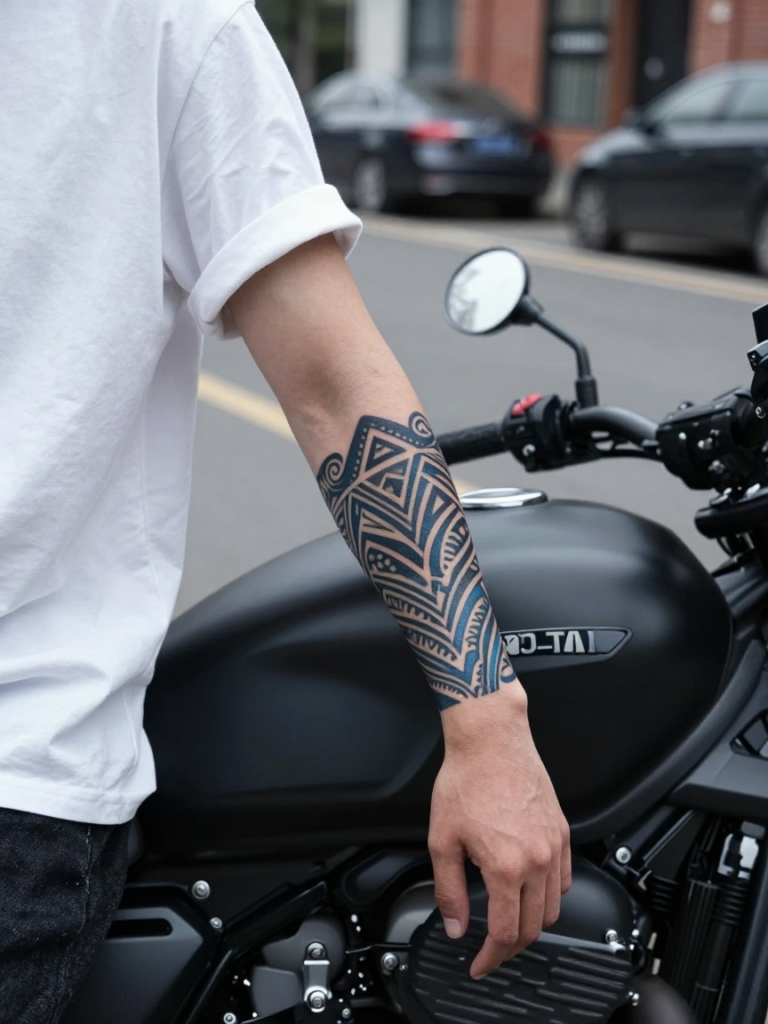
A lot of guys start at the forearm because it’s the part they see. There is an honest argument for starting at the upper arm instead: the forearm is the most visible, hardest-to-cover zone, and taste changes most between the first tattoo and the fifth. An upper-arm piece hides under a T-shirt while you decide who you are as a tattooed person.
That said, the blue-black tonal range here is smart. Deep blue holds contrast against skin longer than pure black alone in some complexions, and the geometric pattern language wraps cleanly around the forearm’s taper.
6. Japanese Wave and Peony Sleeve Tattoo for Men
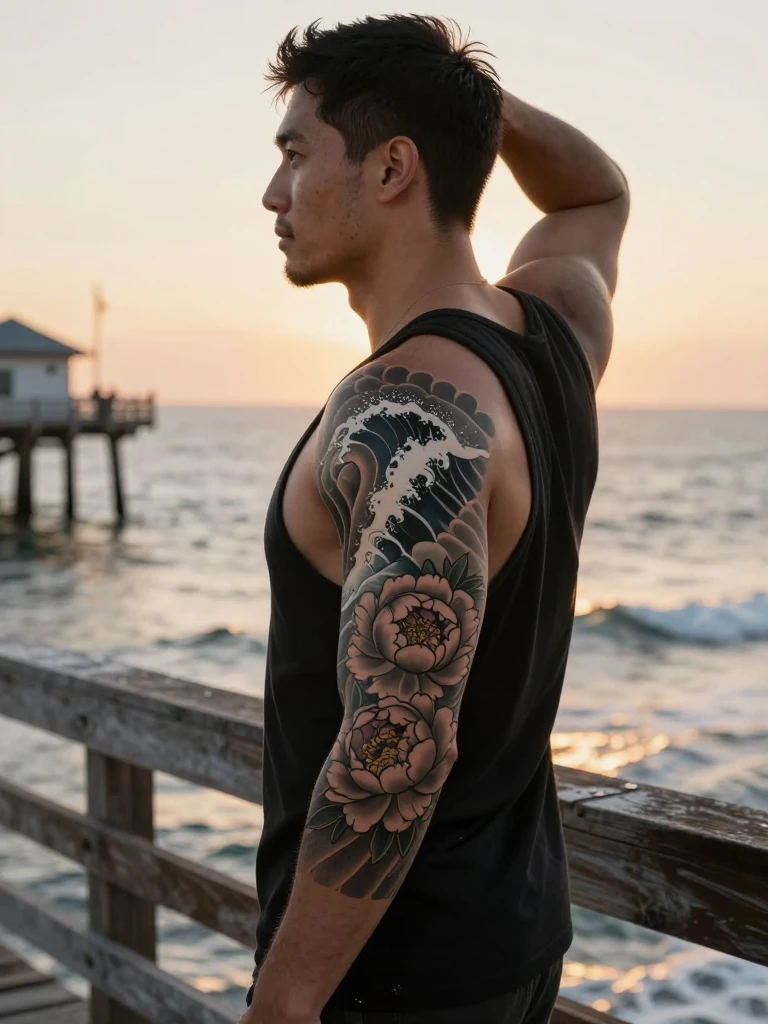
Waves and peonies are the traditional background-and-accent pairing of Japanese sleeves. The waves give you flow for free; the peonies give the eye places to rest. Traditional Japanese work is widely considered the aging champion of sleeve styles, and the reason is mechanical: bold outlines, limited palette, high contrast, and compositions that were designed to be read at distance.
7. Biomechanical Sleeve Tattoo for Men
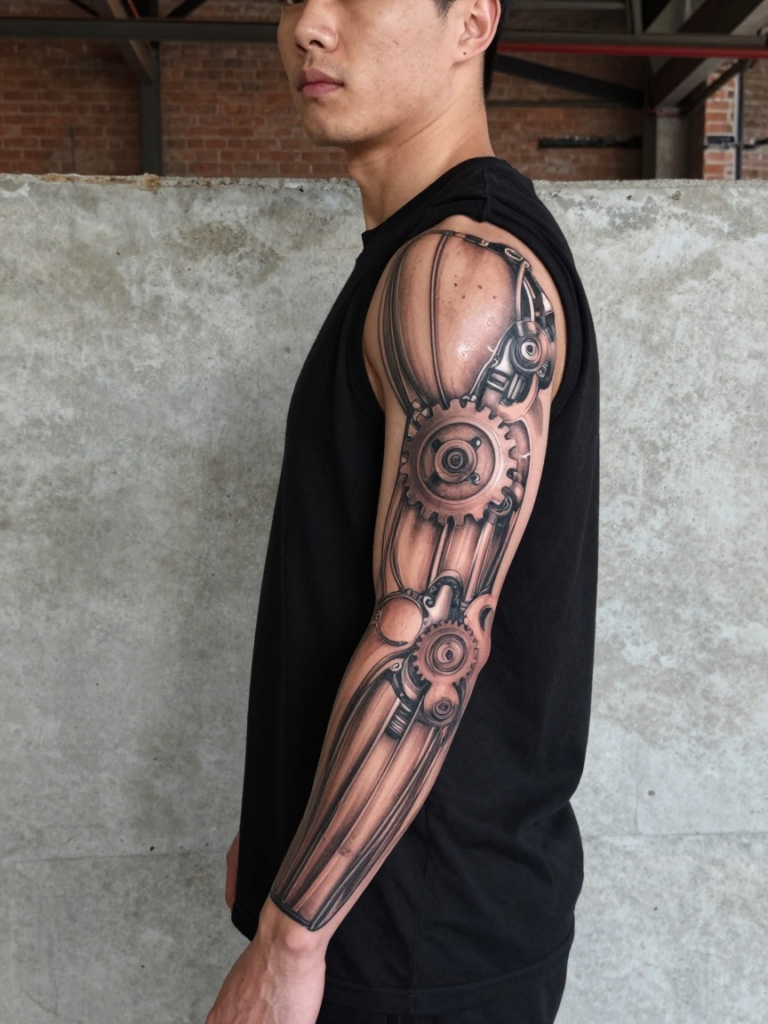
Biomech turns the arm’s mechanics into the subject: pistons at the elbow, plating over the forearm. It is the one style where the elbow is an asset rather than a problem zone, because the design expects joints to bend. The precision standard is high though. Symmetry errors in geometric or mechanical work show immediately; pick an artist whose portfolio proves they can hold a line over a 3-hour session, not just a 30-minute one.
8. Blackout Sleeve Tattoo With Negative Space for Men
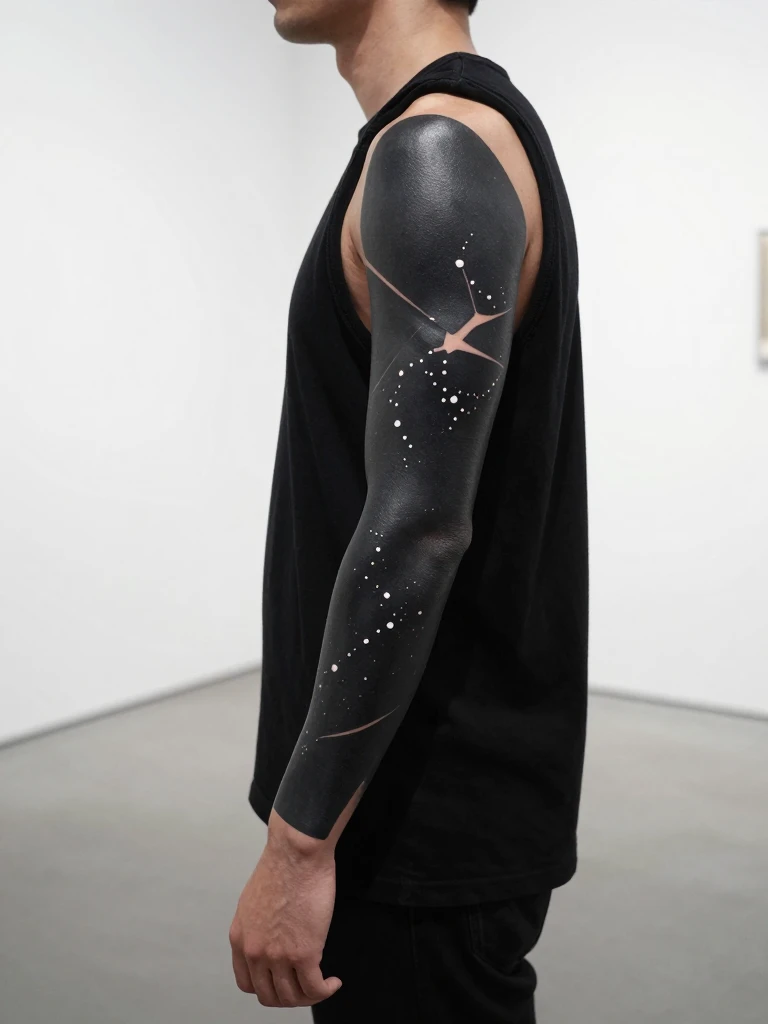
Solid black with the design cut out of it in bare skin. This reads as the boldest sleeve here and it is also the most committed. Blackout is effectively a one-way decision; removal and cover-up of solid black are the hardest jobs in the business.
Negative space
Notice what makes this work: the negative space IS the artwork. Geometric cutouts, line patterns in skin, the contrast between the black field and your natural tone. A blackout without a negative-space plan is just a dark arm. The planned cutouts are the difference between a statement and a mistake.
See Also: Neck Tattoos for Men: 18 Bold, Subtle Unexpected Ideas That Actually Work
9. Neo-Traditional Lion Sleeve Tattoo for Men
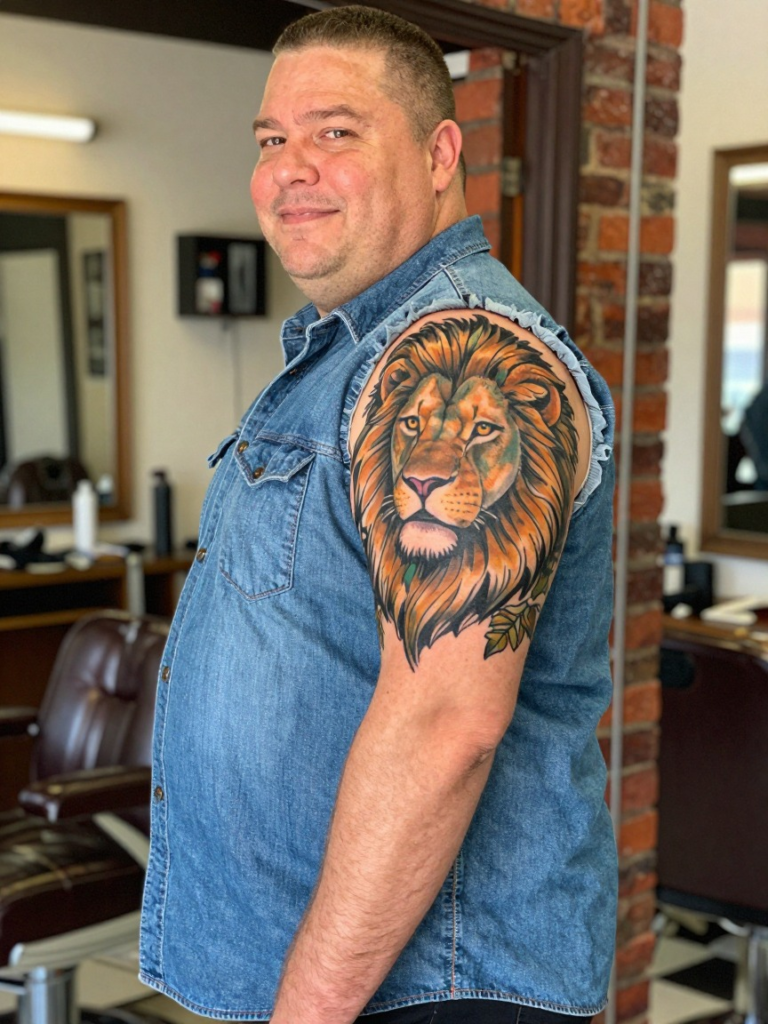
Thick outlines, saturated colour, illustrative shading. Neo-traditional borrows the bold structure of American traditional and adds richer colour and more detail. The lion works as a hero because the face gives you a focal point you can build everything else around. Neo-traditional’s thick outlines are its aging advantage: they hold against fading noticeably better than fine linework over the following decade.
10. Religious and Clouds Sleeve Tattoo for Men
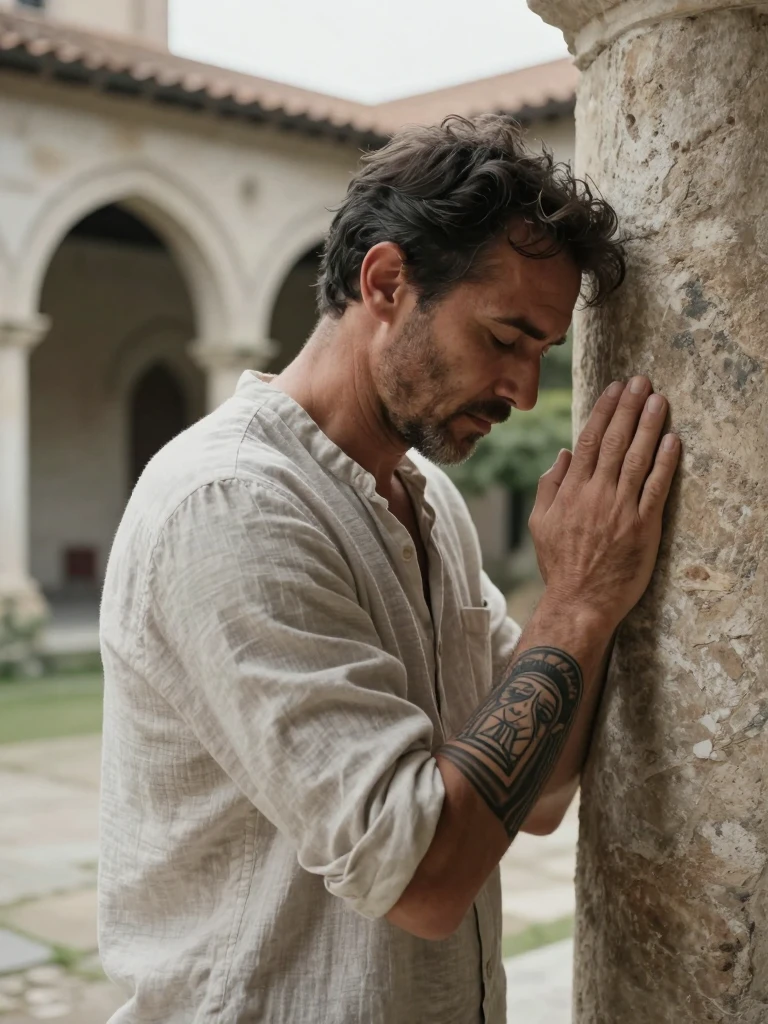
Vertical compositions like this suit the arm’s length. A praying-hands or saint figure runs up the outer arm while clouds fill around it. Clouds are the workhorse filler of black-and-grey realism for a reason: they read as atmosphere from a distance and they can be placed lighter on the inner arm, where bold filler would look heavy and where the skin takes ink less evenly.
Filler map
Filler should be chosen by arm zone, not by preference. Inner arm: lighter filler (clouds, smoke, soft dotwork). Outer arm: bold filler (waves, geometric). Elbow: radiating designs that expect the bend. Shoulder cap: circular compositions that sit on the curve. Wrist: wrapping bands. This is the 30/70 rule in practice: about 70% hero imagery, 30% filler max, and negative space counts as filler.
11. Skull and Clock Memento Mori Sleeve Tattoo for Men
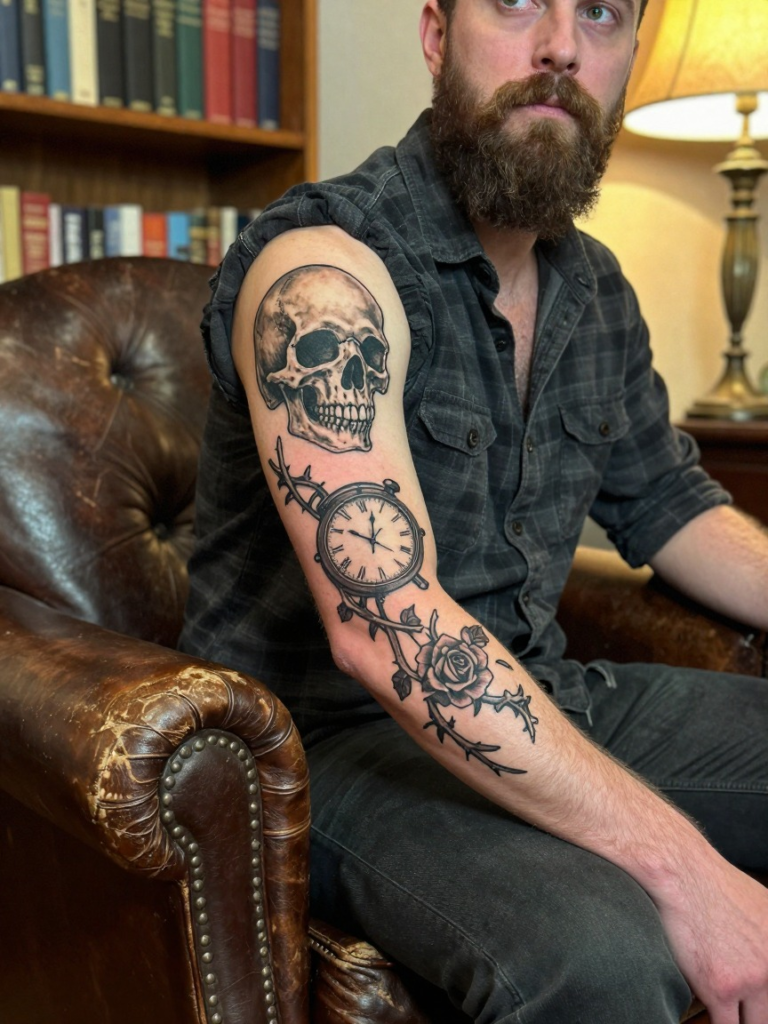
Realism pieces like this live or die on contrast hierarchy. The skull reads first, the clock second, the background shading third. Realism softens noticeably over a decade; that’s the honest trade. What saves realism is strong black underneath the greys. Ask to see healed black-and-grey realism in the artist’s portfolio, not just fresh work. Our chicano style tattoo guide breaks down how grey wash carries a design when the shading is done right, which is exactly the skill this sleeve depends on.
12. Nautical Compass and Anchor Sleeve Tattoo for Men
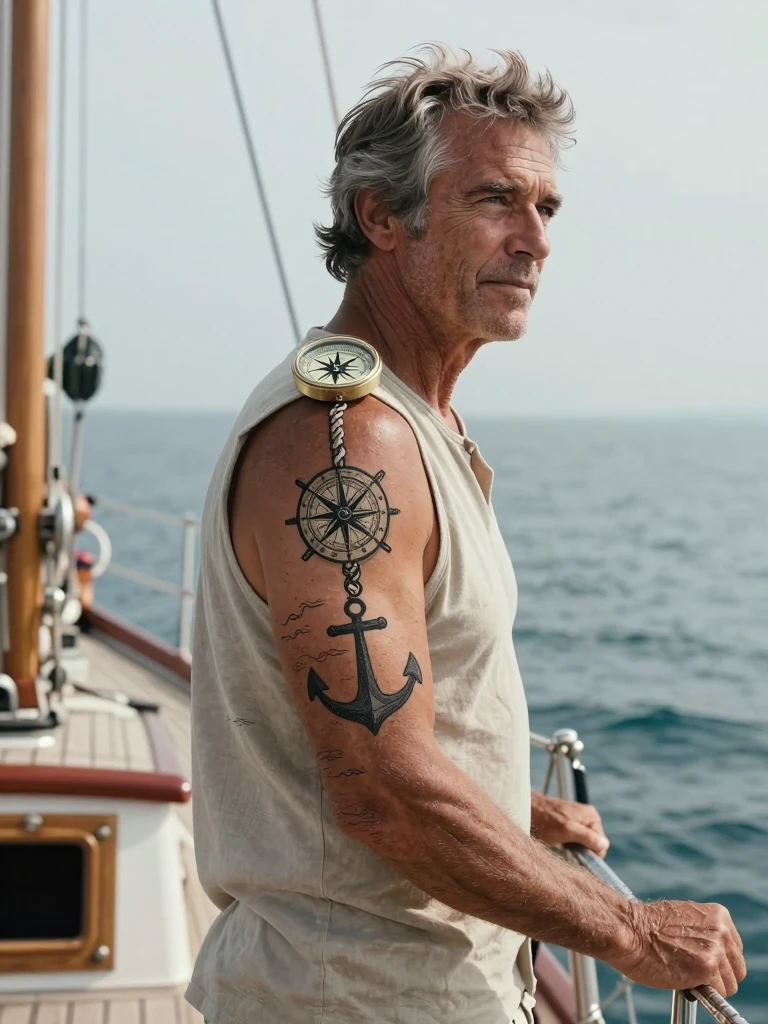
Circular elements belong on the shoulder cap. The compass rose sits naturally on that curve, and the anchor’s vertical weight balances below it. Nautical themes age well in any style because the shapes are bold and simple at their core. A compass works at almost any scale, which makes it forgiving filler when the arm’s actual dimensions differ from the plan.
13. Celtic Knotwork Sleeve Tattoo for Men
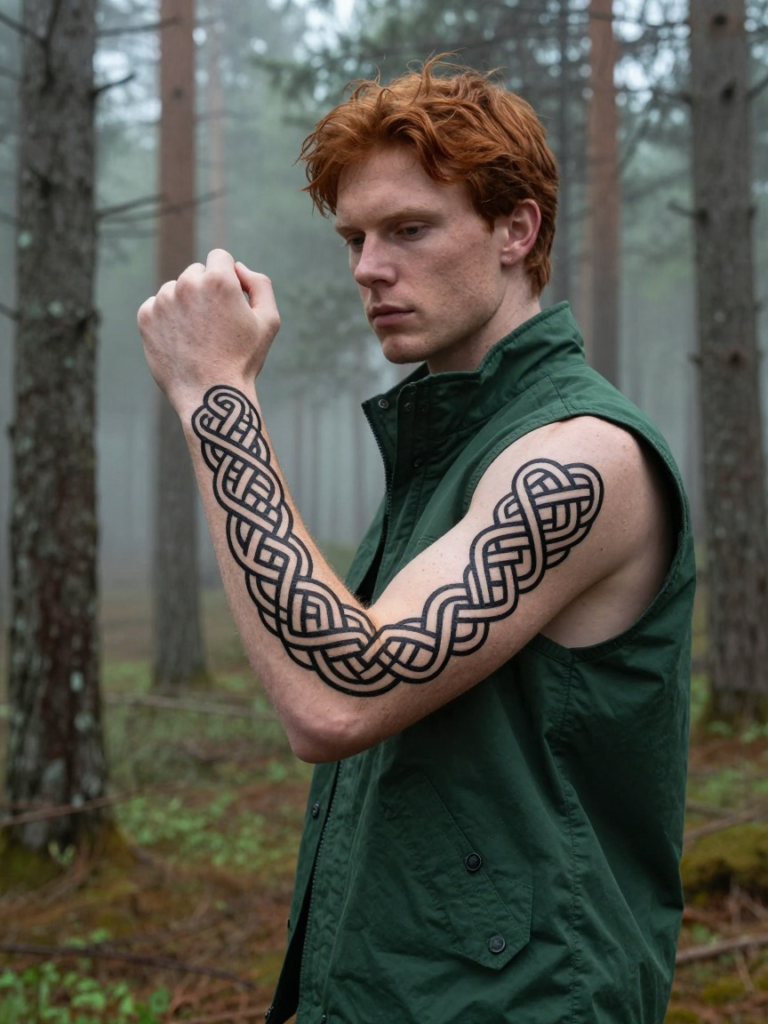
The entire product here is line quality. Interlacing bands that never visually break, spaced evenly, holding a consistent width around the whole arm. There is nowhere to hide in this style. Uneven spacing between bands is the single most common flaw in knotwork, and it gets worse as the arm’s taper forces the pattern to compress toward the wrist.
Line precision
Before booking, ask for a test sketch of the knot interlacing, and look at how the artist handles the transition where the arm narrows. If the sample bands drift in width, every band on your arm will.
14. Script and Floral Fill Sleeve Tattoo for Men
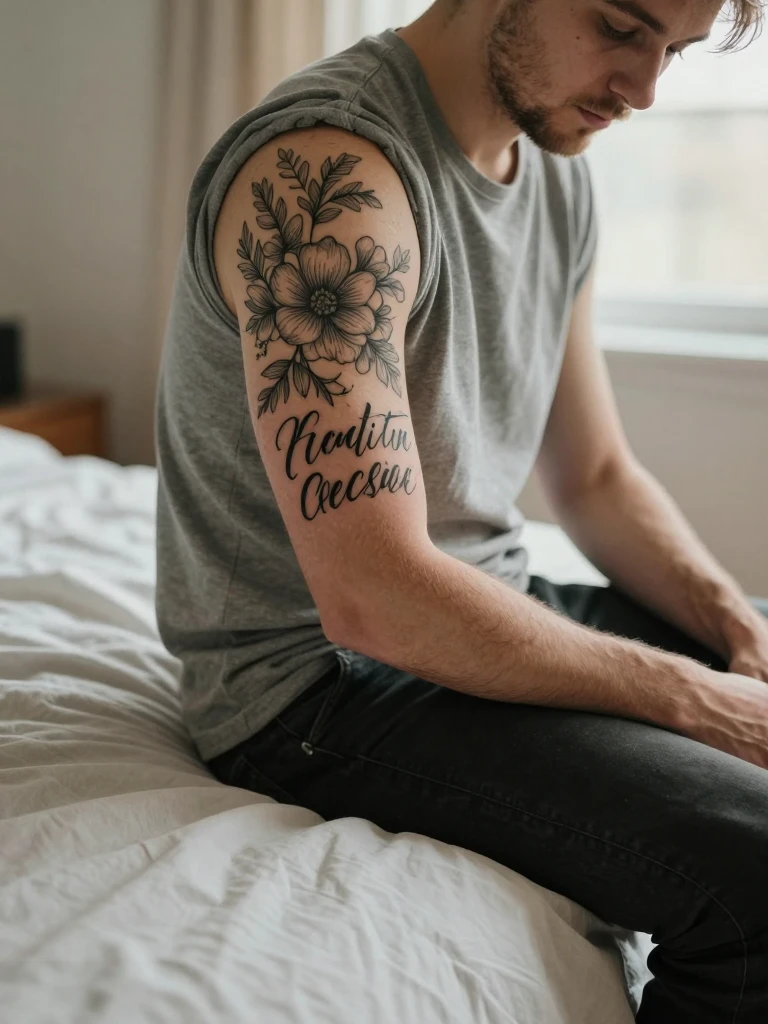
This one treats filler as the design rather than the background. Script weaves through florals across the whole arm. It works when the script and florals share one style and one line weight. Patchwork-with-intent is the difference between this and a random collection: shared visual language, intentional gaps of bare skin, and a planned edge even where you don’t fill.
15. Samurai Warrior Sleeve Tattoo for Men
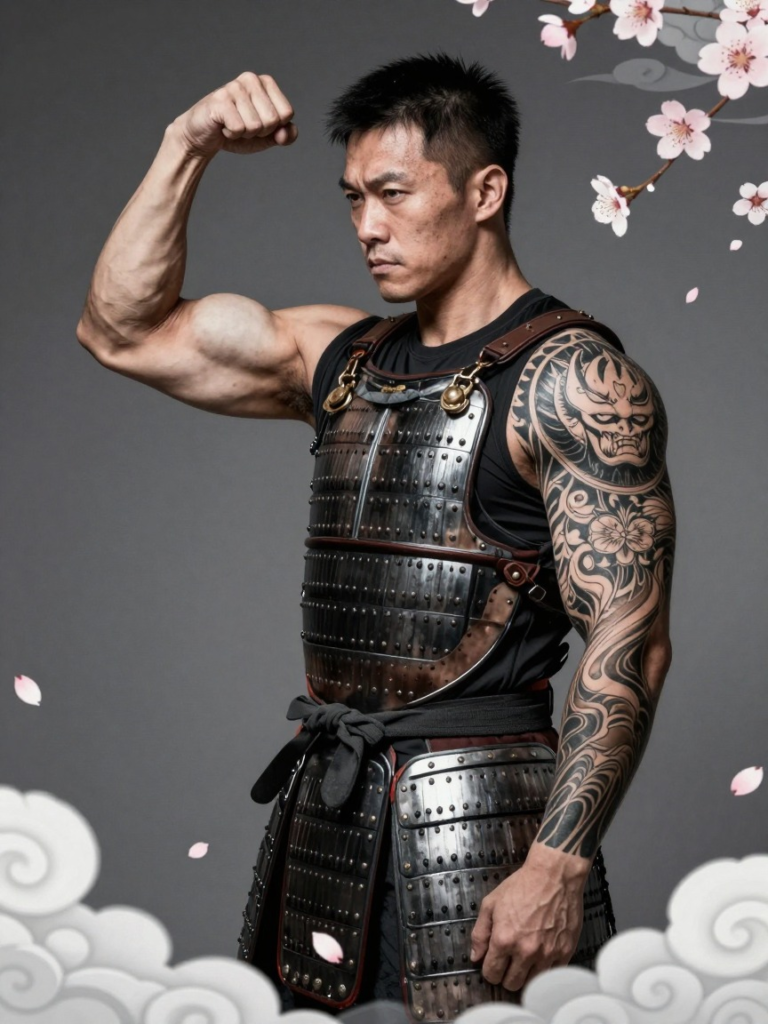
A single narrative figure at large scale. The samurai gives you a hero with built-in background elements: wind bars, cherry blossoms, waves, all from the same visual tradition. This is the sleeve equivalent of the Japanese dragon in idea 2; the figure’s body creates the flow, and the traditional background vocabulary fills the rest without inventing anything.
16. Phoenix and Fire Sleeve Tattoo for Men
The phoenix is the dragon’s mirror in sleeve logic: a long body with a head and a tail, wings adding spread across the shoulder. Like the dragon, it routes around the arm naturally instead of needing the background to do the work. The fire elements are the honest part to interrogate. Reds and oranges are the fastest-fading colours in sunlight, and a sleeve’s outer arm is sun-exposed by default. If the phoenix matters more than the flames, ask for the fire in black and grey with the bird in colour. You keep the subject; you cut the maintenance.
17. Sacred Geometry Sleeve Tattoo for Men
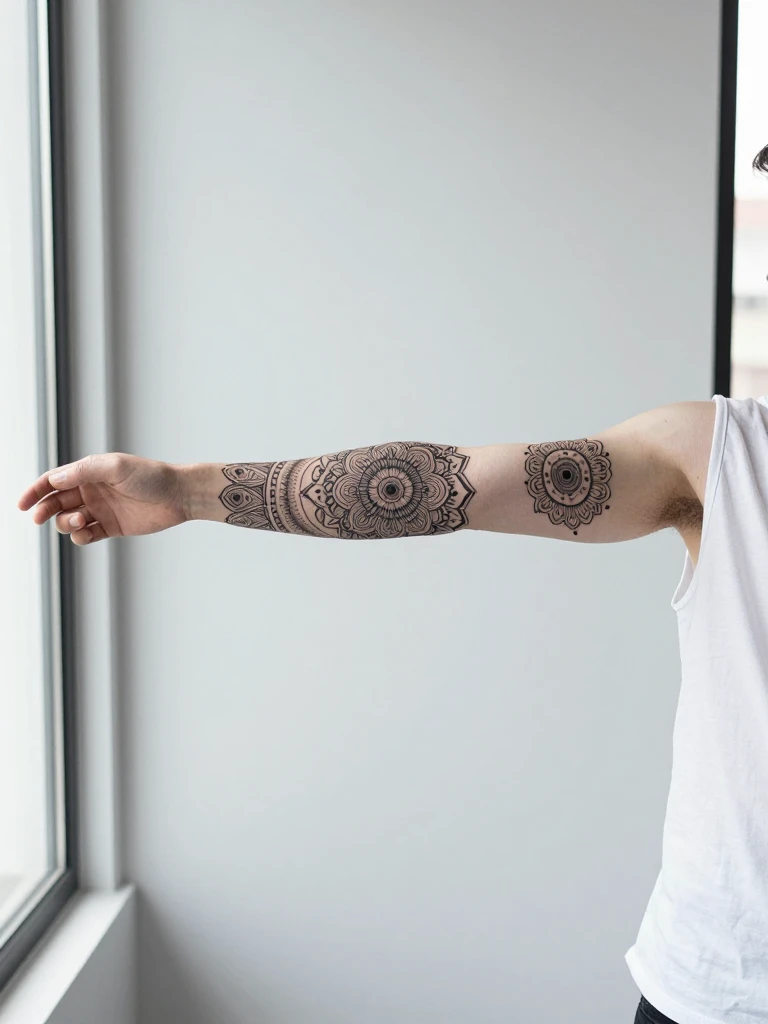
Precision is the entire style. Interlocking shapes, mandala panels, dotwork gradients, arranged so the pattern reads from across the room and rewards a closer look.
Ruler work
Confirm the artist uses stencil-assisted or ruler-based technique for the straight lines; freehand geometric work is where this style most often falls apart. The stencil stage deserves real attention here, and our tattoo stencil ideas guide explains why that transfer step matters more for precision work than for anything else on this list. Keep the first geometric piece to a half sleeve if this is new to you, since small alignment errors amplify across the whole design at full-arm scale.
18. Wildlife Realism Sleeve Tattoo for Men
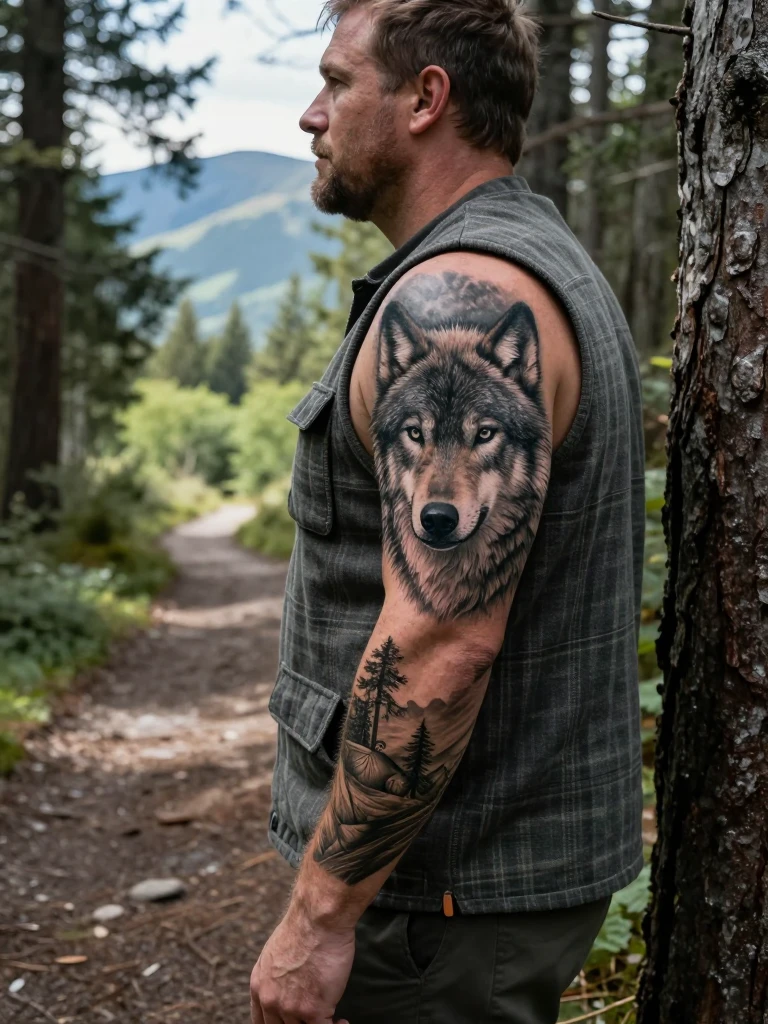
Wolves, eagles, bears rendered photoreal across the arm. The technical ceiling is high and so is the risk. Realism softens more than any other style on this list. What looks photographic at month one reads as soft greys at year ten. The pieces that survive have strong black foundations under the detail. This is also the style where the artist matters most; the gap between a good realism artist and a great one is the gap between a sleeve you keep and a cover-up consult.
Contrast saves it
Ask the consult question directly: how do you keep this readable in ten years? An artist who talks about black structure and contrast hierarchy has thought about it. An artist who only talks about how it looks fresh has not.
19. Cosmic and Galaxy Sleeve Tattoo for Men
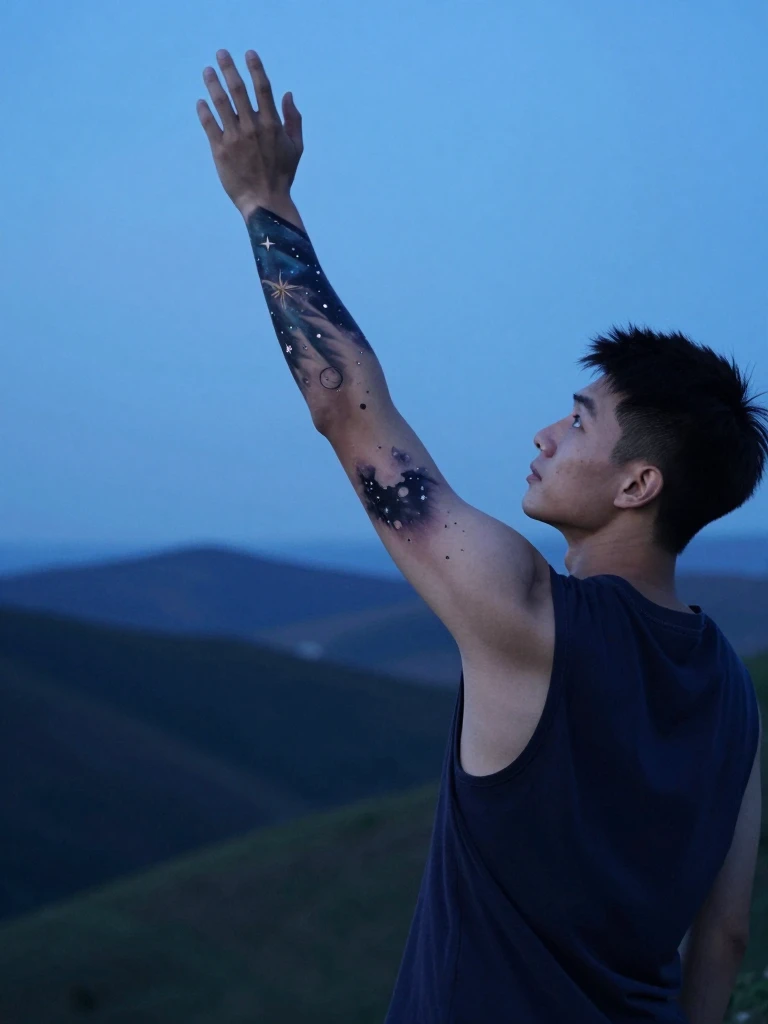
A full dark background with stars and nebula colour. This commits you to near-total coverage; there is no easing out of a black-sky sleeve. Fine dots blur over time, and tiny stars are the first detail to go. The pieces that hold are the ones built on bold constellation lines and larger nebula shapes rather than pinpoint detail. Treat it like blackout with a theme: magnificent, and one-way.
20. Watercolor Splash Sleeve Tattoo for Men
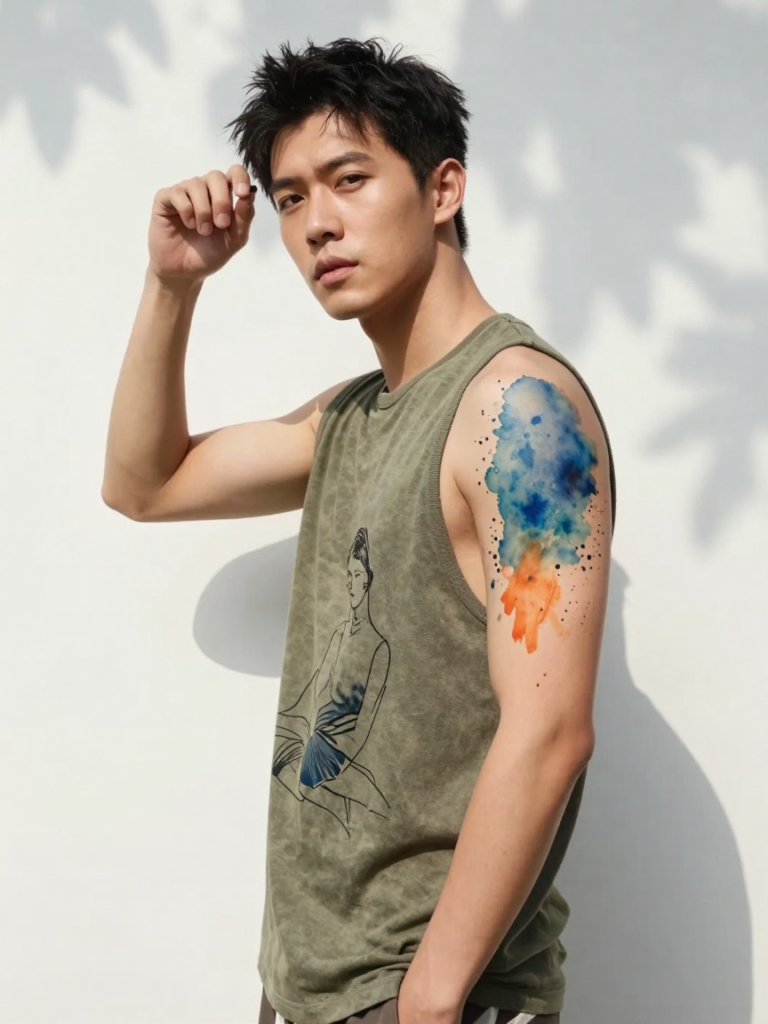
The aging-risk entry on this list, stated plainly. Watercolor-style washes have no black outline holding them together, and colour washes are the first thing to fade. What competitors call watercolor is often just colour realism without outlines, and it ages exactly like that sounds. If you love the look, go in knowing the maintenance: sun protection is mandatory, and a touch-up inside five years is the norm rather than the exception.
Fading truth
The artists who do this well are honest about the lifespan. The ones who aren’t will show you only fresh photos. Ask for healed watercolor at three-plus years. That portfolio either exists or the conversation is over.
21. Freehand Blackwork Patchwork Sleeve Tattoo for Men
The organic-build sleeve: separate blackwork pieces collected over time, connected with intentional filler. This is the realistic path for most people, because very few walk in ready to commit to a full planned sleeve on day one.
Shared line weight
Patchwork looks deliberate when every piece shares a style AND a line weight. Different hands mean different line weights, so the one-artist rule matters most here, even though the pieces were done months apart. Plan the edge: decide in advance whether the sleeve stops at the wrist, wraps the hand, or continues to the chest, even if you don’t fill to it yet. An unplanned edge is what separates a collection from a sleeve.
Designing for a Limb That Bends
Everyone says a sleeve should “flow.” Almost nobody explains what that costs in practice. Your arm is a cylinder with two joints, and the design has to survive both.
The elbow and wrist are transition zones, not canvases. Detail placed across the elbow ditch distorts every time you bend. Radiating designs that expect the bend work; portraits across the ditch do not. Ask the artist how they plan these transitions specifically. It’s the sleeve consult question that separates experienced hands from generalists.
The back of the arm is the forgotten panel. You never see it; everyone else does. A sleeve designed only from the front view has a dead zone behind it. Walk through the design from the back at the consult.
Relaxed vs flexed. A sleeve designed on a flexed arm in the shop looks different on a relaxed arm in life. The best artists stencil with the arm in a neutral position and check the composition relaxed before starting.
Clothing geometry. A three-quarter sleeve hides under long sleeves and shows in a T-shirt. A full sleeve to the wrist is visible in almost everything. A forearm-only piece is the most visible option of all. Decide the visibility before the design, because the placement can’t be negotiated after.
The Momentum Problem
Here is the outcome nobody advertises: the most common sleeve result is a half-finished one. The outline phase goes well, the first shading session is exciting, then life intervenes and the arm sits at 40% for two years. Filler guides exist precisely because people stall.
The prevention playbook is unglamorous. Budget the entire sleeve before session one, not session by session. Schedule the next appointment before you leave the current one; artists’ books fill and a six-month gap kills momentum. Choose a style you will still like in session nine, not one that excites you in session one. And understand the sessions math: with 2-4 week healing gaps between sessions, a full sleeve is 6-18 months minimum. Nobody finishes a full sleeve in a summer. Anyone promising otherwise is selling something.
An honest month-by-month shape: consult and design (month 1), outline phase in 1-2 long sittings (months 2-3), black and shading (months 4-8), colour if any (months 8-12), healing and touch-up pass (months 12-18). The touch-up session is part of the plan, not a failure.
What It Really Costs
A sleeve is priced as time on skin, not as an object. Hourly rates commonly run $120-250, day rates $800-1,500, and a fast expensive artist can cost nearly the same as a slow cheap one. That math is worth doing before you fall for a low hourly rate.
The add-ons are where budgets actually break. A “$4,000 sleeve” really costs around $5,000 once you count the deposit ($100-300), tips (15-25% per session is standard), aftercare supplies, parking and travel, time off work, and a touch-up cushion. Budget the extras before you commit, not after.
One more honest note: tattoo tourism rarely pays. Travel costs erase the savings from a cheaper artist abroad. The exception is guest spots: established artists doing limited residencies in your city, which gets you the right hand without the flight.
Vetting a Sleeve Artist
Large work is the worst category to gamble on, because removal and cover-up both scale with size.
Demand healed full sleeves in the portfolio. Fresh work always looks sharp; healed work shows whether dense shading and fine detail survive. Single small pieces in a book prove nothing about sleeve work.
Ask in the consult: how do you plan the elbow and wrist transitions? What’s your average session count for a full arm? Can I see the stencil on my arm before we start? An artist who corrects your reference is more valuable than one who just agrees with it.
The one-artist rule exists for a mechanical reason: different hands mean different line weights and shading habits, and the seams become MORE visible as the work settles, not less. The harder question: what happens if your artist retires or moves mid-sleeve? Ask about it upfront. An artist with documented standards, consistent line weights and repeatable shading, is a continuity plan.
How Sleeves Age: Year 10 Honesty
Blackwork and Japanese traditional: the aging champions. Bold outlines, high contrast, limited palettes. These look better at year fifteen than most styles look at year five.
Neo-traditional colour: strong, with maintenance. Thick outlines hold; the colour needs sun protection and earlier touch-ups than blackwork.
Black-and-grey realism: softens noticeably. Contrast hierarchy decides whether it reads as intentional shading or grey blur at year ten. Strong black foundations are the difference.
Geometric and dotwork: precision decays. Fine dots can blur; tiny spacing errors get worse as ink spreads. Bold geometric holds; delicate dotwork is the risk zone.
Colour realism and watercolor: the highest maintenance. Sun exposure is the enemy. Daily SPF on a colour sleeve is not a suggestion; it is the price of the style.
The universal rule: bold holds, detail fades, and the sun decides everything.
Quick Comparison
| Design | Style | Sessions (typical) | Cost (reported) | Aging |
|---|---|---|---|---|
| Tropical Sunset and Ocean | Colour realism | 8-12 | $$$$ | High maintenance |
| Japanese Dragon Irezumi | Japanese traditional | 6-12 | $$$ | Champion |
| Polynesian Tribal + Chest | Blackwork tribal | 6-10 | $$$ | Excellent |
| Rose and Pocket Watch | Black-and-grey realism | 5-8 | $$$ | Good with contrast |
| Blue-Black Polynesian Forearm | Blackwork | 3-5 | $$ | Excellent |
| Storm Half-Sleeve | Japanese irezumi | 6-10 | $$$ | Champion |
| Biomechanical | Black-and-grey illustrative | 6-12 | $$$ | Good |
| Blackout Negative Space | Blackwork | 4-8 | $$ | Good if bold |
| Neo-Traditional Lion | Neo-traditional colour | 5-8 | $$$ | Strong with upkeep |
| Religious and Clouds | Black-and-grey realism | 6-10 | $$$ | Good with contrast |
| Skull and Clock Memento Mori | Black-and-grey realism | 6-9 | $$$ | Good with contrast |
| Nautical Compass and Anchor | Illustrative | 4-7 | $$ | Good |
| Celtic Knotwork | Blackwork ornamental | 4-8 | $$ | Good if bold |
| Script and Floral Fill | Mixed filler | 4-6 | $$ | Varies by piece |
| Samurai Warrior | Japanese illustrative | 8-12 | $$$ | Strong |
| Phoenix and Fire | Colour illustrative | 8-12 | $$$$ | High maintenance |
| Sacred Geometry | Geometric blackwork | 4-8 | $$ | Good if bold |
| Wildlife Realism | Colour/black realism | 8-15 | $$$ | Softens most |
| Cosmic and Galaxy | Dark illustrative | 6-10 | $$$ | Dots blur first |
| Watercolor Splash | Colour wash | 5-8 | $$$ | Highest maintenance |
| Freehand Blackwork Patchwork | Blackwork patchwork | Ongoing | $$ | Excellent |
Sessions and costs are commonly reported ranges for full coverage of the shown area, not quotes. Every shop sets its own numbers.
Frequently Asked Questions
How many sessions does a full sleeve tattoo take?
Most full sleeves take anywhere from four to eight sessions depending on detail level, with heavily shaded realism or Japanese pieces on the longer end and linework-based tribal designs on the shorter end. But that range assumes steady momentum. With 2-4 week healing gaps between sessions, plan for 6-18 months from first session to finished, and schedule the next sitting before you leave the current one.
Which sleeve tattoos for men hurt the least?
Pain follows placement, not subject. The outer upper arm and shoulder are the easiest zones; the inner bicep, elbow ditch, and wrist are the hardest. Don’t start at the wrist. Begin on the outer upper arm, where the skin is forgiving and the work hides under a T-shirt while you learn your own tolerance.
Do sleeve tattoos for men need to be one continuous theme?
No, but they need one visual language. A continuous theme (Japanese, biomech, nautical) is the easiest path. Patchwork-with-intent is the harder one: separate pieces that share a style and line weight, with planned gaps and a planned edge. What fails is the accidental collection: pieces in different styles from different artists with no relationship to each other.
What’s the best sleeve tattoo style for a first big piece?
The one with the best aging and the most forgiving planning. Japanese traditional and bold blackwork top that list: they age best, their compositions are designed for arms, and their background vocabulary (waves, wind bars, geometric filler) solves the flow problem for you. Save realism and colour for when you know your tolerance for sessions and maintenance.
How much do full sleeve tattoos for men typically cost?
Commonly reported ranges: $3,000-8,000 for a full black-and-grey sleeve, $5,000-15,000+ for full colour. Those are the tattoo costs. Add the deposit, 15-25% tips per session, aftercare, travel, and a touch-up cushion, and the real number is roughly 20% higher than the quote. Get the total in writing before session one.
Which of These Actually Deserves Your Arm
Twenty-one ideas, but the decision isn’t really about the subject. It’s about the commitment behind it. The sleeves that age well share three things: one hero subject, one visual language, and a plan that survives to session nine. Pick the design you can afford to finish, in the style that forgives your lifestyle, from an artist whose healed work you’ve actually seen. Everything else is decoration.


Pingback: 16 Iconic Tribal Tattoo Men Ideas: Ultimate Placement Guide - Glow Vibes Spot