Spooky tattoos are otherworldly designs that range from eerie plant linework to bold dark feminine tattoos. This guide collects 18 spooky tattoos for women, each with placement notes and styling detail, so you can find one that fits your aesthetic, from whisper-subtle to full haunt.
Something shifted in tattoo culture over the last couple of years. Spooky stopped meaning Halloween-only, though most roundups still file these as halloween tattoos for women, a seasonal box the aesthetic has outgrown. The audience driving it searches for an aesthetic more than a season: moody femininity as an umbrella, delicate linework over heavy black, unsettling rather than gory. On Pinterest, the pins getting saved right now are delicate ghosts, poisonous flowers, and literary references, not the skull-and-rose flash every shop wall already has.
That is the gap this list fills. Every idea below was checked against what the top-ranking galleries already show, and the recycled concepts were left out. You will not find another death’s-head moth or cute cartoon ghost here. What you will find are 18 genuinely distinct designs, from a belladonna sprig on the wrist to an anglerfish on the thigh, with honest notes on placement, scale, and how bold each one reads in daily life. If your taste runs toward witchy tattoo ideas, a few of these will feel like they were drawn for you.
1. Poison Garden Sprig
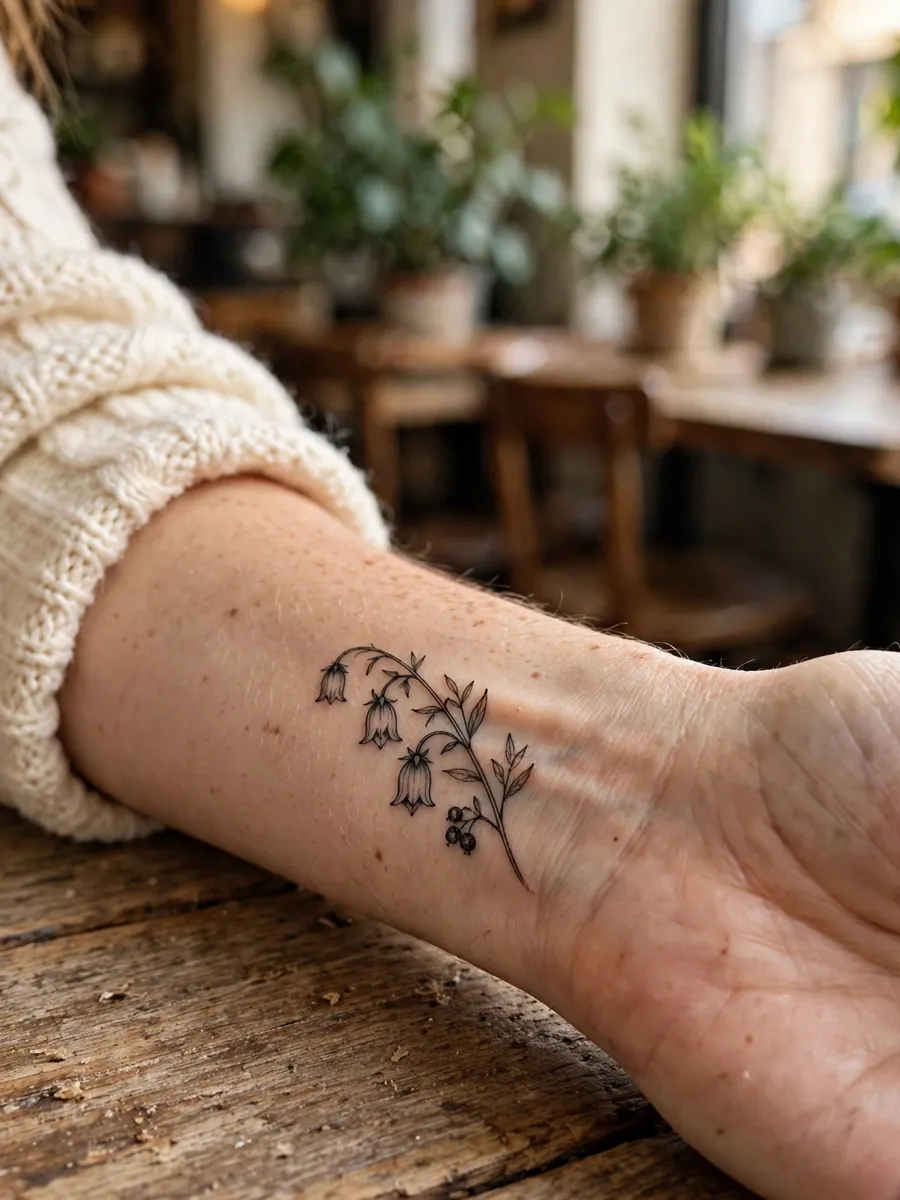
Belladonna’s dark berries have poisoned characters in 19th-century novels for generations, which makes the plant perfect tattoo material: beautiful, botanical, and quietly deadly. A single sprig in delicate linework, with two or three bell-shaped flowers and one berry cluster, reads as an elegant herbarium study to anyone who does not know the plant. To those who do, it is a wink. Foxglove works as an alternative, with its tall spire of speckled trumpet flowers giving you more vertical movement up the forearm.
Line Weight
Keep the linework hairline-thin and skip heavy shading. The menace of this piece lives in what it depicts, not in how dark it is, so delicate strokes with a little stippled texture on the berries carry the whole concept.
Where It Sits
The inner wrist or the ankle suits the sprig’s natural slim shape. Both spots let the design peek out rather than announce itself, which is exactly the energy a poison garden piece wants.
2. Luna Moth
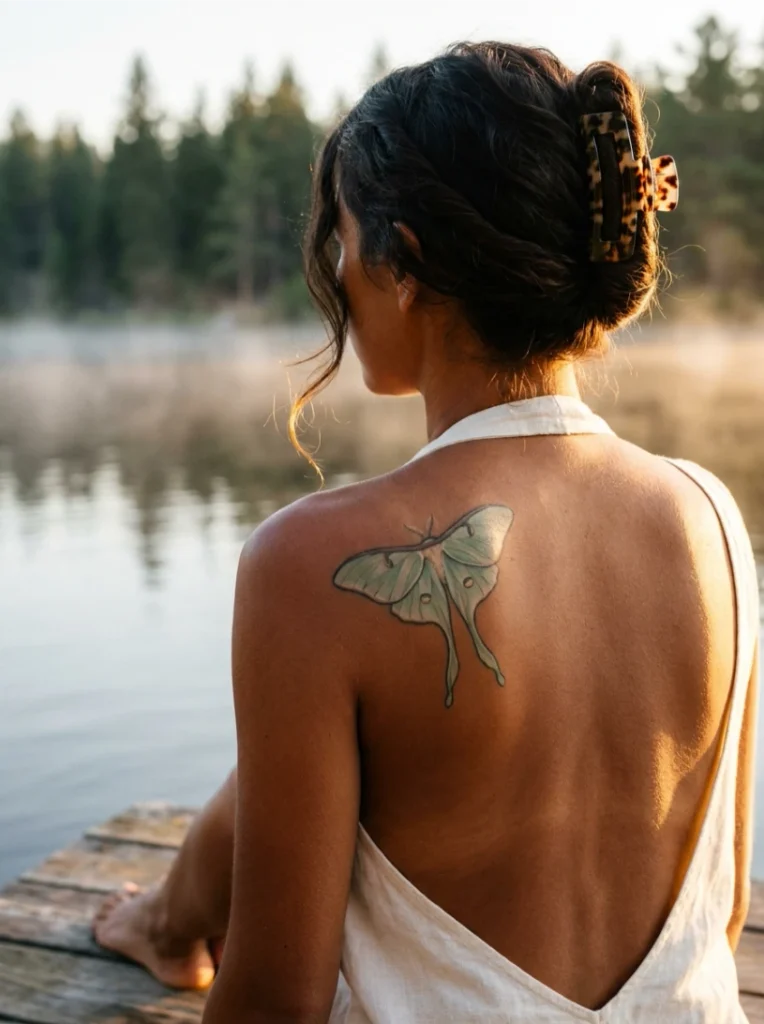
This nocturnal moth lives only about a week as an adult, never even eating in that time, and that brief ghostly existence has made it a symbol of transformation and impermanence. In pale sea-green with its long trailing wing tails, it gives you everything ghostly about moth imagery with none of the aggression of the over-inked skull moth. It is the gentlest entry point on this list, and one of the most saved styles in 2026 precisely because it feels ethereal instead of edgy.
Color Story
Soft sage and seafoam with the faintest cream at the wing edges. Some artists add a whisper of gold at the body, which catches light beautifully without turning the piece gaudy.
Scale It Up
At two to three inches across the shoulder blade or sternum, the wing tails get room to flow. Smaller than that and the tails lose their distinctive ribbon shape.
Pairing Idea
A luna moth anchors a future collection well. It sits comfortably beside stars, moons, or small plant studies if you ever build outward.
3. Porcelain Doll Eye
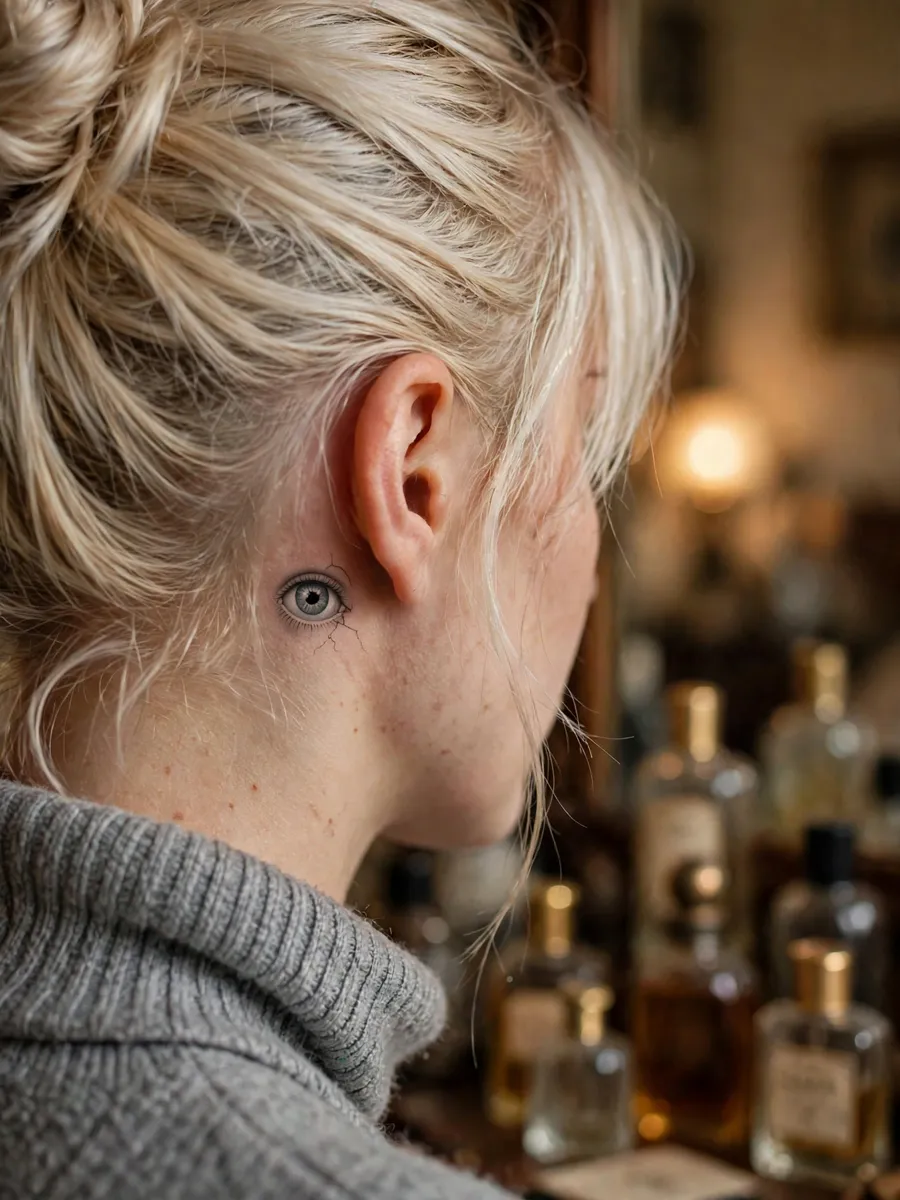
A single oversized doll eye, cracked at one corner, packs an entire abandoned nursery into a design smaller than a coin. The uncanny effect comes from realism: a carefully rendered iris and catchlight make it feel like something watching, and the crack is what tips it from pretty to unsettling. Behind the ear is the classic placement, where hair can hide or reveal it at will.
Micro Placement
This design lives or dies on precision, so choose an artist whose portfolio shows true micro work. Behind the ear, the inner ankle, or the side of a finger are the three spots that suit its scale.
The Crack Detail
One crack, not a shattered web. A single fine fracture line from the outer corner keeps it elegant; too many cracks and it reads as damaged rather than uncanny.
4. Red-Ink Spooky Apparition
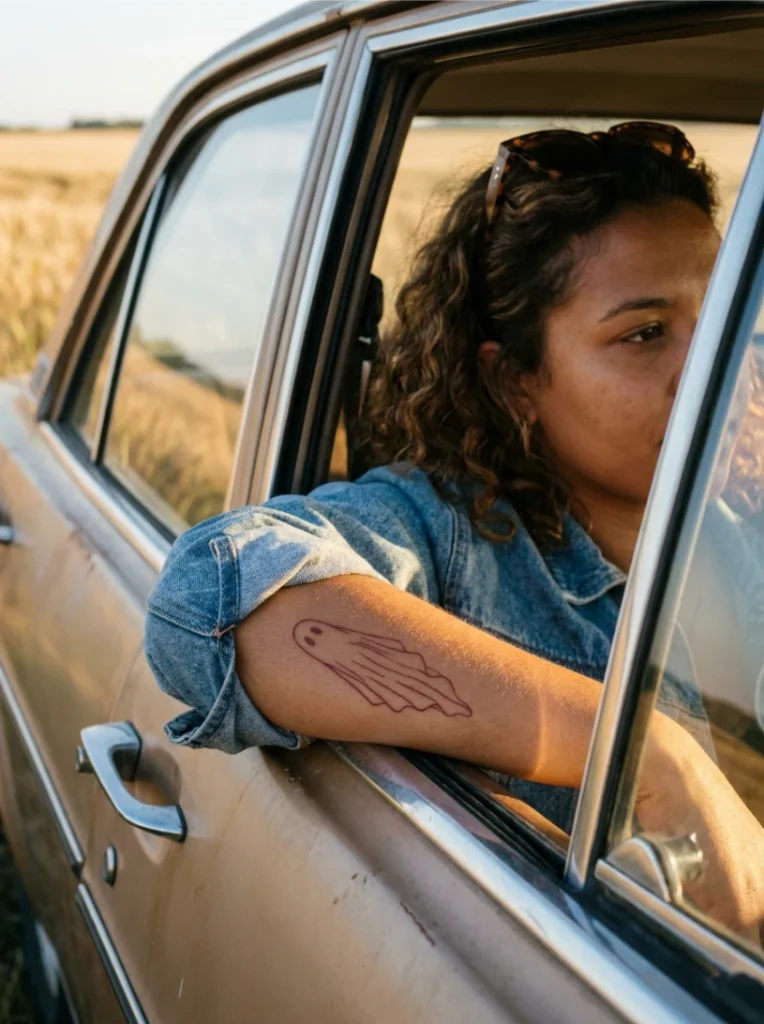
A ghost rendered entirely in red linework stops people mid-scroll, because the eye expects ghosts in black or grey. The single-color approach forces the design to work on silhouette and flow alone, which is why the best versions use long, trailing sheet folds that dissolve into loose lines at the edges. It is minimalist, startling, and one of the fastest-rising formats for supernatural imagery this year.
Why Red Works
Red carries its own charge, part valentine and part warning sign. That tension is the whole design: a friendly ghost shape in a color that refuses to be cute.
Keep It Simple
No face, or the faintest suggestion of hollow eyes. Detail is the enemy here; the ghost should feel half-formed, like something caught at the edge of vision.
5. Cozy Spooky Teacup

Here is the literal version of a storm in a teacup: a vintage cup and saucer with a tiny lightning storm churning inside it, complete with miniature clouds spilling over the rim. It belongs to the cozy spooky corner of the aesthetic, uncanny without a drop of menace, and it proves that cute spooky tattoos can still feel grown-up when the draftsmanship is serious. Think of the dark whimsy of Coraline-inspired ink, shrunk to wrist scale.
Storm Detail
The lightning should be the smallest element, two or three fine jagged lines. The charm is in the contrast between the delicate china pattern on the cup and the wild weather inside it.
Color Palette
Soft grey wash for the storm against black linework for the cup keeps it readable at small sizes. A single accent, dusty blue or faded gold on the china pattern, stops it feeling flat. The finished effect is a little spellbound, like something lifted from a storybook shelf.
Who It Suits
This is the design for the woman who loves the aesthetic but works somewhere a skull would raise eyebrows. It reads as charming first and spooky second, which is exactly its strength.
6. Haunted Keyhole
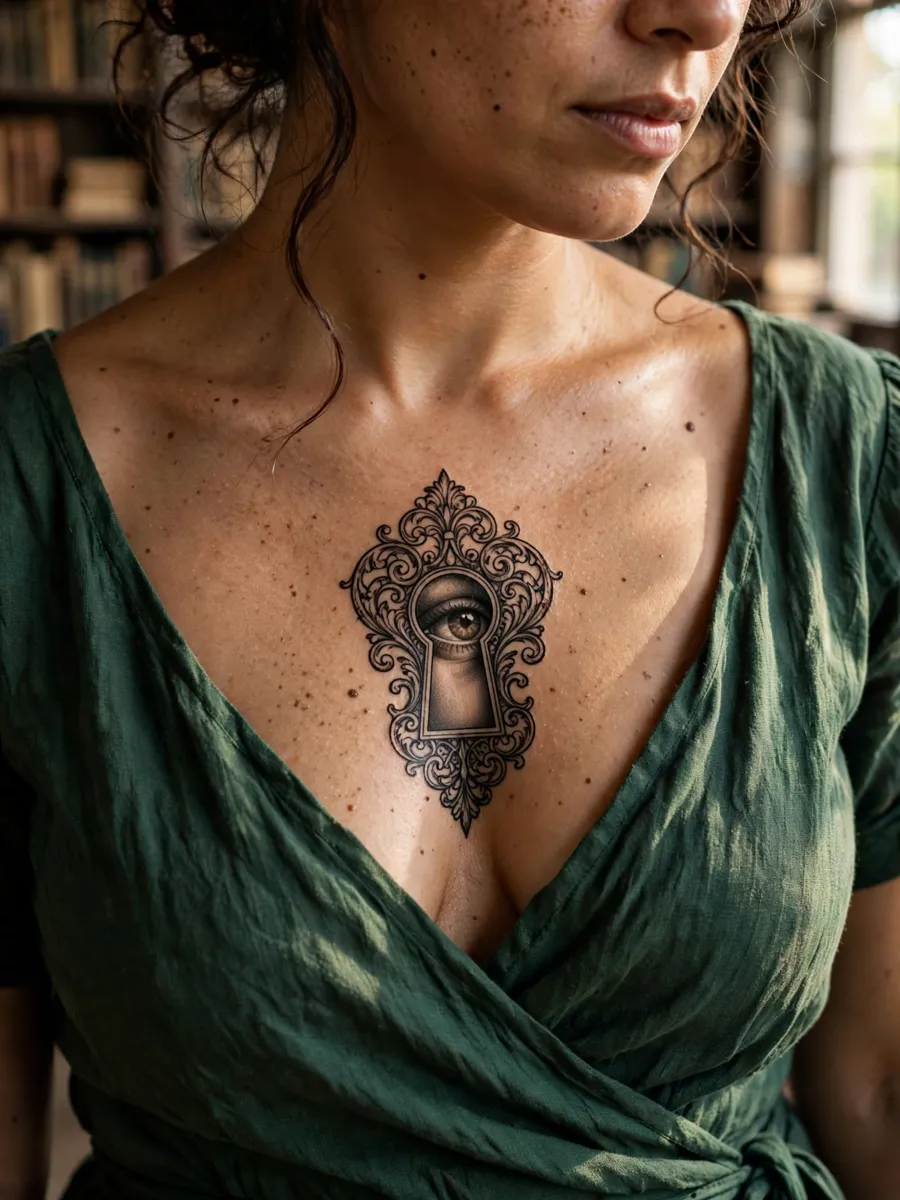
An ornate Victorian keyhole with a single eye gazing out from the darkness behind it turns your skin into a locked door someone is looking through. The concept borrows from Victorian fiction’s obsession with what lies behind closed doors, and it works because the viewer’s imagination does the frightening part. There is a touch of the occult in that locked-door mystery, the sense of a ritual interrupted. Ornate scrollwork around the keyhole sells the antique feel; the eye itself should be rendered with uncomfortable realism.
The Eye
Direct gaze or averted? A direct stare is bolder and more confrontational, while an eye glancing sideways feels like you caught something that did not want to be seen. Decide which unnerves you more.
Frame It
The keyhole needs its decorative surround to read as Victorian rather than generic. Filigree flourishes top and bottom, kept symmetrical, give it the antique-lock authority the concept needs.
The Spooky Subtlety Scale
The biggest unanswered question in this niche is how to wear spooky ink every day without it reading as a costume. Think of it as a scale, and pick your level honestly before you book.
| Level | What It Looks Like | Try This |
|---|---|---|
| Whisper | Pretty first, strange on second glance | Poison garden sprig, luna moth |
| Hint | Clearly unusual, not clearly spooky | Teacup storm, spider lily |
| Statement | Unmistakably dark, still tasteful | Keyhole, hourglass, yurei |
| Full haunt | Starts conversations with strangers | Candelabra faces, anglerfish |
Most women land happiest at Whisper or Hint for a first piece. You can always go darker with the second tattoo; removing boldness is the hard direction. If you are browsing gothic tattoos for women but hesitate at heavy black ink, Whisper and Hint are your comfort zone.
7. The Tell-Tale Heart
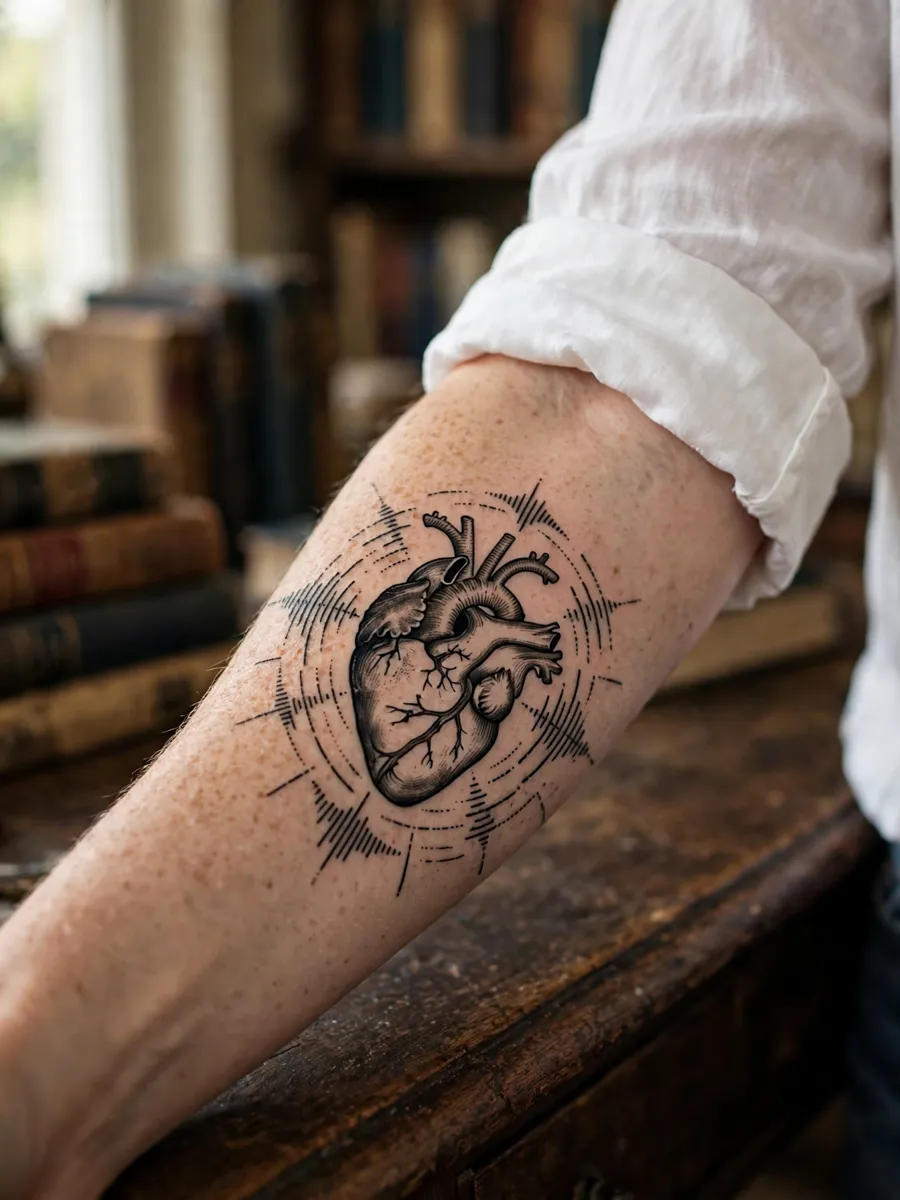
Poe gets reduced to ravens in tattoo flash, which leaves his best story imagery untouched. An anatomical heart wrapped in radiating sound-wave lines captures the Tell-Tale Heart’s central horror: a beating that may be real or madness, rendered as vibration. The heart itself should be drawn with clinical accuracy, valves and vessels included, because the contrast between scientific precision and the impossible sound waves is what makes it macabre rather than merely anatomical.
Sound Waves
Concentric broken arcs or a single EKG-style line circling the heart both work. Keep the waves looser and more gestural than the heart, so precision and frenzy sit side by side.
Script Option
A fragment like “louder, louder” in typewriter lettering curves beneath the design for readers who want the literary reference explicit. Skip it if you prefer the image to speak alone.
Size Matters
This needs at least three to four inches to keep the vessel detail legible. The outer forearm gives it a natural vertical canvas.
8. Higanbana Spider Lily
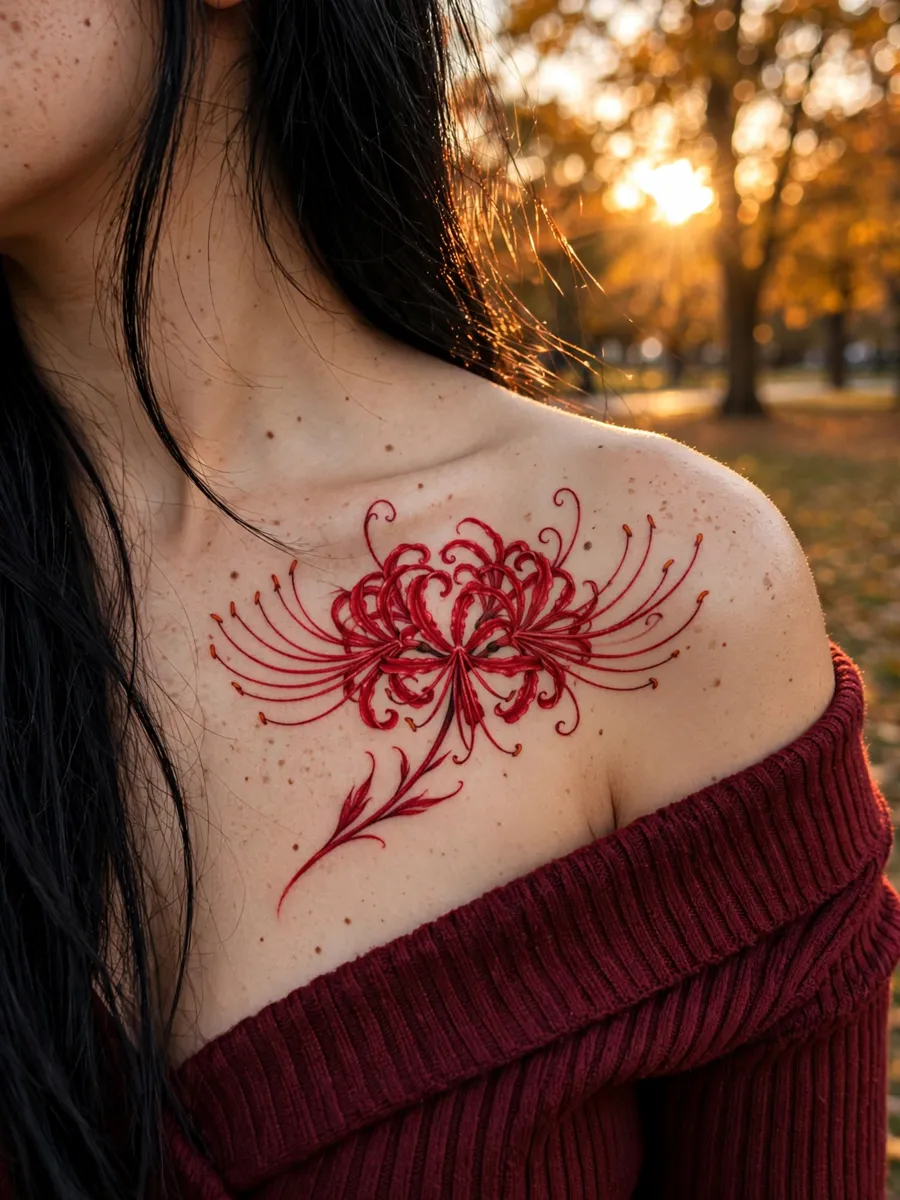
In Japan, the red spider lily blooms around the autumn equinox near graveyards and is called the flower of the afterlife, said to guide the dead on their final journey. Its spidery curled petals look almost drawn already, which makes it a gift to tattoo artists: long stamens, dramatic negative space, and a silhouette nobody mistakes for a rose. It carries genuine funereal symbolism with zero coverage in mainstream spooky galleries.
Red, Always Red
The flower’s meaning lives in its crimson color, so this is one design where solid black alone loses something. A rich red with darker shading at the petal bases keeps it vivid without looking cartoonish.
Stem Placement
Let the long stem follow a natural line: down the spine’s edge, along the collarbone, or trailing down the outer thigh. The flower head lands where the stem ends, like it grew there.
9. Venus Flytrap in Bloom
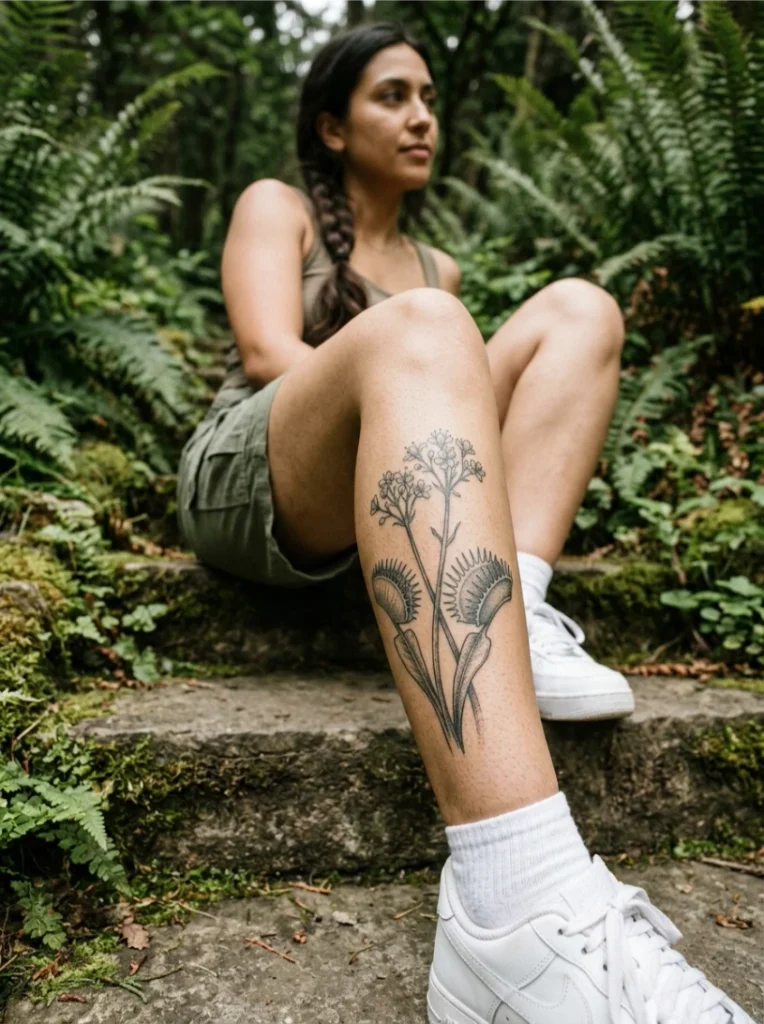
The spooky plant nobody inks. A Venus flytrap combines delicate white blossoms on tall stalks with the unmistakable jaw traps below, predator and flower on the same stem. Drawn in a vintage naturalist-plate style, with fine crosshatching and Latin-name elegance, it reads as a naturalist’s illustration of something that eats. That tension between scientific beauty and carnivorous function is the entire appeal.
Bloom vs Trap
Show both: the airy flower cluster at top, the traps mid-stem, one trap snapped shut and one gaping open. The open-closed pairing tells the plant’s whole story in a single glance.
Line Style
Etching-style linework with stippled shading suits this better than bold outlines. Think antique field guide, not flash sheet.
10. Centipede Anklet
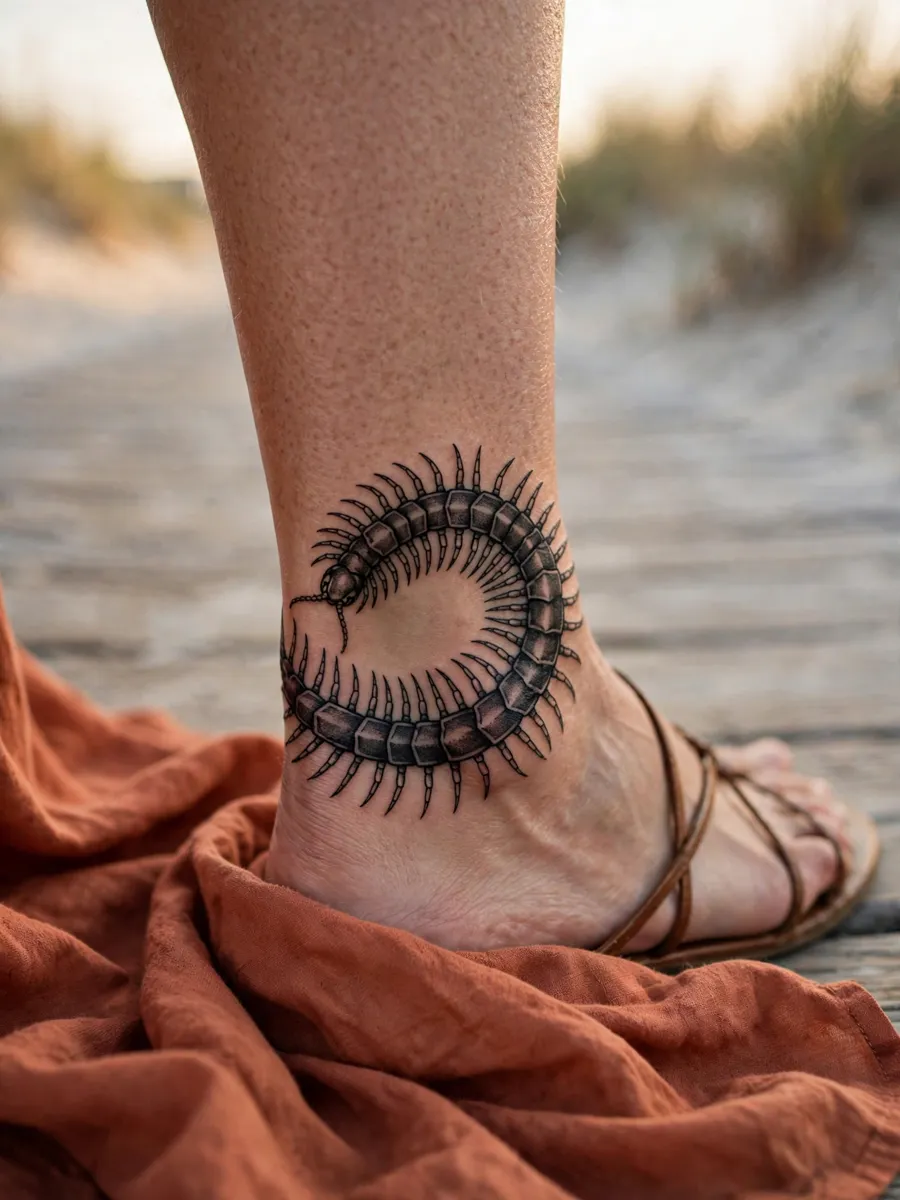
A centipede curling around the ankle like jewelry takes one of nature’s most unsettling creatures and makes it graceful. The segmented body follows the ankle’s curve naturally, legs fanning in rhythmic symmetry, and from a distance it reads as an ornate anklet before the eye resolves what it actually is. That delayed recognition is delicious. It is also genuinely rare: spiders get all the arthropod attention in tattooing, while centipedes go unclaimed.
Anklet Flow
The body should wrap at least three-quarters of the way around, with the head resting near the inner ankle bone. A partial wrap looks like a mistake; commit to the circle.
Detail Level
Each segment wants its leg pair suggested rather than fully drawn, or the design turns to visual noise. Simplify boldly and let the silhouette do the work.
Shoe Season
Be honest about your footwear. This piece lives for strappy sandals and bare feet; if you live in boots eight months a year, put the concept on the wrist instead.
See Also: 13 Leg Sleeve Tattoos Women Love: Stunning Full-Leg Themes
11. Spooky Yurei Portrait
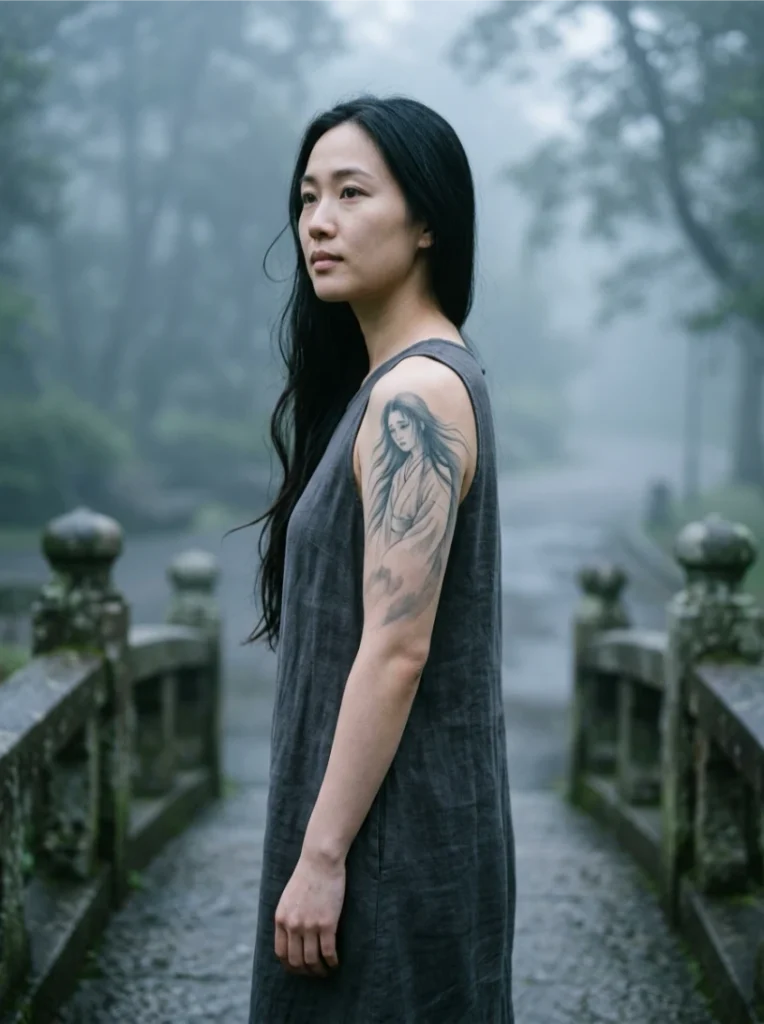
The yurei, the pale long-haired ghost woman of Japanese folklore and art, brings centuries of visual tradition that Western spooky tattooing barely touches. Rendered in soft sumi-e wash with her hair streaming and her white burial kimono dissolving at the edges, she is mournful rather than frightening, which suits the moody feminine register perfectly. This is cultural imagery with real depth, not costume spookiness, and it stands apart from everything in the mainstream galleries.
Wash Technique
Grey wash shading is non-negotiable for this style; solid black would flatten the ghostliness. The ink should fade like mist at the kimono’s hem and the hair’s ends.
Hair Movement
The hair is the composition. Long diagonal sweeps across the design create motion and let the piece flow with the body’s lines, especially on the thigh or upper arm.
12. Cracked Music-Box Ballerina
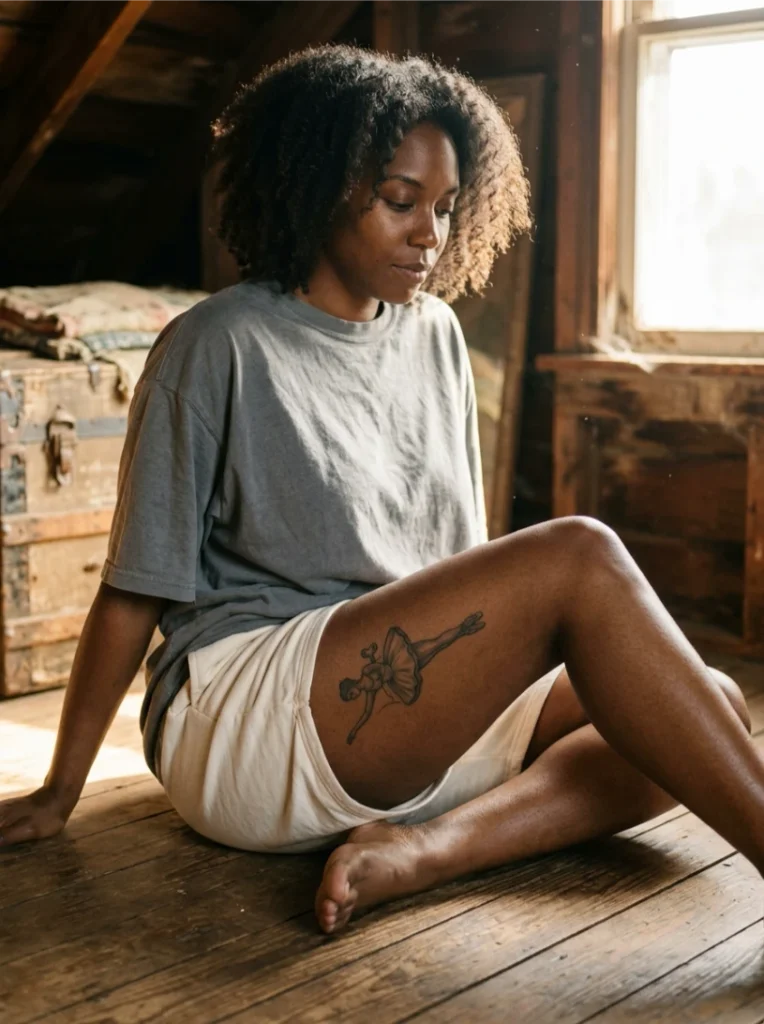
Dusty-attic nostalgia in a single image: a porcelain ballerina, the kind that pirouetted on childhood music boxes, with one visible crack running through her and the tiny winding key still at her back. It is spooky the way an abandoned attic is spooky, through memory rather than menace. The crack matters more than any other detail; it is the difference between a pretty dancer and a ghost of one.
Porcelain Tone
Keep her pale, with soft grey shading suggesting glazed ceramic. Too much contrast and she becomes a statue; the fragility needs to stay visible.
Key Detail
The little winding key at the back, drawn small and precise, is what identifies her as a music-box figure rather than just a dancer. Do not let the artist skip it.
Nostalgia Factor
This piece hits hardest for women who actually owned one of these as children. If the image gives you that specific pang, it is your design; if not, the teacup or the doll eye will serve you better.
Quick Comparison: Three Ways to Ink Spooky
Most spooky designs land in one of three technical approaches. If you have been searching spooky fine line tattoos, you are already asking for the first row, and the choice changes the tattoo’s personality as much as the subject does.
| Approach | Best For | Vibe | Keep in Mind |
|---|---|---|---|
| Delicate line | Plants, moths, micro pieces | Delicate, ghostly, jewelry-like | Needs a specialist; tiny detail needs space |
| Blackwork | Keyholes, candelabras, bold motifs | Graphic, dramatic, high contrast | Reads darkest day to day; hardest to keep subtle |
| Red ink | Ghosts, spider lilies, accents | Startling, modern, distinctive | Single color limits shading; fades visibly if overexposed to sun |
If your spooky leans celebratory rather than unsettling, the tradition behind sugar-skull imagery treats death as a reunion instead of an ending; Britannica’s overview of the Day of the Dead explains the symbolism behind the marigolds and painted skulls.
13. Candelabra of Faces
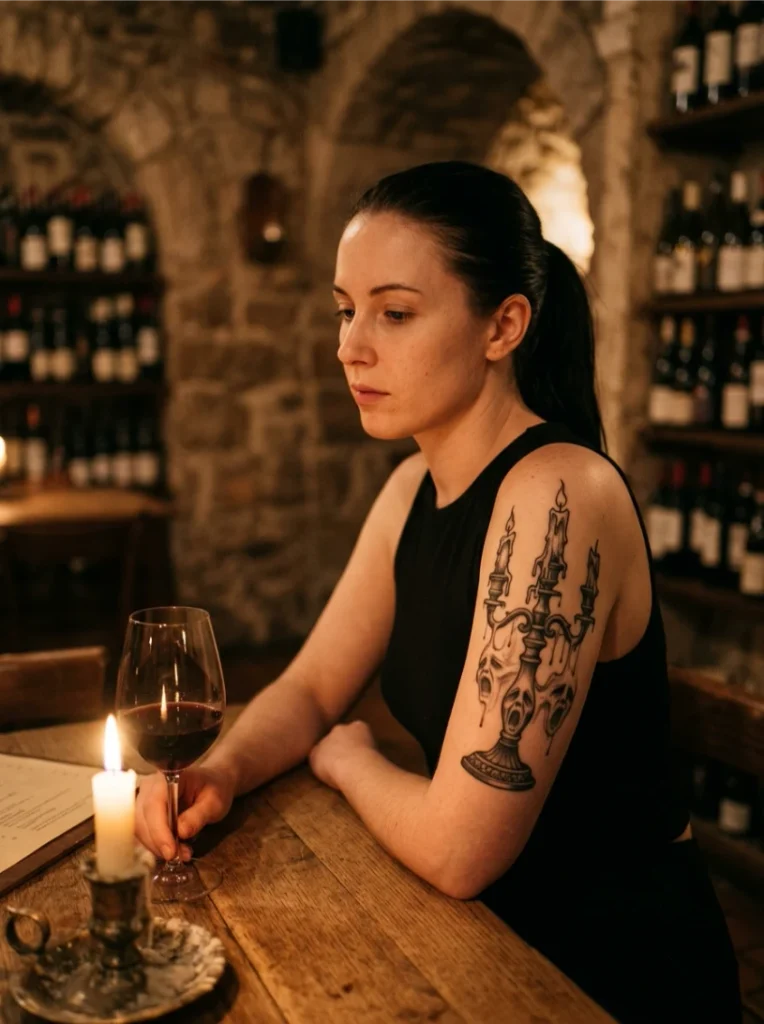
Melting wax drips down this candelabra and resolves, halfway down, into faint screaming faces caught in the flow. It is possessed-object horror at its best: no monster, no ghost, just a household thing behaving impossibly after midnight. The faces should emerge gradually, clear enough to unsettle but vague enough that the viewer questions what they saw. This is a Full Haunt design, unapologetic, and it earns its drama.
Wax Faces
Three faces maximum, each at a different stage of melting. More than that turns the piece chaotic; restraint makes each face land harder.
Candle Count
Three or five arms keep the composition balanced. An odd number of candles with only one or two lit gives beautiful asymmetry to work the faces around.
14. Spooky Memento Mori Hourglass
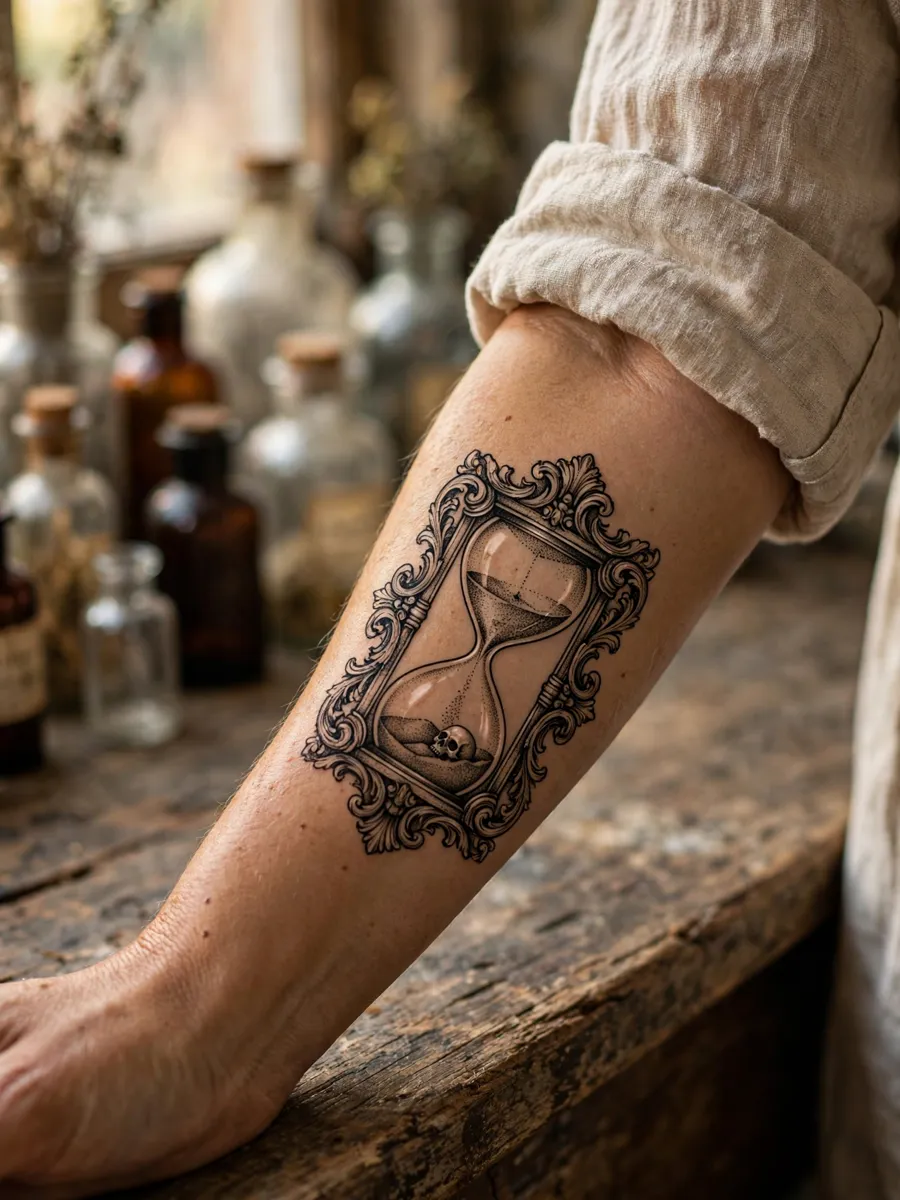
Imagery reminding us of death is centuries older than tattoo culture, and the hourglass is its most elegant symbol: time running out, rendered beautiful. This version hides a tiny skull inside the lower glass bulb, half-buried in the fallen sand, so the piece reveals its darkness slowly. Sand half-run, never full or empty; the tension of the in-between moment is the point.
Sand Detail
Stippled dots for the sand, denser at the pile’s peak. The falling stream should be a single fine thread, barely there, which makes the whole thing feel frozen mid-moment.
Tiny Skull
Keep it small enough that it reads as a discovery, not the subject. Someone should notice it on the third look, not the first.
Frame Shape
An ornate frame, baroque scrolls or simple turned-wood posts, gives the glass something to hang from. Without it the hourglass floats oddly on skin.
15. Sugar Skull Marigold Crown
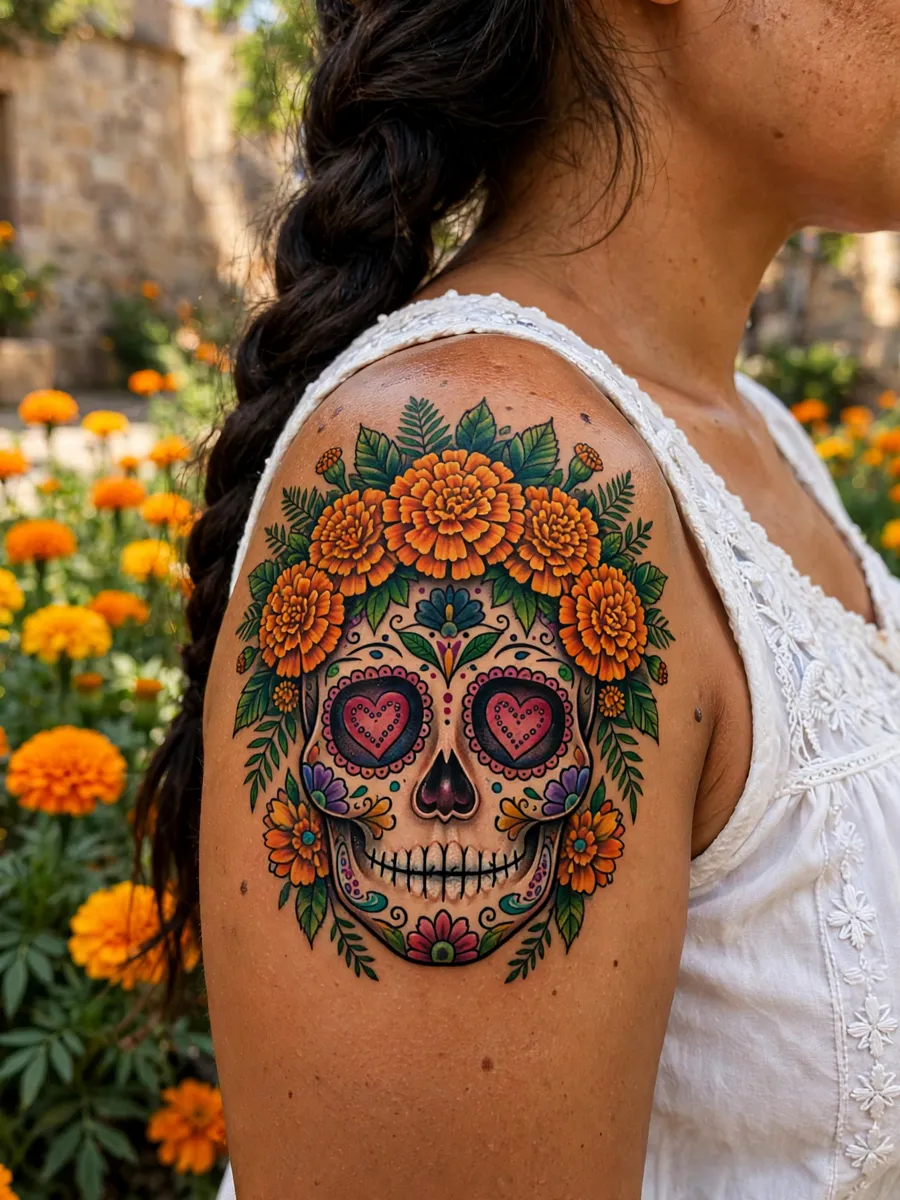
The one unapologetically colorful design on this list. A Day of the Dead sugar skull crowned with marigolds celebrates death instead of fearing it, which gives it an emotional register nothing else here has: joy, remembrance, festivity. The traditional decorative elements, heart-shaped eyes, stitched mouth, floral patterns across the cranium, are centuries old and deserve an artist who respects their origins rather than treating them as generic spooky decoration.
Marigold Crown
Layer the marigolds in oranges and golds with deep green foliage behind. The crown should feel abundant, almost heavy, framing the skull like a halo.
Color Rules
Traditional palettes use saturated jewel tones on the skull’s decoration. Muted or pastel versions lose the folk-art soul of the design, so commit to the color.
16. Eclipse Sequence Down the Spine
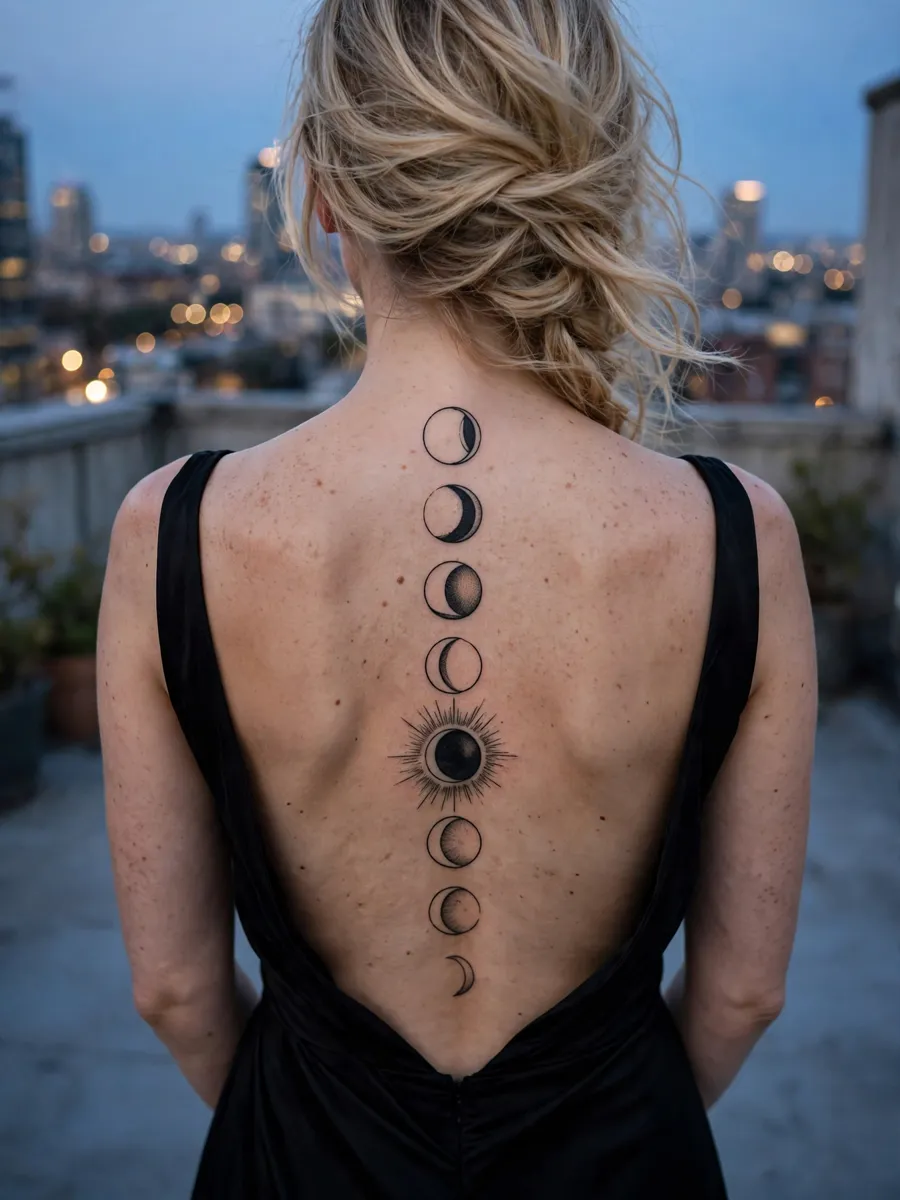
The phases of a total solar eclipse, from first contact through totality’s corona to last light, running down the spine in a vertical column. It is celestial horror at its most refined: the dread of the sun going out, abstracted into pure geometry. The spine’s natural line does half the compositional work for you, and the progression from partial to total eclipse gives the piece a narrative arc rare in small tattoos.
Spine Flow
Center each phase on the spinal line with generous spacing between them. Crowding the phases kills the astronomical-chart elegance; let each one breathe.
Phase Count
Five to seven phases capture the full sequence, the moon phases as a single dramatic event rather than a calendar. Include the diamond-ring moment just before totality, the most dramatic single phase.
17. Tarot Death as a Garden
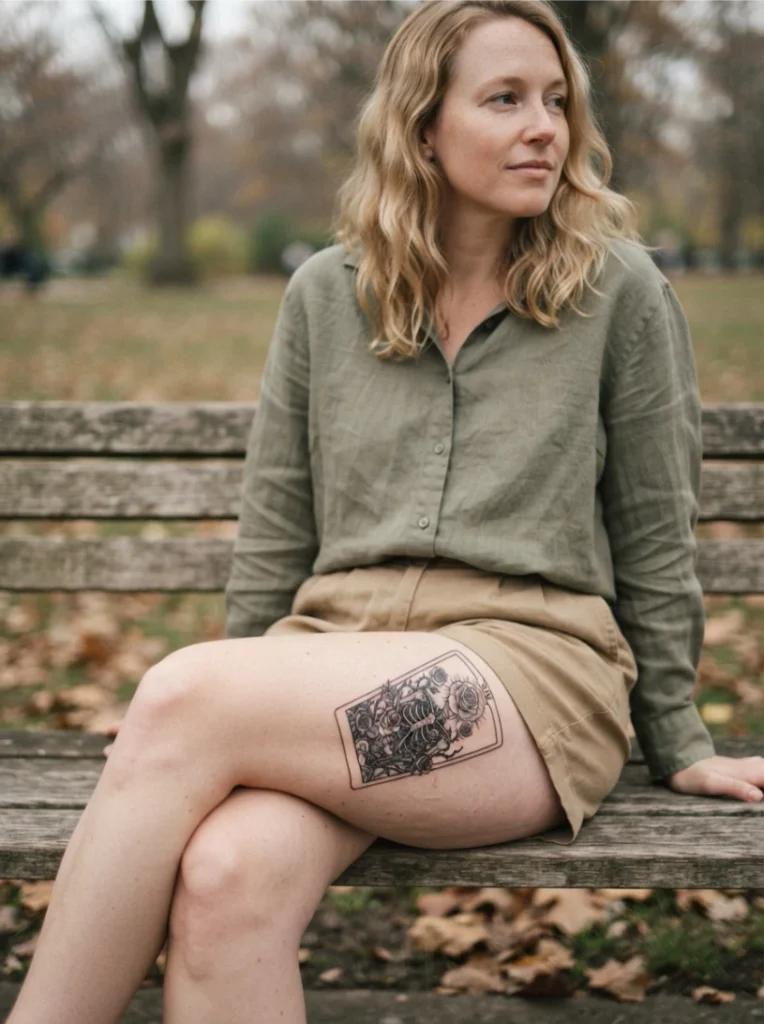
The Death card has never meant literal death; it means transformation, endings that feed beginnings. This design takes that seriously and reimagines the card as a garden: the skeletal rider dissolving into blooming overgrowth, armor giving way to vines, the rising sun replaced by an opening flower. It keeps the card’s unmistakable composition while arguing, visually, that the scariest card in the deck is actually about renewal.
Garden Overgrowth
Let the flora win. Roses climbing the armor, roots threading through the ribcage, petals where the banner flew. The more the garden consumes the skeleton, the stronger the transformation message.
Thorns
A few thorny stems among the blooms keep it honest. Pure prettiness would betray the card; a few barbed stems remind you what the garden grew out of.
Card Format
Keeping the rectangular card border with “XIII” at top roots it unmistakably in tarot. Breaking the border, with vines escaping the frame, is the bolder artistic choice.
18. Anglerfish Lantern
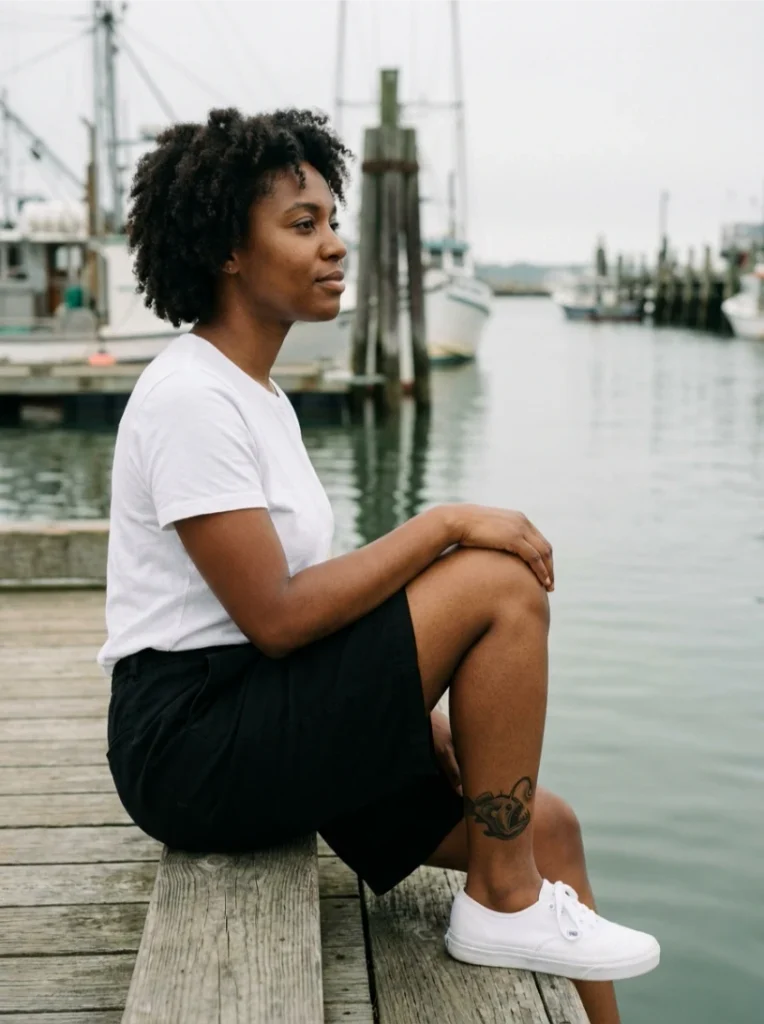
Abyssal horror for the bold: a deep-sea anglerfish with its bioluminescent lure glowing in the dark water, needle teeth bared. Nothing on this list commits harder to genuine fear, and that is its power. The anglerfish is nature’s own monster, no mythology required. It hunts in near-total shadow, navigating by its own light, which makes it feel more real and therefore more unsettling than any invented demon. The thigh gives it the large flat canvas its teeth and lure deserve.
Lantern Glow
The lure’s glow is the emotional center. A soft halo effect around it, achieved with careful grey wash or a touch of pale yellow, makes the surrounding darkness feel deeper by contrast.
Teeth Detail
Translucent needle teeth, slightly irregular, overlapping. Perfect symmetry would make it look designed; the anglerfish should look evolved, which is scarier.
Where to Place Spooky Ink: A Woman’s Guide
Placement changes a spooky tattoo’s personality as much as the design does. The sternum suits symmetrical pieces like the luna moth, intimate and revealed on your terms. The spine was made for vertical sequences like the eclipse phases. Behind the ear is the micro-placement capital: doll eyes, tiny phantoms, anything under an inch. The ankle takes the centipede and the poison sprig beautifully, visible in summer and hidden in winter. Inner forearm keeps literary pieces like the Tell-Tale Heart where you can see them daily. And the thigh is your large-canvas zone, for the anglerfish, the tarot garden, or the yurei. For a first piece, many women start with small spooky tattoos on the wrist or ankle, low commitment, easy to cover, and simple to build around later.
Mistakes That Ruin Spooky Tattoos
The most common mistake is picking the same flash everyone already has. If your artist’s wall shows the design, a thousand other arms do too; the skull-and-rose and the death moth are the worst offenders. Second is the boldness mismatch: choosing Full Haunt imagery when your wardrobe, workplace, and temperament live at Whisper. Sit with the subtlety scale honestly before you commit. Third is cramming miniature detail into skin that moves constantly; fingers and inner wrists blur fine detail faster than flatter areas, so save your most intricate linework for calmer real estate. And fourth is treating spooky as Halloween-only in your head, then feeling self-conscious about it in March. The whole point of this aesthetic is that it is year-round.
My Honest Take
If I were choosing one design from this list tomorrow, it would be the poison garden sprig, because it operates on two levels at once: a beautiful plant study to the casual eye, a quiet threat to those who recognize belladonna. That double reading is what separates a tattoo with lasting power from one that just looks cool in photos. My one honest caveat: the finest pieces here, the keyhole, the doll eye, the hourglass’s hidden skull, demand artists who genuinely specialize in micro and delicate-line work. In average hands, hairline detail softens within a few years into something muddier than you imagined. Interview artists like you are hiring for a very specific job, because you are. For horror-movie devotees who want their spooky literal, our Jason Voorhees and Michael Myers tattoo roundups go full slasher.
Frequently Asked Questions
What are the best spooky tattoo designs for women right now?
Delicate plant-based and literary designs lead in 2026: poison garden sprigs, luna moths, yurei portraits, and red-ink ghosts. They read as haunting rather than Halloween-costume, which is why they are being saved far more than traditional skull flash.
Is a small, subtle tattoo a good first tattoo?
Yes, they are one of the safest first choices. A wrist sprig, ankle centipede, or behind-the-ear doll eye gives you real aesthetic impact with low commitment, easy coverage, and room to build a collection around it later.
Do delicate-line spooky tattoos hold up over time?
They age gracefully if you give the lines room: slightly bolder line weight than you think you need, placement on flat stable skin rather than high-movement areas, and an artist who specializes in delicate linework. Hairline micro detail in the wrong hands is the main risk.
What are some cute-but-creepy tattoo ideas?
The cozy end of the spectrum covers you: a teacup with a tiny storm inside, a luna moth, a cracked music-box ballerina, or a sugar skull with marigolds. All read as charming first and uncanny second.
What does a moth tattoo mean?
Most commonly transformation and impermanence, drawn from the moth’s short adult life. The luna moth specifically leans toward gentle rebirth, while darker moths signal mystery or attraction to the unknown.
Where is the best placement for spooky tattoos on women?
It depends on the design’s scale and boldness. Sternum and spine suit symmetrical or vertical pieces, behind the ear takes micro designs, ankles and wrists are ideal first-tattoo spots, and the thigh handles the largest, boldest work like the anglerfish or tarot garden.
A Final Thought
The best spooky tattoos are not about frightening anyone. They are about carrying a small, chosen darkness with you: a poisonous flower, a drowned ghost, a heart that beats too loud. Pick the one that feels like a secret you want to keep, not a costume you want to wear, and it will still feel right years after the Halloween decorations come down.