Spiky hairstyles use a combination of texturizing, precise cutting, and strong-hold styling products to create pieces of hair that stand up or point outward for a bold, graphic finish. The style has deep roots in punk and new wave culture but has softened into something far more wearable, showing up everywhere from red carpet pixies to low-maintenance everyday cuts. Spiky hairstyles for women now range from barely-there texture to full mohawk drama, and it works on a wide range of hair types and ages. Right now it’s having a real resurgence as more women move away from soft, undefined layers toward cuts with actual shape.
1. Textured Pixie With Piecey Spikes
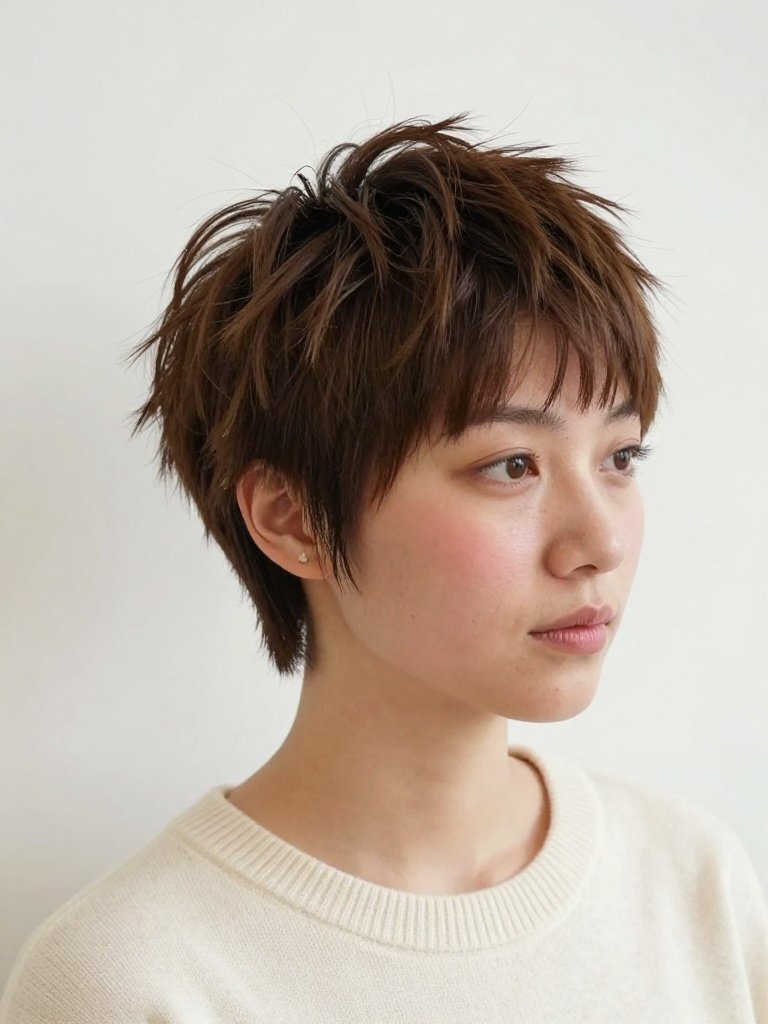
A razor or point-cutting technique through the crown creates individual pieces that separate naturally instead of clumping into one solid spike. The length usually stays shortest at the nape and sides, building up gradually toward the crown, so there’s enough hair to actually work with when styling.
A small amount of matte clay worked through damp hair, then blow-dried with fingers lifting at the roots, is what gives this its texture. It’s a classic entry point into spiky hairstyles for women who want something editable day to day rather than a single fixed shape, closer to a modern edgy pixie than a full graphic spike.
Tip
- Ask your stylist for “point cutting” through the crown, not just thinning shears
- Use a matte paste, not a glossy pomade, for separation
- Blow-dry upside down first to build root lift before styling
- Reapply a small amount of product midday if pieces fall flat
Face Shape Match
This style is especially flattering on round or oval faces, since the height at the crown adds vertical length and draws the eye upward.
2. Short Spiky Hair Female Cut With A Longer Fringe
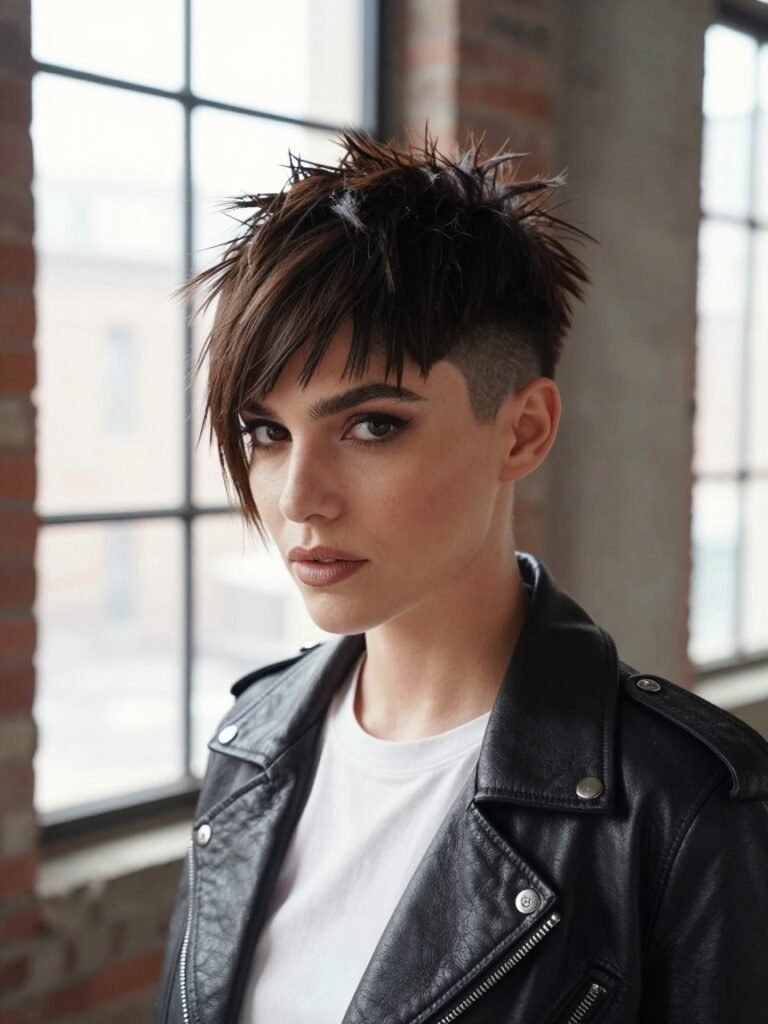
The back and sides are cropped close, almost buzzed, while the top section is left long enough to comb forward into a heavy, textured curtain fringe that can be spiked up or pushed to one side. It’s a strong contrast cut, short versus long in the same style, which is part of what makes it read as intentional rather than just short hair that’s grown out unevenly.
Worth noting, this is a higher-maintenance option since the length differential means regrowth shows up fast, usually needing a trim every four to five weeks to keep the shape crisp.
Tip
- Request clippers on the sides with a guard, scissors only on top
- Use a strong-hold wax to spike the fringe forward or off to one side
- Keep a small comb in your bag for quick fringe touch-ups
- Ask for an undercut fade if you want an even sharper contrast
Face Shape Match
Square and heart-shaped faces tend to suit this best, since the softer fringe balances a stronger jawline or wider forehead.
3. Spiky Hairstyles For Older Ladies With Soft Root Volume
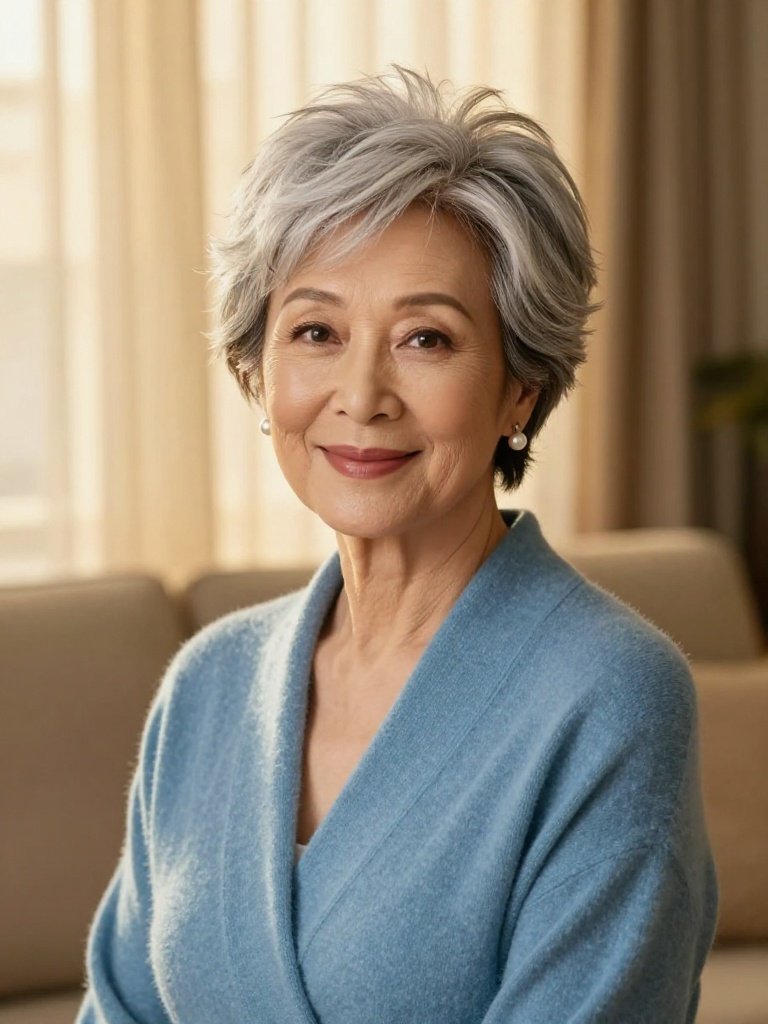
For women who want the energy of a spiky cut without the harsh, punk edge, this version keeps the spikes shorter and less angular, closer to gently lifted texture than dramatic points. The cut is usually built from choppy layers throughout rather than concentrated at the crown, which keeps things looking soft and full instead of severe.
Among low-maintenance options for finer, more mature hair, this is genuinely one of the most flattering, since the shorter layers create the appearance of thickness without needing constant restyling.
Tip
- Ask for “textured layers with soft lift” rather than “spikes”
- Use a lightweight mousse instead of a heavy wax to avoid weighing hair down
- Diffuse dry with your head tipped forward for natural root volume
- Keep spikes small and rounded rather than pointed for a softer look
Face Shape Match
This suits most face shapes, and it works especially well for finer or thinning hair since the shorter layers create visual density.
4. Spiky Hairstyles For Ladies Over 50 With An Undercut Detail
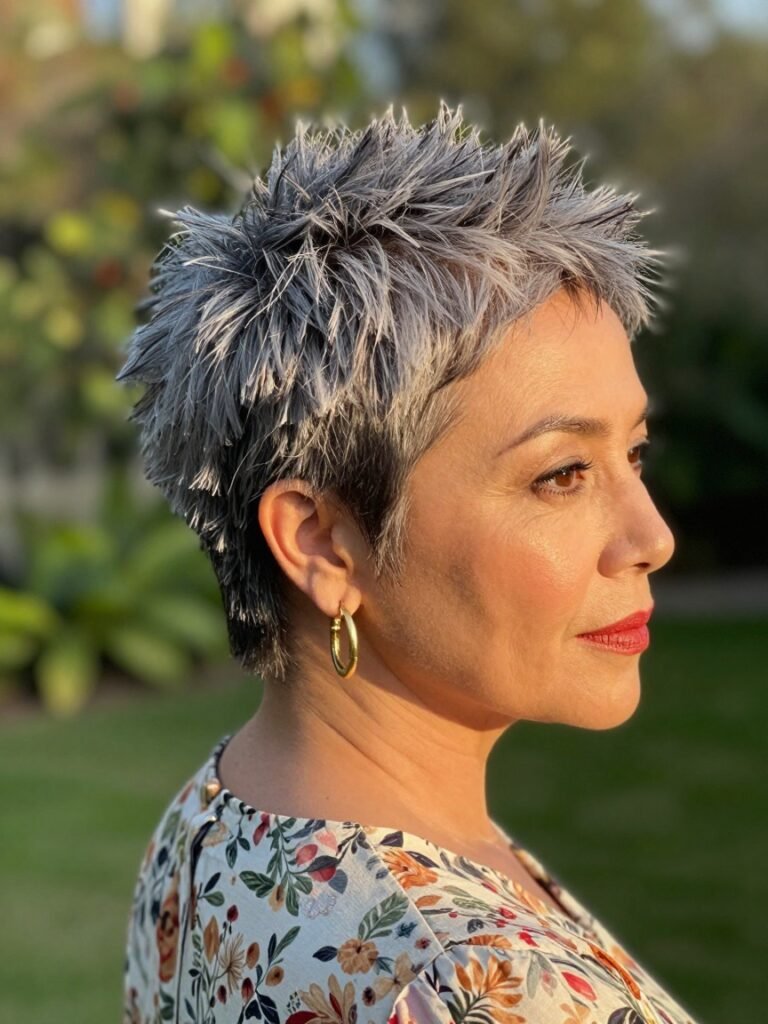
A shorter, tapered undercut at the nape pairs with longer, textured pieces on top that can be spiked or left tousled. The undercut stays subtle, usually just an inch or two of exposed buzzed nape, rather than a dramatic shave, so it reads as edgy rather than severe.
The contrast between the closely cropped nape and the fuller crown gives the illusion of thicker hair overall, which is part of why this has become such a popular request among women looking to add shape without going short everywhere.
Tip
- Describe it as a “hidden undercut” if you want it to peek out only with hair pulled up
- Use a texturizing spray at the roots before spiking the crown
- Have the undercut refreshed every six to eight weeks
- Try clipping the top back occasionally to show off the undercut detail
Face Shape Match
Oval and long face shapes both work well here, since the added crown volume keeps proportions balanced.
5. Asymmetrical Spiky Crop
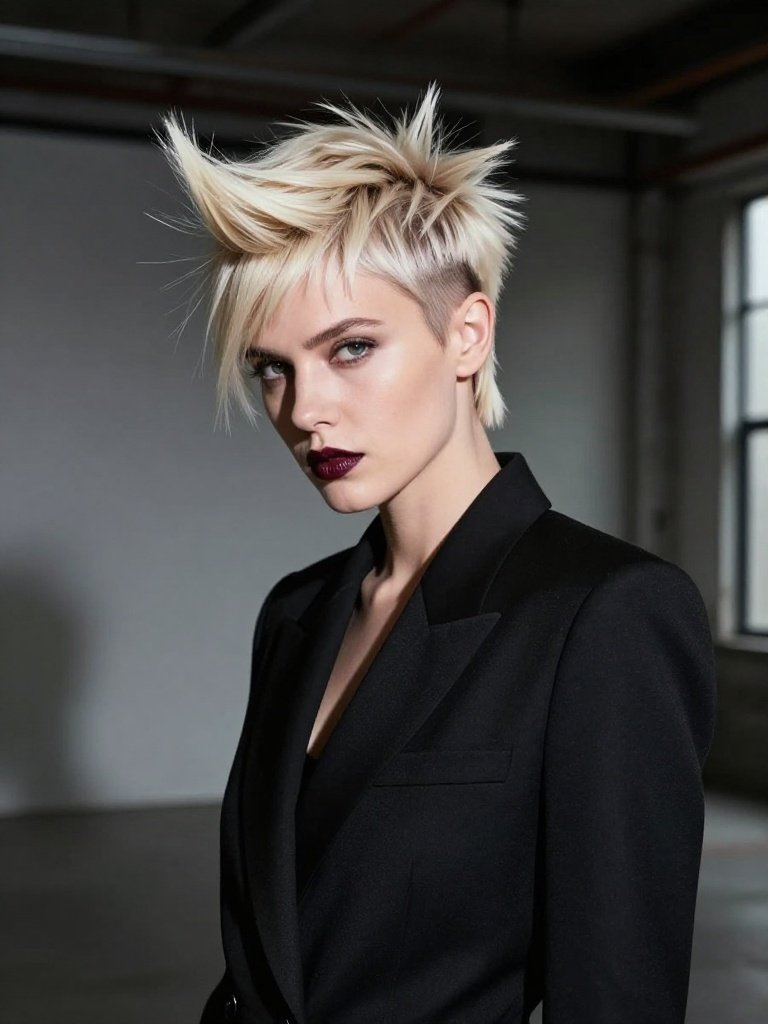
Breaking from the usual symmetrical spiky shape, this cut keeps one side noticeably shorter than the other, often with the longer side left full enough to sweep across the forehead while the shorter side spikes up tight. It’s a more fashion-forward take, closer to editorial hair than a typical everyday cut, with a disconnected undercut underneath adding to the graphic shape.
On the honest side, this style takes real styling time each morning since the asymmetry has to be maintained deliberately, or the whole shape reads as unbalanced rather than intentional.
Tip
- Bring a reference photo, since “asymmetrical” can mean very different things
- Style the longer side first, then spike the shorter side to match the angle
- Use a strong gel on the short side to hold sharp points
- Get regular trims so the length difference doesn’t blur together
Face Shape Match
This works particularly well on oval and diamond face shapes, where the asymmetry doesn’t compete with already-strong angles.
6. Frosted Tips Spiky Hairstyle
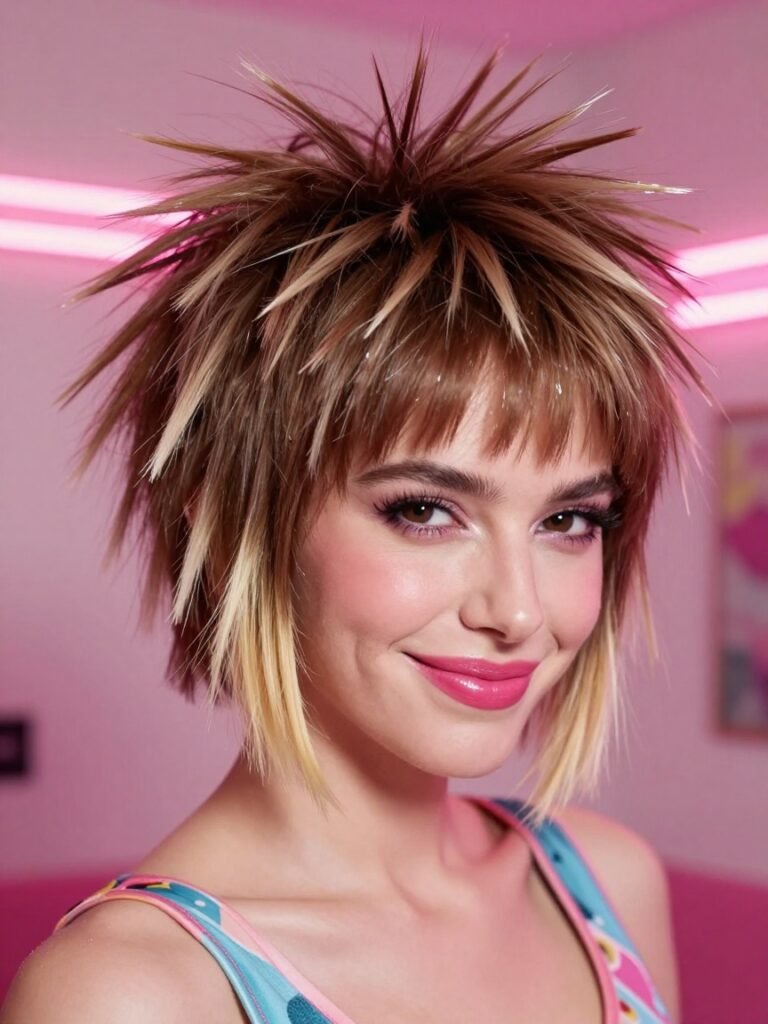
Borrowed from a very specific late-90s and early-2000s look, this version uses subtle highlighting or a light bleach technique on just the very tips of the spiked sections, creating a two-tone effect that catches light differently than the rest of the hair. It’s usually done on natural blonde or light brown bases so the contrast doesn’t require heavy lightening, and it pairs well with a spiky bob for anyone not ready to go fully short.
Tip
- Ask for “tip-only balayage” so your colorist knows to isolate just the ends
- Use a clear or shine-enhancing gel to keep the frosted tips glossy
- Touch up color every eight to ten weeks as new growth comes in
Face Shape Match
This tends to suit lighter, warmer skin tones best, since the contrast reads most clearly against a similar natural hair color.
7. Short Spiky Hairstyles With A Defined Widow’s Peak Fringe
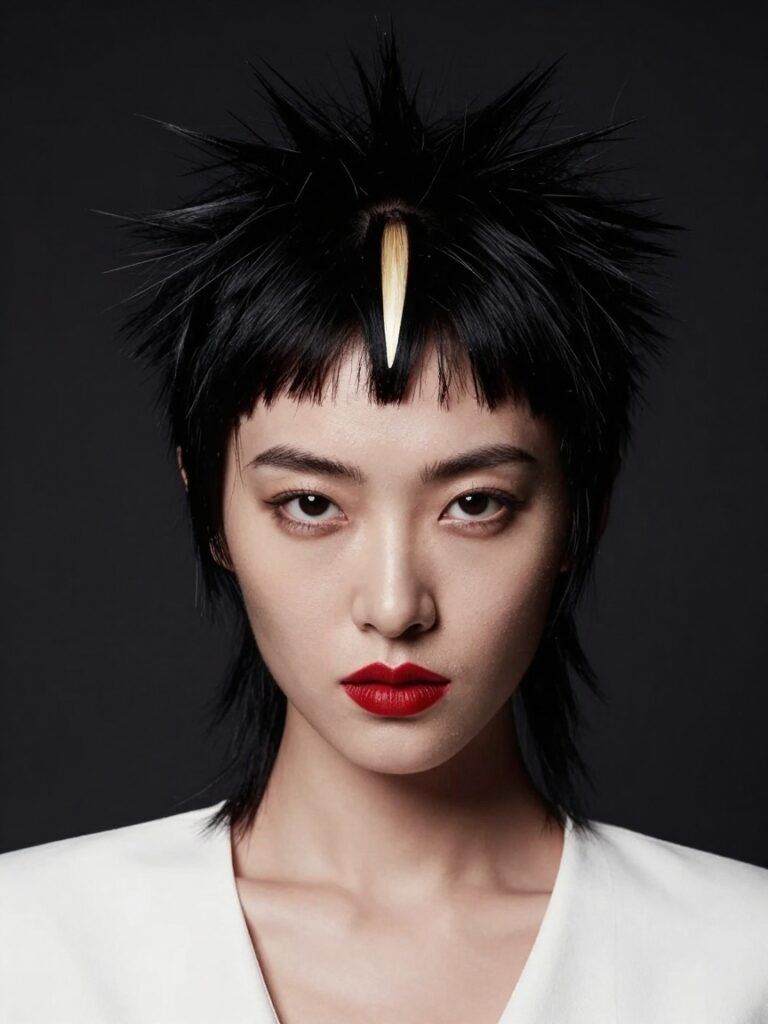
The fringe comes to a sharp point at the center of the forehead rather than the usual straight-across or side-swept shape, with the rest of the crown spiked around it. It’s a much bolder, more graphic shape than most spiky cuts, closer to a deliberate style statement than an easy everyday look.
Tip
- Ask your stylist to cut the center point first, then build the rest around it
- Use a fine-tooth comb and strong gel to keep the point crisp
- Avoid heavy bangs elsewhere in the cut to keep the point the focal element
- Expect this to need daily restyling, it doesn’t hold shape overnight
Face Shape Match
This is best suited to oval or heart-shaped faces, where a strong center point doesn’t clash with an already angular jawline.
See Also: 18 Easy Fulani Braids Ideas That Are Trending for Natural Hair
8. Spiky Hairstyles For Over 60 With A Rounded Silhouette

Soft, rounded spikes replace sharp points here, with layering concentrated through the crown and sides to add lift without severity. The overall silhouette stays close to the head, which makes it easier to manage day to day than taller, more architectural spiky cuts.
This remains one of the more forgiving options for changing hair texture, since it doesn’t rely on a single dramatic focal point that has to be perfect to work.
Tip
- Ask for “soft texturizing” rather than a hard graphic spike shape
- Use a volumizing mousse at the roots before blow-drying
- Finger-style rather than comb for a more relaxed, rounded finish
- A light-hold root lift spray keeps shape without stiffness
Face Shape Match
This flatters most face shapes and pairs especially well with finer, silver, or gray hair, since the rounded texture adds visible fullness.
9. Short Spiky Hairstyles For Older Ladies With A Side-Swept Top
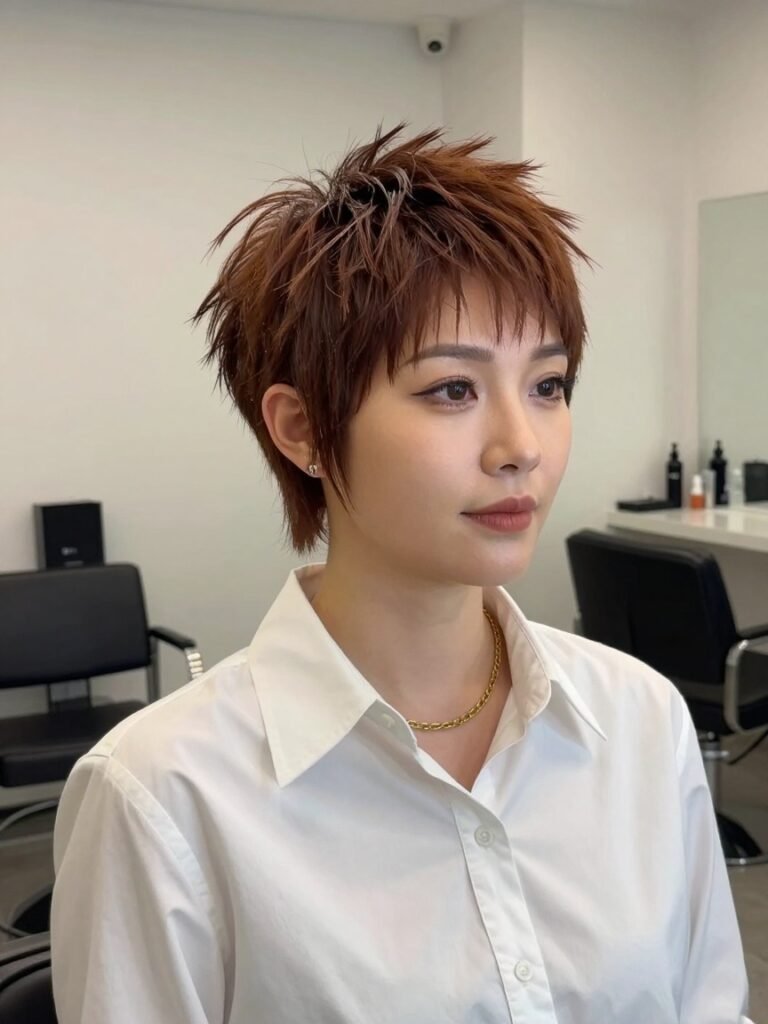
Instead of spiking straight up, the top section is directed diagonally to one side before texturizing the ends, giving a softer, more polished version of the classic spiky shape, somewhere between a fauxhawk and a traditional side part. It photographs particularly well since the diagonal line adds movement that a straight-up spike doesn’t have.
Tip
- Blow-dry the top section in the direction you want it to fall before adding texture
- Use a light wax rather than gel to keep movement soft
- Ask for a slight undercut underneath to reduce bulk
Face Shape Match
This particularly suits square or rectangular face shapes, since the diagonal line softens stronger angles.
10. Spiky Mohawk-Inspired Crop
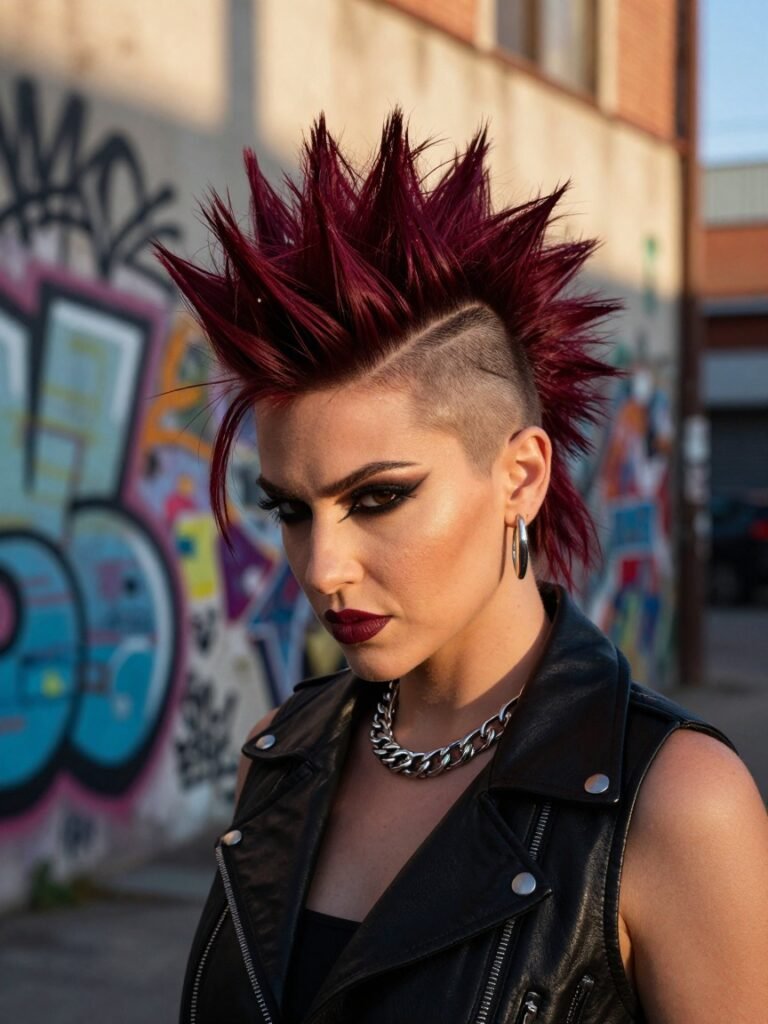
The most dramatic entry on this list concentrates length and volume along the center of the head while keeping the sides very short or shaved, then spikes the center section into a defined ridge. It doesn’t have to be a full mohawk; even a subtle version, closer to a soft quiff than a punk-inspired strip, reads as strong and intentional.
To be direct, this isn’t an easy style to wear to every setting, and it’s genuinely the boldest choice here, better suited to someone who wants their hair to be a clear style statement rather than something that blends in.
Tip
- Specify how dramatic you want the center strip, from subtle to full mohawk
- Use a strong-hold gel or wax applied section by section for a defined ridge
- Keep the sides trimmed short between appointments to maintain contrast
- Practice styling before a big event so you’re comfortable with the technique
Face Shape Match
Oval and heart-shaped faces handle the height and drama of this cut most naturally.
11. Wet-Look Spiky Hairstyle
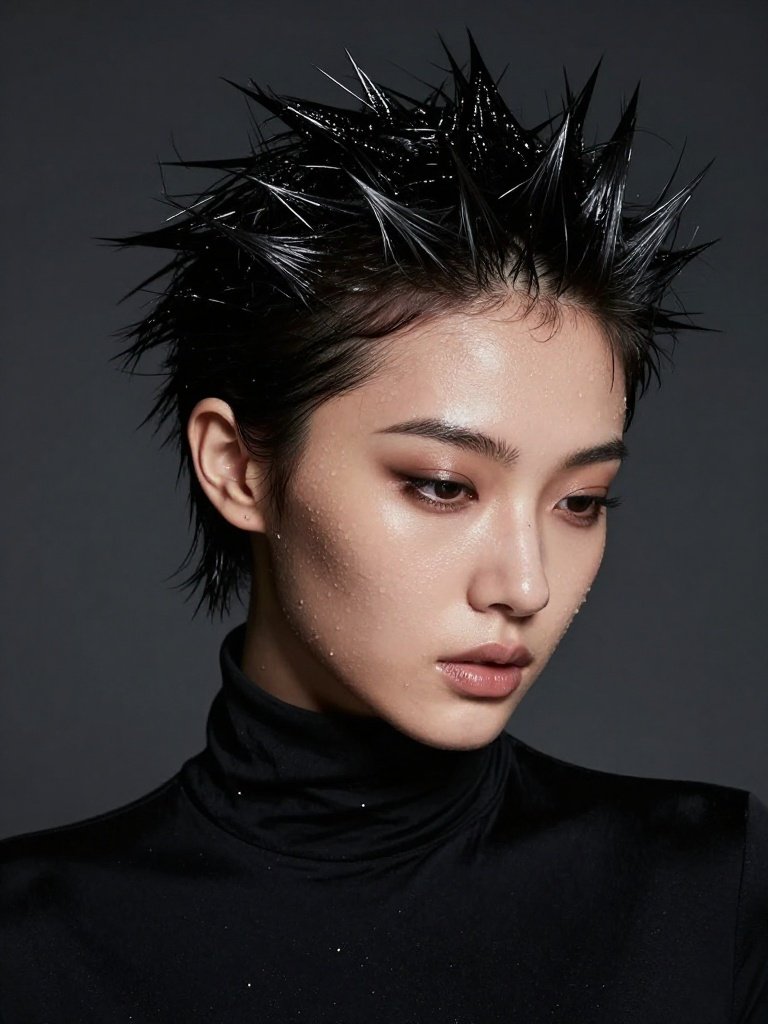
Skip the dry, matte finish. This styling approach uses a gel or pomade with high shine to create defined, glossy spikes that look intentionally wet rather than textured. It’s less about the cut itself and more about how it’s finished, so it can work on several of the cuts already mentioned above.
Tip
- Apply gel to damp, not fully dry, hair for the most authentic wet look
- Use a fine comb to separate and define individual spikes
- A shine spray on top can boost the wet effect if your gel dries matte
Face Shape Match
This works on nearly any face shape since it’s a finishing technique rather than a specific cut, though it reads most striking on shorter overall lengths.
12. Spiky Hairstyles For Women With Curly Texture
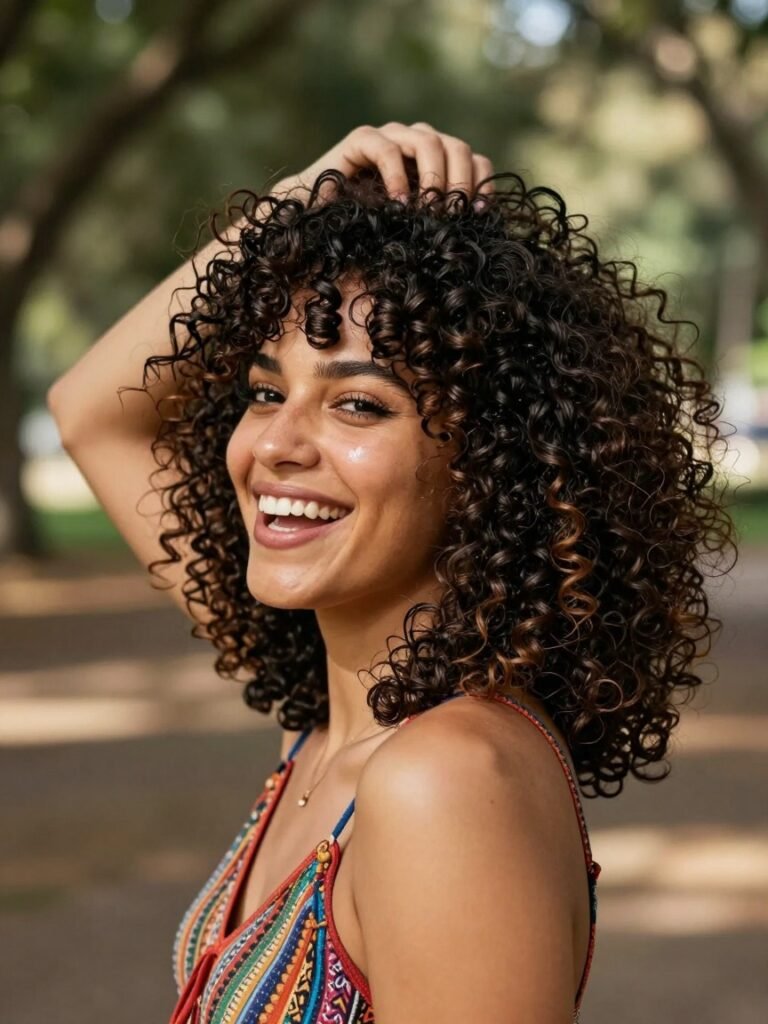
Curly hair naturally resists lying flat, which actually works in favor of a spiky shape when cut correctly. Shorter shag layers, cut while the hair is dry and following the curl pattern rather than fighting it, allow individual curls to stand up and separate into a soft, spiky silhouette without heat styling.
Tip
- Ask for a dry cut so your stylist can see exactly how each curl falls
- Use a curl-defining gel rather than a straight-hair wax or paste
- Scrunch upward while drying to encourage curls to stand rather than fall
- Avoid brushing dry, it disrupts the curl pattern and flattens the spikes
Face Shape Match
This suits round and oval faces especially well, since the height and volume from the curls add length to the overall shape.
13. Bleached Blonde Spiky Crop
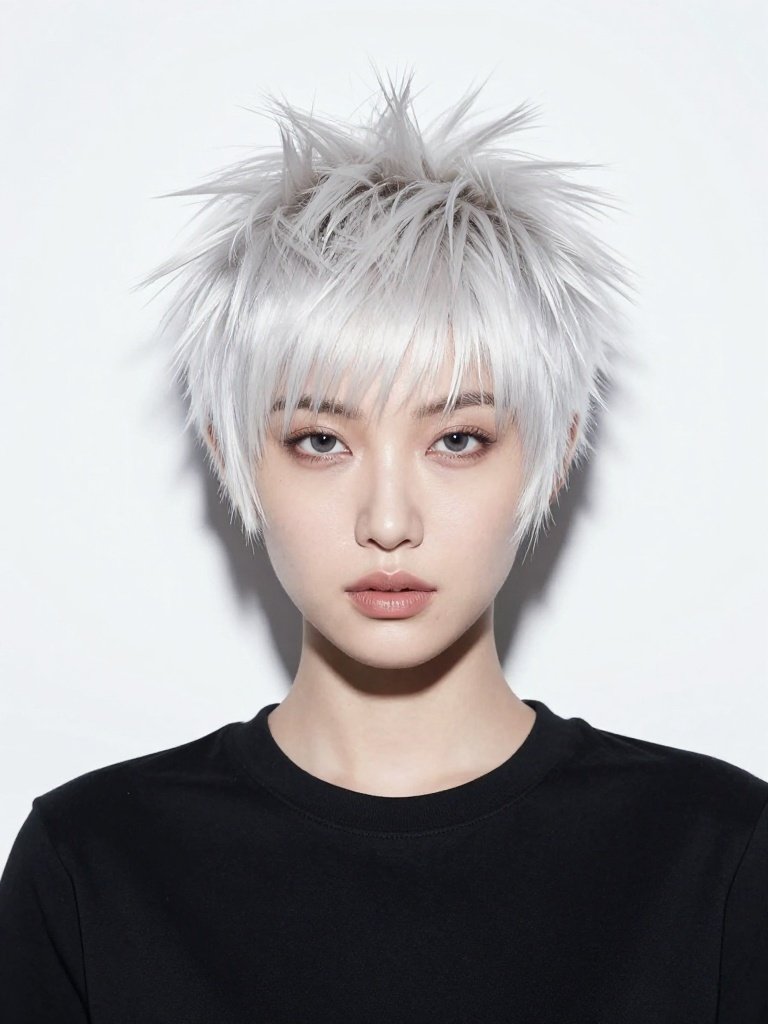
A short, heavily textured spiky cut paired with an all-over platinum blonde balayage or icy color leans into high contrast and maximum visual impact. The bleaching process itself is intensive and typically needs to be done in stages to protect hair health, making this genuinely the highest-commitment option on this list in terms of both time and hair condition.
If you’re going to try just one bold spiky hairstyle from this list, this is the one worth pointing most people toward first, since the color does as much visual work as the cut itself and photographs beautifully from every angle.
Tip
- Budget for multiple salon sessions if you’re starting from a darker base
- Use a bond-building treatment throughout the lightening process
- Purple shampoo keeps brassiness at bay between color appointments
- Deep condition weekly since bleached hair needs extra moisture
Face Shape Match
Cooler skin undertones tend to suit platinum blonde most naturally, and the short length works well across most face shapes.
Frequently Asked Questions
What face shape suits spiky hairstyles best?
Oval and heart-shaped faces tend to suit spiky hairstyles most easily, since the added height and texture balance proportions without competing with strong angles. Softer, rounded spike variations can work on nearly any face shape.
Are spiky hairstyles good for thin hair?
Yes, spiky hairstyles are actually one of the better options for finer hair, since the shorter layers create the visual appearance of thickness. A lightweight mousse or texturizing spray helps without weighing strands down.
How often do you need to trim short spiky hairstyles?
Most short spiky cuts need a trim every four to six weeks to keep the shape crisp, especially with an undercut or contrast element involved. Softer, more textured versions can sometimes stretch to eight weeks.
Can older women pull off spiky hairstyles?
Absolutely. Spiky hairstyles for older ladies and spiky hairstyles for over 60 are some of the most requested variations right now, usually styled with softer, rounder texture rather than sharp punk-style points.
What products work best for spiky hair?
A strong-hold gel or wax gives the most defined, long-lasting spikes, while a lighter mousse works better for softer, more natural-looking texture. The right product really depends on how sharp or subtle you want the finished look.
Where To Start
If you’re new to spiky hairstyles, start with a softer, more textured version rather than jumping straight to a dramatic mohawk-inspired cut. It’s easier to build up to something bolder once you know how your hair actually holds texture day to day. Bring reference photos to your appointment since terms like “spiky” and “textured” can mean very different things to different stylists.