A reverse navel piercing is a modern variation of the classic belly button piercing that places the jewelry through the upper rim of the navel instead of the lower edge. The placement creates an inverted look where the decorative end sits downward toward the belly button, giving the piercing a unique and more fashion-focused appearance.
From minimalist gemstone designs to detailed charms, chains, and stacked combinations, reverse navel piercing styles offer options for different personalities and aesthetics. This guide explores 13 carefully selected jewelry ideas, along with practical styling advice, placement considerations, and expert tips to help you choose a design that suits your anatomy and lifestyle.
What Is a Reverse Navel Piercing?
A reverse navel piercing, also known as an upper navel piercing, is placed through the top section of the belly button instead of the traditional lower position. While a standard navel piercing usually places the decorative jewelry above the belly button, a reverse style creates the opposite visual effect by positioning the jewelry from the upper entry point downward.
The biggest difference between a traditional and reverse navel piercing is the placement, jewelry direction, and overall appearance. Many people choose the reverse style because it highlights the upper belly button area and creates a cleaner look with certain outfits, especially cropped tops, swimwear, and high-waisted styles.
However, this placement is not suitable for everyone. A professional piercer should evaluate your navel anatomy, skin thickness, and available tissue before recommending the piercing.
How to Choose the Right Reverse Navel Piercing Style
Choosing a reverse navel piercing is not only about picking a beautiful piece of jewelry. Because this placement sits on the upper rim of the belly button, the best style depends on your anatomy, daily routine, and how much movement you want from the jewelry.
Unlike traditional navel piercings, reverse styles have less space above the belly button, which means jewelry size, weight, and shape can completely change how comfortable the piercing feels.
Match Jewelry Style With Your Belly Button Shape
The structure of your belly button plays a major role in how a reverse navel piercing will look. People with a defined upper navel ridge and enough skin fold usually have more options, including gemstones, charms, and decorative ends.
If the upper rim is shallow, a small bezel gem or simple curved barbell often works better because it sits closer to the body and creates less pressure on the tissue.
A professional piercer should always check the shape and depth of your navel before recommending a jewelry style.
Decide Between Flush Jewelry and Dangling Designs
Reverse navel jewelry generally falls into two categories: low-profile designs and statement pieces.
Minimal gemstone styles sit close to the skin and are easier for everyday wear because they are less likely to catch on clothing. They are usually the better choice for people who wear fitted jeans, leggings, or high-waisted outfits.
Dangle styles such as chains, hearts, and charms create more movement and visual impact, but they require more attention because extra weight can pull on the healing piercing
1. Star Charm Double Reverse Navel Piercing
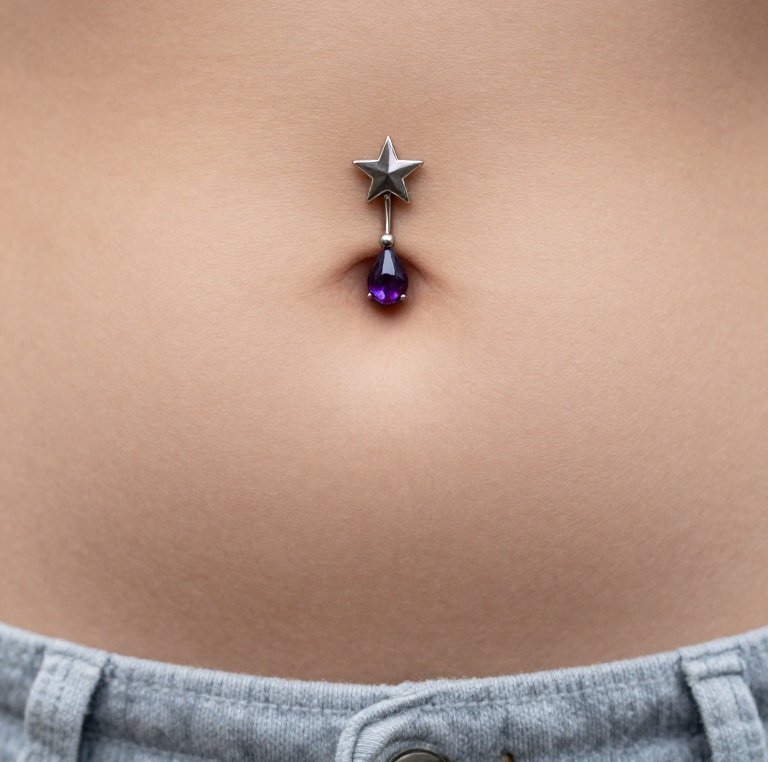
A small five-point star charm with a single amethyst drop sits above the belly button, paired with a classic ball-end barbell placed in the standard lower position, framing the belly button from both sides. The star sits close enough to the top of the navel that the dangle drops just into the rim, so it moves slightly with breathing and clothing rather than sitting flat.
This is technically two separate piercings done either together or spaced weeks apart, and the upper reverse piercing tends to be a touch more tolerable than the lower one since the skin at the top of the navel is thinner with less underlying tissue pulling on it. Full healing on both typically lands somewhere in the three to nine month range, longer than most people expect for a spot this small.
Tip
- Ask your piercer to mark both placements while you’re standing up straight, since navel symmetry shifts depending on posture and looks different lying on the piercing table.
- Say this at your consultation: “Can we do the top and bottom symmetrically so the charm doesn’t sit off-center once it’s healed?”
- Request a lightweight dangle charm on internally threaded jewelry rather than a heavy pendant for the top piece specifically, since excess weight on the newer, thinner-skinned reverse piercing raises the odds of it migrating, and internally threaded posts pull less on the healing channel going in and out.
- Skip getting both piercings on the same day if you have a low pain tolerance. Spacing them out gives you a clearer read on how each one is healing individually.
Styling Note
This is one of the more visible options on the list since it fills the whole navel area, and it’s most often paired with a cropped top or swimsuit rather than layered under clothing.
2. Minimalist Single Gem Reverse Navel Piercing
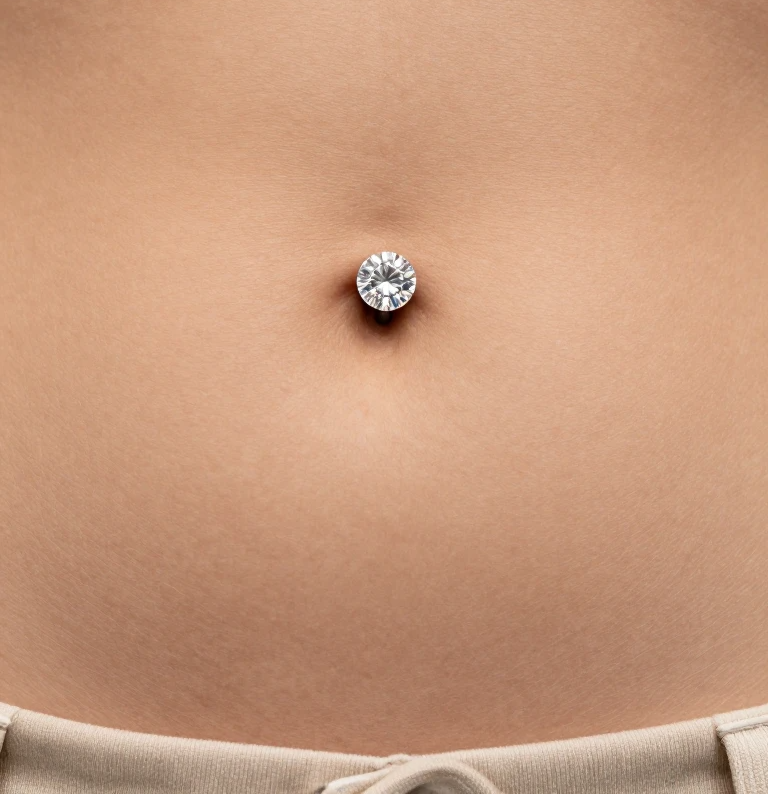
A single round bezel-set clear CZ sits just above the belly button on a curved barbell, with no dangle and no second piece below it, so the whole look reads as one clean point of sparkle rather than a statement. The stone stays flush against the skin instead of hanging, which keeps it from shifting or flipping during the day. Most studios start a reverse belly button piercing at a standard 14-gauge, the same diameter used for a traditional navel piercing, so sizing isn’t something you typically need to request.
Reverse placement tends to be slightly easier to tolerate than a traditional lower navel piercing, and most people are looking at roughly three to six months before it feels fully settled, though full internal healing can run longer.
Tip
- If this is your first navel piercing, request a shorter starting barbell rather than a longer one, since less length limits how much the jewelry can catch and irritate the piercing while it heals.
- Ask for a bezel setting instead of a prong setting on the gem itself, since bezels sit lower and snag less on tight waistbands or leggings.
- Avoid choosing a stone with visible facets for your first piece. A flat cabochon-style cut sits closer to the skin and is genuinely easier to keep clean day to day.
Styling Note
Because there’s no dangle to catch light or movement, this sits quietly under a fitted shirt and only really shows when you want it to.
3. Birthstone Solitaire Reverse Navel Piercing
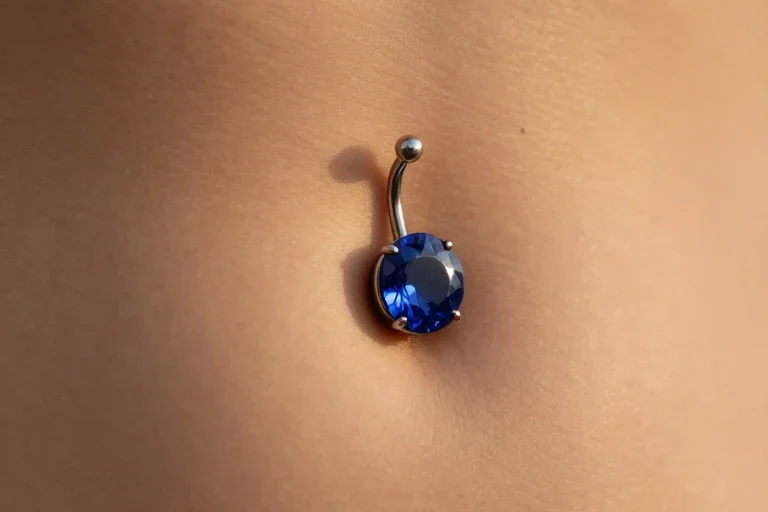
This version keeps the same simple curved barbell and single round gem as a classic reverse setup, but the color is chosen deliberately, a deep sapphire blue cabochon matched to a birth month rather than a generic clear stone, so the piercing doubles as a small, personal detail instead of a default look. A saturated jewel tone like this reads richer against most skin tones than a pale gem would, especially in warmer lighting.
Choosing a colored stone over clear CZ is really the only decision here, since the placement and shape stay identical to a standard reverse piece. Pain and healing follow the same general timeline as any single-gem reverse piercing, generally settling within three to six months before the surface feels fully calm.
Tip
- Bring a reference photo of the exact shade you want, since “green” or “blue” covers a wide range and studios stock specific tones that vary by supplier.
- Ask specifically: “Do you carry this in a bezel with a birthstone-colored CZ, or would I need to special order it?”
- If you know you react to certain metals, ask about niobium as an alternative to titanium; it’s another hypoallergenic option some studios stock for sensitive skin.
- A studio specializing in fine piercing work, not a walk-in mall shop, will generally carry a wider color range and better stone quality for this kind of custom pick.
- Don’t pick a stone shade purely off a screen. Screens shift color more than people expect, so check it against your skin in person before committing.
Styling Note
A colored stone like this stays subtle in everyday wear but stands out the moment you’re in a swimsuit or cropped top, making it a good middle ground between minimal and eye-catching.
4. Floating Reverse Navel Piercing
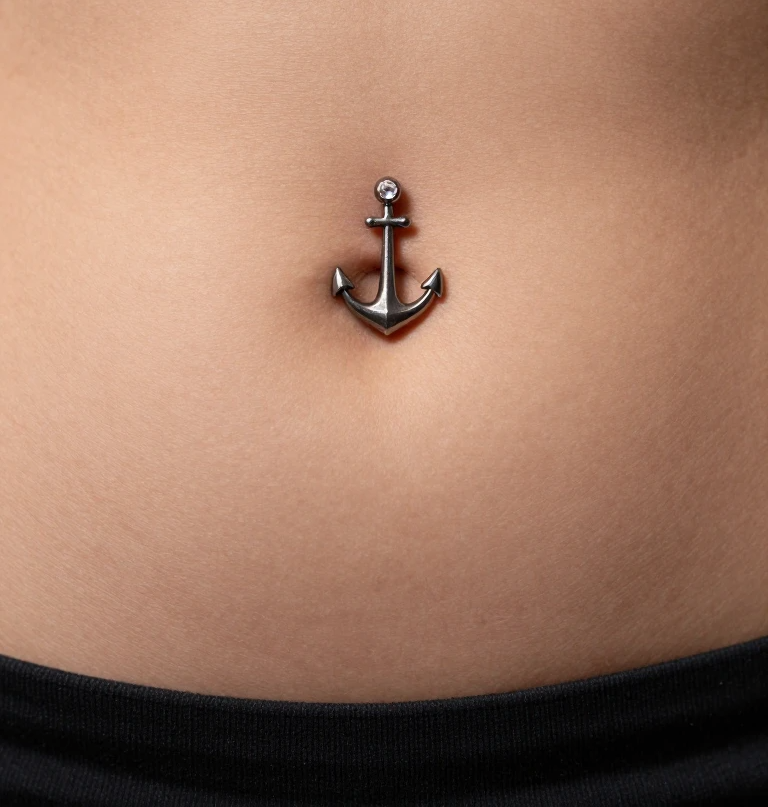
Instead of a standard curved barbell that exits through two visible piercing holes, a floating navel piercing uses a surface-style bar, sometimes referred to as a dermal anchor, anchored just under the skin so only the top gem is visible, with no ball or second bead showing at all. The effect reads as though the stone is simply sitting on the skin above the belly button with nothing holding it there.
Because the anchoring bar sits closer to the surface than a standard curved barbell, this style tends to carry a slightly higher piercing rejection risk over time, and healing timelines run similar to a standard reverse piece, generally a few months to feel stable, with full settling taking longer.
Tip
- Ask directly whether the studio has real experience with surface or floating anchors specifically, since this technique differs from a standard navel piercing and not every piercer offers it.
- Say this at consultation: “What’s your rejection rate on floating navel work, and how do you handle it if the piece starts pushing out?”
- Choose titanium for the anchor itself rather than surgical steel, since the body tends to tolerate titanium better in surface placements like this one.
- Watch for the jewelry sitting flush rather than raised. If it looks like it’s tenting the skin at all, that’s a sign it needs adjusting before it settles wrong.
Styling Note
This is the most subtle option on the list day to day since there’s no visible bottom ball, and it reads as barely-there jewelry rather than a full piercing.
5. Titanium Reverse Belly Button Piercing
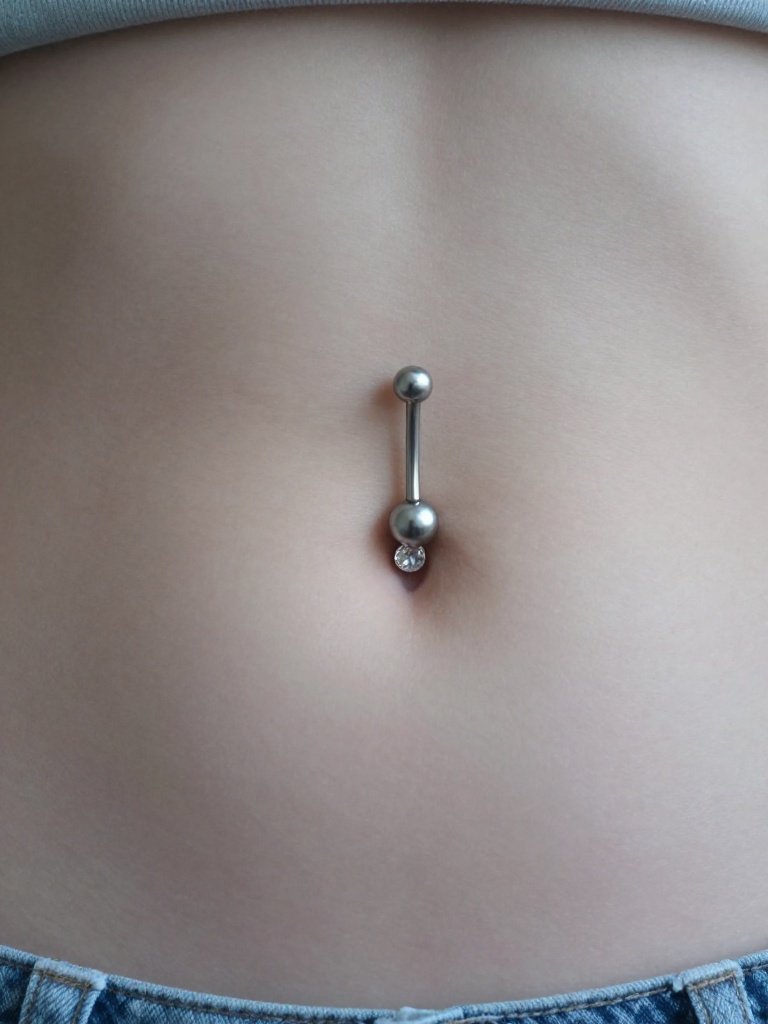
This entry is about the metal rather than the shape: implant-grade titanium in a matte or brushed finish instead of the shinier surgical steel most starter jewelry comes in. The curved barbell shape and gem placement stay standard, but the matte titanium reads warmer and less flashy under everyday light. Some studios also offer PTFE bioplastic as a flexible, hypoallergenic alternative for the initial healing period, though titanium remains the more common recommendation.
Titanium is also simply the material most professional piercers recommend for a fresh reverse navel piercing regardless of style, since it’s the least likely metal to cause a reaction while the area is still healing, and it doesn’t change how much the initial piercing itself hurts. Expect roughly three to six months before the surface calms down, similar to any single-gem reverse setup.
Tip
- Ask specifically for implant-grade titanium (ASTM F136 is the standard piercers reference), not just “titanium,” since lower grades exist and aren’t the same thing.
- If you’ve had a reaction to jewelry anywhere else on your body before, mention it at your consultation before your piercer even picks up the jewelry.
- Choose a brushed or matte titanium finish over polished if you want the piece to read as understated rather than as a statement piece.
- Don’t downgrade to cheaper jewelry once healed just to save money. The switch itself is what causes irritation in an otherwise settled piercing.
Styling Note
The finish here is quiet enough to wear daily without it reading as flashy, and it pairs well with gold or silver body jewelry elsewhere without clashing.
6. Chain Dangle Reverse Navel Piercing
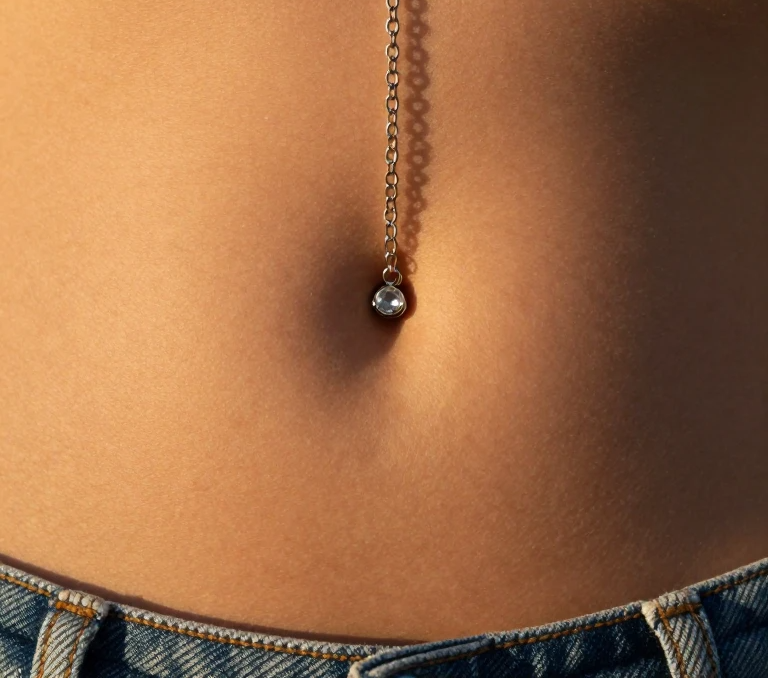
A fine chain drops from the top bezel gem down into the belly button itself, so the dangle actually moves with your body instead of sitting fixed like a single stud would. The chain length matters here. Too long and it catches on clothing, too short and it just looks like a stiff extension of the top piece. Getting barbell length sizing right at the fitting matters just as much as the chain itself, since a post that’s too long lets the whole piece shift more than it should.
Because the dangle adds weight and movement to a fresh piercing, it puts more strain on the healing tissue than a flush gem does, and most piercers recommend waiting until the initial piece is settled, generally a couple of months in, before swapping to a dangling chain style.
Tip
- Get the flush minimalist version first and switch to the chain dangle only after your piercer confirms the piercing has settled, rather than starting with the heavier piece.
- Ask: “What’s the maximum safe chain length for my anatomy so it doesn’t sit too deep in the navel or hang loose enough to catch on things?”
- Choose a chain with soldered links rather than open jump rings, since open links are what actually snag on fabric and pull at the piercing.
- Avoid layering a second necklace-style chain piece here. One moving dangle is enough; two competing for the same small space usually looks cluttered rather than intentional.
Styling Note
This is one of the more noticeable looks on the list since the movement draws the eye, and it works best with fitted or cropped tops where the motion is actually visible.
7. Opal Reverse Navel Piercing
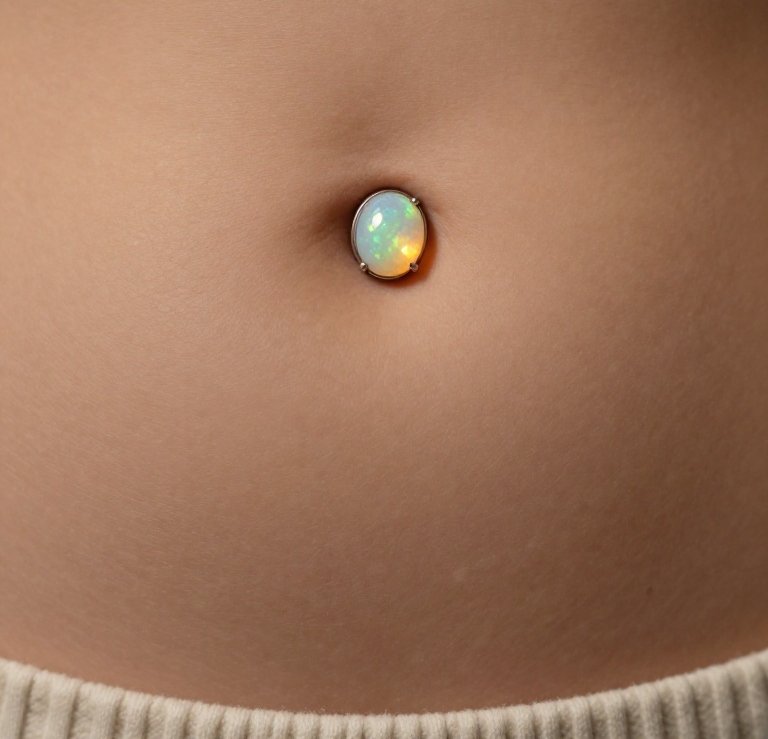
An opal cabochon catches light with a shifting, iridescent flash instead of the flat sparkle a standard CZ or diamond-cut gem gives off, which makes this version read softer and more painterly than the sharper stone options on this list. It’s a genuinely different visual category from a clear or colored CZ, not just a different shade of the same idea.
Opal is also a softer stone than most piercing gems, which matters practically since it scratches and dulls more easily with regular contact than a harder cut stone would. The piercing itself carries the same comparative pain level as any flush reverse gem, generally milder than a lower navel piercing, with the surface settling over three to six months. A gentle saline soak during that window helps keep the area clean without disturbing the softer stone setting.
Tip
- Ask whether the opal is a solid natural stone, a lab-created opal, or an opal triplet, since each holds up differently to daily wear and the studio should be able to tell you which one you’re getting.
- Request a bezel setting with a slightly raised edge specifically for opal, since the setting itself protects the softer stone surface from scuffing against clothing.
- Avoid opal if you’re someone who’s hard on jewelry generally. It’s a beautiful stone, but it’s genuinely not the most durable pick for a spot that rubs against waistbands all day.
Styling Note
The shifting color in opal reads differently depending on the light, so this piece looks noticeably different in daylight versus under warm indoor lighting.
See Also: 16 Gorgeous Snug Piercing Ideas With Insider Styling Tips
8. Rose Gold Reverse Navel Piercing
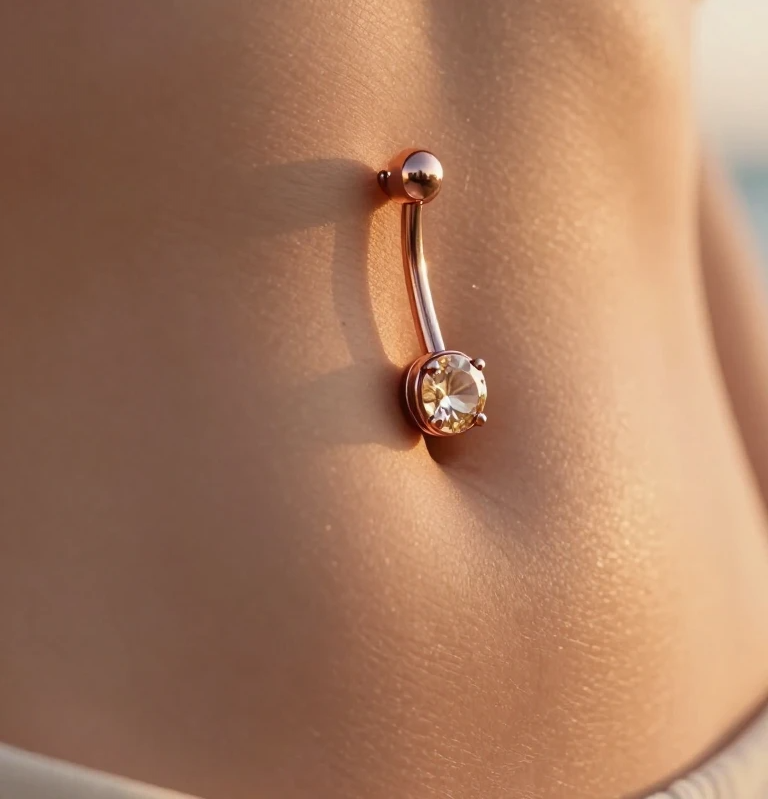
Rose gold plated or solid titanium jewelry gives this reverse navel piercing a warmer, pinkish metal tone instead of the cooler silver most starter pieces come in, which changes how it reads against warmer skin undertones specifically. The shape stays the same curved barbell and gem combination as a classic reverse piece, though some people eventually switch to a rose gold captive bead ring for a slightly different silhouette once healed.
Rose gold plating specifically is worth knowing about here, since plated jewelry can wear thin with friction over months of daily contact, unlike solid titanium which holds its color permanently.
Tip
- Ask directly whether the piece is rose gold plated titanium or solid rose gold titanium, since plating eventually wears and solid doesn’t, and the price difference reflects that.
- Say this at your consultation: “I want something that won’t fade or turn a different color after a few months of regular wear.”
- Pair this with a warmer stone tone, like a champagne or rose-cut CZ, rather than a stark white diamond-cut stone, since the two metal and stone tones read as more cohesive together.
Styling Note
Rose gold tends to photograph warmer and softer than silver tones, which is worth factoring in if this piercing is going to show up in a lot of your photos.
9. Boho Sun Charm Reverse Navel Piercing
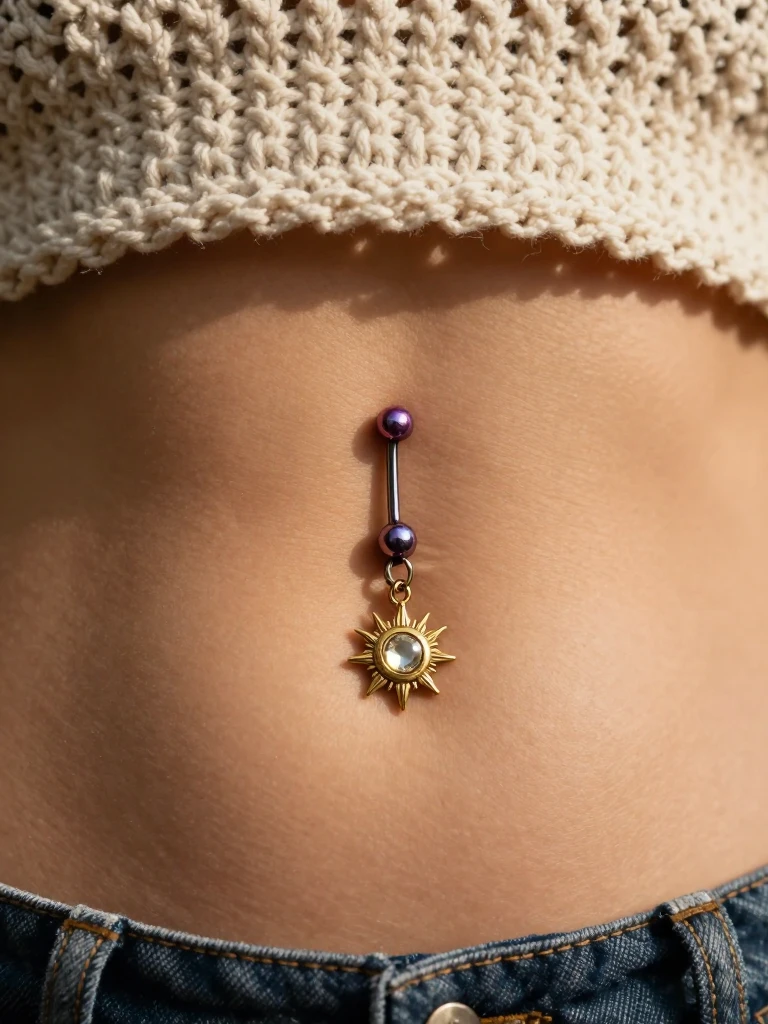
An ornate sun-shaped charm with a small central gem replaces the standard round bezel top piece, adding an intricate, almost jewelry-store level of detail rather than a plain stone. The etched rays catch light differently than a smooth gem does, giving the whole piece more visual texture at a glance. Detailed charms like this are more often mounted on externally threaded jewelry, since the exterior threading gives the piercer more surface to anchor the heavier design securely.
Ornate charm pieces like this tend to weigh slightly more than a simple bezel gem, so the same fresh-piercing caution applies: it’s a better second piece than a first one.
Tip
- Have your piercer weigh the finished charm before it goes in, since anything that feels heavier than a standard flush gem is worth reconsidering for a brand new piercing.
- Ask for the charm to be securely fixed rather than a spinning or loosely-set piece, since detailed metalwork like this can catch on fabric if it moves too freely.
- Choose this style once your reverse piercing is already healed and settled, then swap the jewelry in rather than starting fresh with the heavier design.
Styling Note
The intricate detail here reads best up close, so it’s a piece that rewards being shown off rather than one meant to disappear under clothing.
10. Black CZ Reverse Navel Piercing
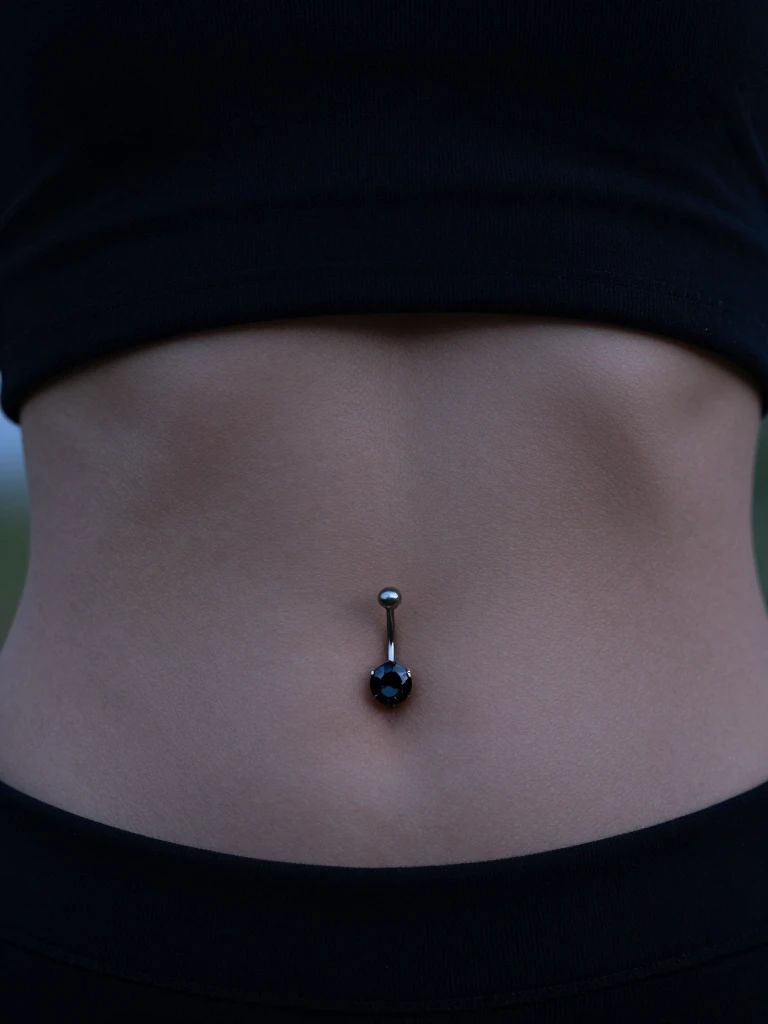
A black cubic zirconia stone set in dark titanium swaps the usual bright, colorful gem for something moodier and more graphic, which shifts the whole piece from delicate to edgy without changing the placement or shape at all. Against most skin tones, the contrast reads sharper and more deliberate than a clear stone would.
Dark anodized titanium is worth asking about by name here, since the black finish is created through a coating process rather than a naturally black metal, and that affects how the piece ages over time. Any dark, irritated bump that shows up around the jewelry rather than a normal piercing bump is worth having a piercer look at, since coated finishes can occasionally cause more visible irritation than plain titanium.
Tip
- Ask whether the black finish is anodized titanium or a black PVD coating, since the two hold up differently to friction and one will outlast the other with daily wear.
- Say this at consultation: “I want the darkest finish you have that won’t chip or fade with regular contact against clothing.”
- Skip a black finish entirely if you tend to be rough on jewelry day to day, since coated pieces show wear at the edges faster than solid-color titanium does.
Styling Note
This reads noticeably bolder than the other stone options on this list and pairs naturally with an all-black or monochrome outfit rather than something colorful.
11. Heart Dangle Reverse Navel Piercing

A small heart-shaped charm hangs from the top bezel gem, landing right at the top edge of the belly button, which gives this version a softer, more romantic feel than a plain gem or an abstract charm shape. The heart’s size relative to the belly button matters a lot here. Oversized hearts tend to look costume-like rather than delicate. Once healed, some people move the heart charm onto a reverse belly button ring instead of a barbell, which lets the dangle swing more freely than a fixed post allows.
Like the chain dangle style above, this adds weight and motion to the piercing, so it carries the same fresh-healing consideration as any dangling attachment.
Tip
- Ask your piercer to hold a few heart sizes up against your actual belly button before choosing, since the right proportion depends entirely on your specific anatomy.
- Request the heart in a smaller size than your first instinct. Most people find a subtler dangle actually reads as more intentional than a large one.
- Wait for full healing on the base piercing before switching to a dangling heart charm rather than starting with it, for the same reason chain dangles need settled tissue first.
- Avoid a heart with sharp points at the bottom tip, since a rounded design snags less on clothing over time.
Styling Note
This leans more delicate and romantic than most other entries here, and it tends to get chosen for a first navel piercing more often than the bolder styles on this list.
12. Double Stacked Reverse Navel Piercings
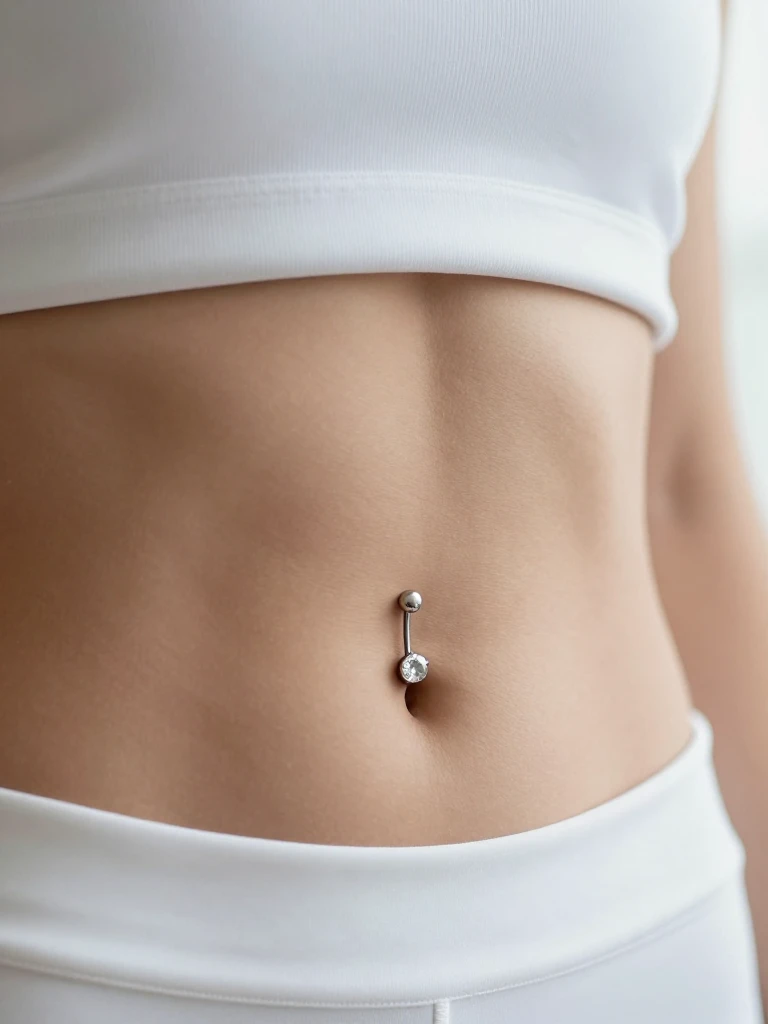
Two reverse piercings sit stacked vertically above the belly button rather than one, spaced a small but deliberate gap apart, so the eye reads them as a matched pair rather than a single accidental double. This is a different structural idea from the star charm double at the top of the list, since both pieces here sit above the navel rather than one above and one below.
Two piercings in close proximity means more total healing tissue in a small area, and most piercers recommend spacing the two sessions out rather than doing them the same day, which realistically stretches your total healing window to closer to six months before both feel fully settled. Solid navel piercing aftercare, saline rinses and avoiding tight waistbands, matters even more here since there’s twice the healing surface to protect.
Tip
- Ask your piercer to mark exact spacing between the two points before piercing either one, since even a few millimeters off throws the symmetry of a stacked look.
- Get the lower of the two stacked piercings done first, then let it heal before adding the second, since spacing sessions out reduces total irritation to the area.
- Choose matching but not identical jewelry for the two piercings, like the same metal in two slightly different stone sizes, so the stack looks curated rather than random.
- Don’t attempt this as your first navel piercing ever. It’s genuinely easier to gauge spacing and healing with one piercing as a reference before adding a second nearby. A longer piercer consultation up front, walking through spacing and healing order together, pays off more here than on any single piercing on this list.
Styling Note
This is one of the more advanced looks on the list, more visible and more of a commitment than a single reverse piercing, and it’s best suited to someone who already knows they like how their skin handles healing in this area.
See Also: 11 Belly Button Piercings Ideas for Females That Actually Stand Out
13. Vintage Filigree Reverse Navel Piercing
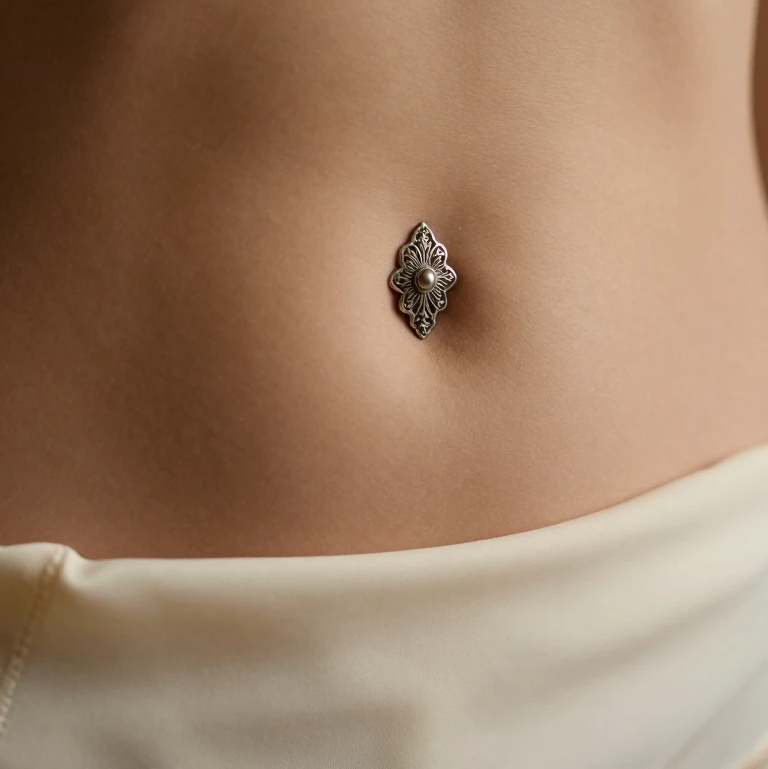
An engraved, lace-like metal top piece stands in for a plain bezel gem here, with a small central stone set into an antique-style filigree pattern rather than a smooth modern setting. The detailed metalwork gives this version a warmer, older-feeling look compared to the sleeker minimalist and boho options elsewhere on this list.
Like other detailed charm pieces, the finer metalwork adds a bit of weight over a flat gem, so this is generally a better choice to add in after your base piercing has already healed. If you’re researching how to do a reverse navel piercing yourself, this is a good example of why that’s worth leaving to a professional: a trained piercer uses a sterile hollow piercing needle rather than a piercing gun, which matters even more with fine, detailed jewelry like filigree that needs precise placement to sit symmetrically.
Tip
- Ask to see the filigree piece in person rather than choosing from a small catalog photo, since engraved detail is genuinely hard to judge accurately at a small scale online.
- Request a titanium filigree piece over a plated one specifically, since the fine detail in the engraving wears down faster on plated metal with regular friction.
- Have your piercer check that none of the engraved edges are sharp before it goes in, since intricate metalwork occasionally has small rough points that need smoothing.
Styling Note
The antique detail here photographs beautifully up close but is easy to miss from a distance, making it a piece that rewards someone actually looking rather than a bold statement from across a room.
Reverse Navel Piercing Healing and Aftercare Guide
A reverse navel piercing requires patience because the belly button area experiences constant movement from clothing, sitting positions, and daily activities. While the outside may appear healed after a few months, the internal piercing channel can continue strengthening for much longer.
Avoid Pressure From Tight Clothing
High-waisted jeans, tight leggings, and fitted waistbands can create repeated friction against the jewelry. During healing, choosing looser clothing and softer fabrics can reduce irritation and unnecessary pressure.
Do Not Change Jewelry Too Early
Decorative jewelry such as chains, heavy charms, and large gemstones should usually be introduced after the piercing has properly settled. Changing jewelry too soon can restart irritation and slow down the healing process.
Keep Cleaning Simple
A healthy piercing does not require excessive touching or rotating. Gentle cleaning with appropriate aftercare products and avoiding unnecessary movement helps protect the healing tissue.
Quick Comparison
| Style Name | Best Placement | Pain/Healing Level | Visibility |
|---|---|---|---|
| Moon Charm Double | Above and below navel | Moderate, longer overall | High |
| Minimalist Single Gem | Just above navel | Mild to moderate | Low |
| Birthstone Solitaire | Just above navel | Mild to moderate | Medium |
| Floating | Just above navel | Moderate, watch rejection | Very low |
| Titanium Matte | Just above navel | Mild to moderate | Low |
| Chain Dangle | Just above navel | Moderate once added | High |
| Opal | Just above navel | Mild to moderate | Medium |
| Rose Gold | Just above navel | Mild to moderate | Medium |
| Boho Sun Charm | Just above navel | Moderate once added | High |
| Black CZ | Just above navel | Mild to moderate | Medium |
| Heart Dangle | Just above navel | Moderate once added | Medium |
| Double Stacked | Above navel, two points | Higher, longer overall | High |
| Vintage Filigree | Just above navel | Moderate once added | Medium |
Frequently Asked Questions
What is a reverse navel piercing?
A reverse navel piercing sits above the belly button with the jewelry entering from the top and curving down, opposite to a traditional navel piercing, which sits below the belly button and curves up. The visual effect points the gem downward into the navel instead of up and away from it. It’s also sometimes called an inverse navel piercing, though “reverse” is the more common term you’ll see used at studios and on piercing menus.
Reverse navel piercing vs normal, what’s actually different?
The main difference is placement and how the jewelry sits. A traditional navel piercing exits below the belly button with the bead facing up, while a reverse navel piercing exits above it with the gem facing down into the navel itself. Many people choose reverse specifically because their upper navel rim is more pronounced than their lower one.
Does a reverse navel piercing hurt more than a normal one?
Most people report the reverse placement as slightly more tolerable than a standard lower navel piercing, since the skin at the top of the belly button tends to be thinner with less tissue underneath pulling on it. Individual pain tolerance still varies quite a bit from person to person.
How long does a reverse navel piercing take to heal?
Most reverse navel piercings take a few months to feel stable on the surface, with full internal healing commonly stretching to six months or longer. Adding dangling charms or a second piercing nearby generally extends that timeline further. Redness that lingers well past the expected window, or a bump that hardens rather than settles, can be early signs of keloid scarring and is worth a piercer’s opinion rather than waiting it out.
Can you get a reverse and a traditional navel piercing at the same time?
Yes, this is the double navel piercing look, with one piece above the belly button and one below it. Most piercers recommend spacing the two sessions apart rather than doing both in one sitting, since two piercings healing simultaneously in the same small area take longer to settle.
The Takeaway
A reverse navel piercing is a placement where jewelry choice and anatomy work together. For beginners, a simple titanium curved barbell or lightweight gemstone is usually the safest starting point because it allows the piercing to heal without unnecessary pressure.
Once the piercing has fully settled, you can explore more expressive styles such as chains, charms, birthstones, and stacked reverse navel combinations. The best design is not only the one that looks attractive but also the one that fits naturally with your body and everyday lifestyle.