Dermal piercing for men has evolved from a bold alternative style into a more refined form of personal expression. Unlike traditional piercings that use an entry and exit point, dermal piercings use a small anchor placed beneath the skin with a visible decorative top. This creates a clean, single-point jewelry effect that can be customized across different areas of the body.
From subtle placements behind the ear to stronger statement looks on the cheekbone, chest, jawline, or arms, dermal piercings allow men to choose exactly how visible they want their style to be. The final result depends on placement, anatomy, jewelry choice, lifestyle, and the overall aesthetic you want to create.
This guide explores modern dermal piercing ideas for men, including minimal designs, symmetrical layouts, hidden placements, and bold statement styles. Each idea focuses on placement purpose, styling direction, and what makes the design visually unique
1. Collarbone Dermal Piercing Men Love for a Subtle Statement
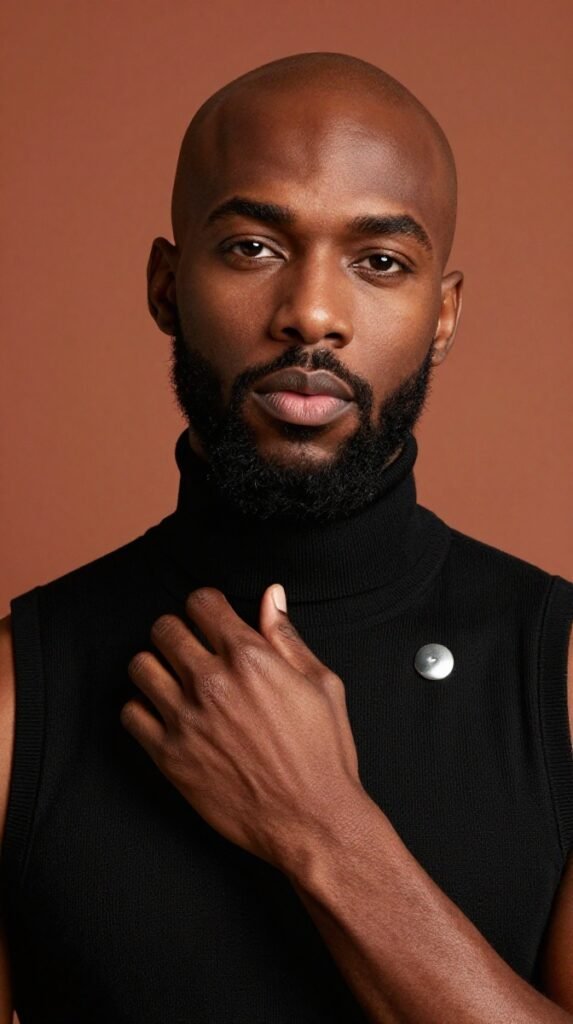
A single dermal anchor placed just above the collarbone, fitted with a flat disc top, is one of the most requested placements for men who want something visible but not loud. The flat top catches light without drawing constant attention, and it sits well against most necklines, including crew necks and open collars. This spot works because the collarbone itself provides a naturally flat surface, which makes the piercing sit evenly rather than at an angle.
Men gravitating toward this style tend to want a piece that reads as polished rather than edgy. It pairs cleanly with a simple silver chain or can be left completely on its own for a more minimal look. The single-point placement, sometimes called a microdermal or single-post anchor, also means it doesn’t compete visually with tattoos or other piercings nearby.
Tip
Ask your piercer specifically for a “low collarbone dermal, centered” so they can measure symmetry against your sternum before marking the spot.
Placement Note
This is a moderately visible placement — covered by most collared shirts but exposed by anything with a lower or open neckline, and it’s commonly paired with a second dermal a few inches away for a subtle line effect.
2. Cheekbone Dermal Piercing With a Gemstone Top

The cheekbone dermal has become a signature look for men wanting something that reads as bold facial jewelry without a traditional facial piercing like a septum or eyebrow ring. A small gemstone top, usually clear or a single dark stone, sits directly on the highest point of the cheekbone, sometimes called the malar area in piercing terminology. The placement draws the eye upward toward the face in a way that changes the entire framing of a photo or in-person look.
This idea works particularly well for men who already keep a clean-shaven or short-beard look, since there’s less visual competition from facial hair. It’s also a popular choice among men referencing looks they’ve seen shared as dermal piercing men reddit favorites, where the cheekbone placement consistently ranks as one of the most-discussed single-point piercings.
Tip
Request a “single point, high cheekbone, symmetrical to under-eye center” description so the piercer can gauge exact placement relative to your bone structure.
Placement Note
This is a highly visible, near-permanent facial placement — it’s rarely covered by anything and is almost always the focal point of the face, so it’s worth sitting with the idea before committing.
3. Double Dermal Piercing Men Choose to Frame the Sternum
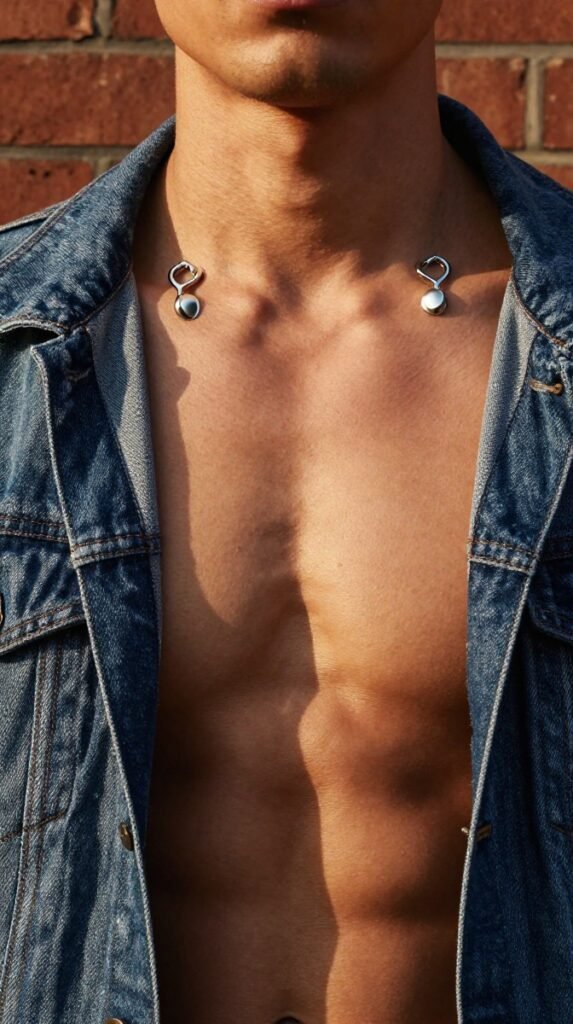
Two dermals placed symmetrically on either side of the upper sternum create a framing effect that many men use to draw attention to the chest without needing a large tattoo. Unlike a single central piece, this paired approach gives a sense of intentional design, almost like a subtle chest accessory. The dermals are typically spaced two to three inches apart and sit at the same height, following a mirrored or symmetrical layout piercers often reference as a base template.
This look tends to appeal to men who already have some upper-body ink and want the piercings to complement rather than compete with existing artwork. The paired symmetry also photographs well shirtless or with an open button-down, which is part of why it’s frequently searched alongside double dermal piercing men inspiration boards.
Tip
Bring a photo reference showing the exact spacing you want, since even half an inch of difference changes the framing effect significantly.
Placement Note
Fully hidden under a t-shirt, this pairing is a statement piece for shirtless settings, beach days, or open collars, and it’s often chosen by men who want something that feels private and reveal-only.
4. Nape Dermal Cluster of Three
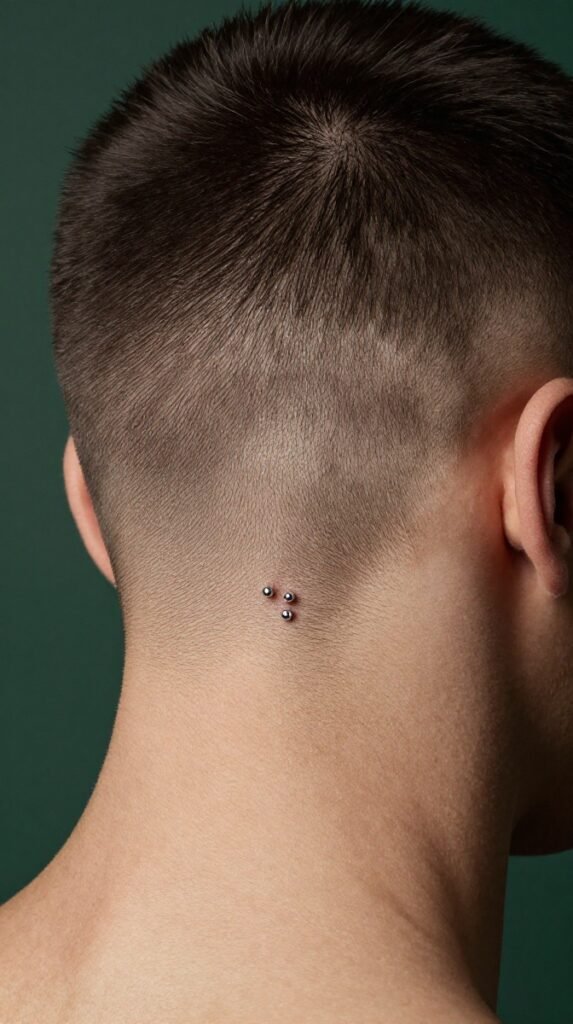
Rather than a single dermal, this idea groups three small anchors in a subtle triangle or straight line at the nape of the neck, just below the hairline. It’s a placement that stays completely hidden with regular hair length but becomes a striking detail with a fade, undercut, or shorter cut. The cluster format, a layout style sometimes called a scatter set, gives more visual interest than a single point without needing a large surface area.
This works well for men who want a piercing that feels more personal than public, since it’s only seen by choice — a haircut, a turned head, or an intentional reveal. The triangle formation is currently the most requested layout, though a straight three-in-a-row line is a close second in popularity.
Tip
Describe the layout as “small triangle, dime-sized spread, centered on the nape” so the piercer can mark all three points before starting.
Placement Note
This is a low-visibility placement by default, fully covered by hair, and it’s often paired with an undercut specifically so the cluster becomes visible on demand.
5. Wrist Dermal Line for a Minimalist Look
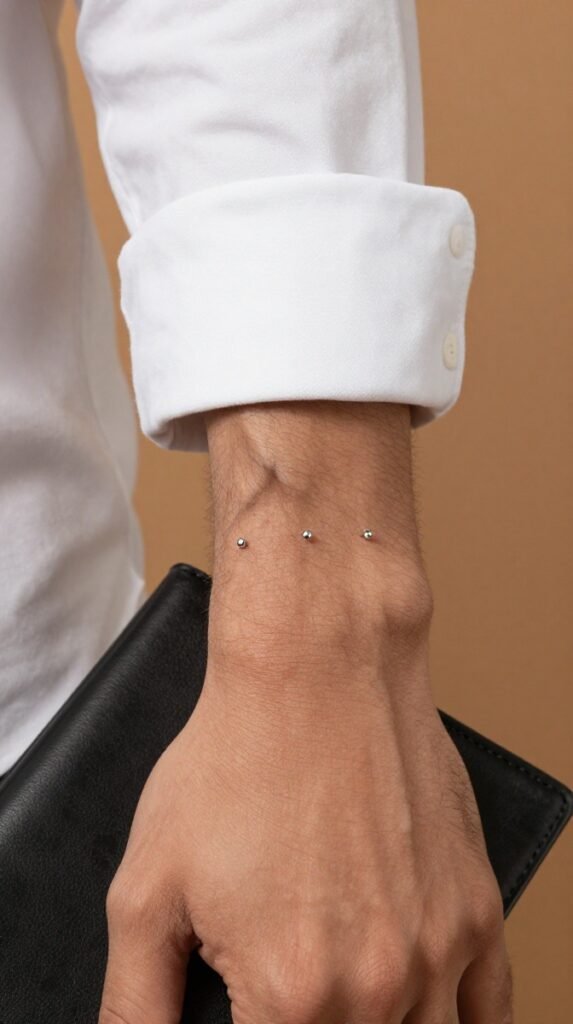
A short, straight line of two to three small dermals along the inner or outer wrist has become a go-to for men who want a piercing that reads more like fine jewelry than traditional body modification. Each anchor is spaced evenly, usually a quarter-inch apart, running parallel to the wrist bone in what’s often called a linear array. The overall effect resembles a delicate bracelet made of skin-level jewelry.
This idea suits men already wearing minimalist rings or a simple watch, since the aesthetic language matches. It also tends to be one of the more approachable entry points for someone piercing-curious but not ready for a facial or chest placement.
Tip
Ask for “wrist line dermals, quarter-inch spacing, following the bone” to keep the line looking intentional rather than scattered.
Placement Note
This placement sits at a medium visibility level — easily seen in short sleeves or with the arm extended, but simple to keep low-key under a long sleeve or watch strap.
Visit Blog
6. Temple Dermal With a Flush Silver Setting
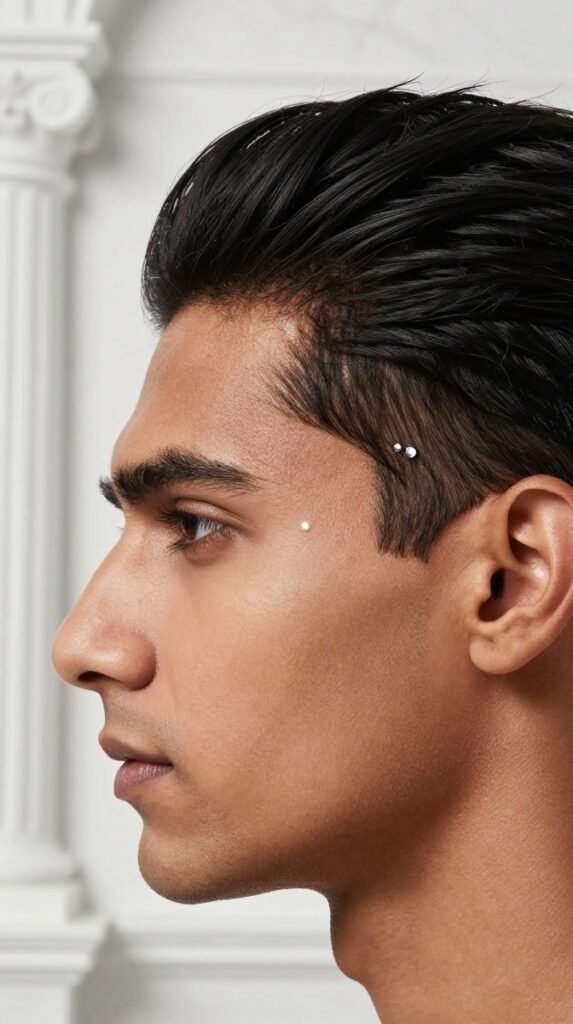
Placed at the temple, just beside the hairline, a single dermal with a flush silver setting creates a subtle architectural line along the side of the face. Unlike the cheekbone placement, the temple sits closer to the hair, which means it can be partially framed or partially revealed depending on how the hair is styled. The flush setting, a low-profile mounting style, keeps the profile low, avoiding a look that catches on glasses or hats.
This idea is popular with men who wear their hair short on the sides but longer on top, since the piercing peeks through when the hair is pushed back or styled up. It gives a sharper, more geometric feel to the face compared to the rounded look of a cheekbone dermal.
Tip
Ask specifically for “flush-set temple dermal, close to hairline” if you wear glasses regularly, so the piercer can account for the arm of your frames.
Placement Note
Visibility shifts with hairstyle here — nearly hidden with hair down, fully visible when pushed back or buzzed short, making it a flexible option for men who like to change their reveal level.
7. Back Dermal Piercing Constellation Along the Spine
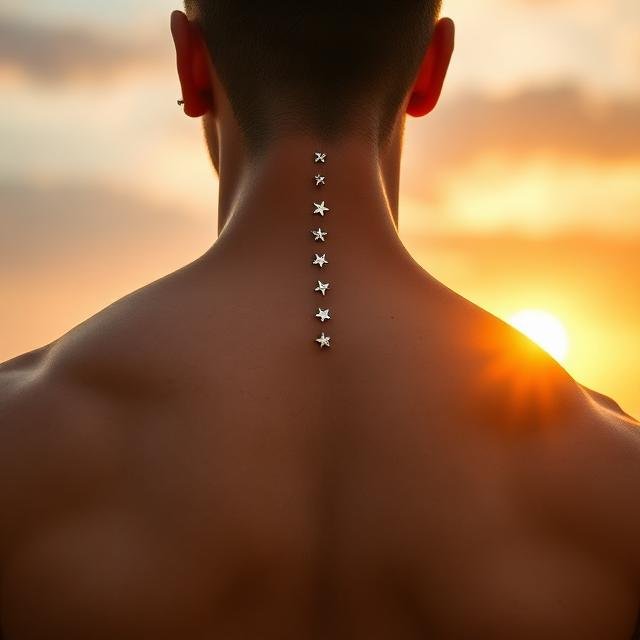
A scattered cluster of small dermals following the natural curve of the upper spine creates what’s often called a constellation effect — irregular in spacing but intentional in overall shape. This differs from a straight line piercing by embracing asymmetry, with anchors placed to mimic a star pattern rather than a grid. It’s one of the more artistic takes within dermal piercing back placements for men, and it draws on the same freeform layout logic used in scatter-style ear piercings.
This look works especially well layered with an existing back tattoo, since the dermals can trace the negative space around the ink rather than sitting on top of it. Men who want a piece that feels custom rather than templated tend to gravitate here, since no two constellation layouts look quite the same.
Tip
Bring reference images of constellations or star patterns you like, and let the piercer adapt the spacing to your actual back shape and existing ink.
Placement Note
This is a reveal-only placement, invisible under any shirt, and typically shown off only at the beach, pool, or in shirtless photography.
8. Hip Dermal Duo Following the V-Line
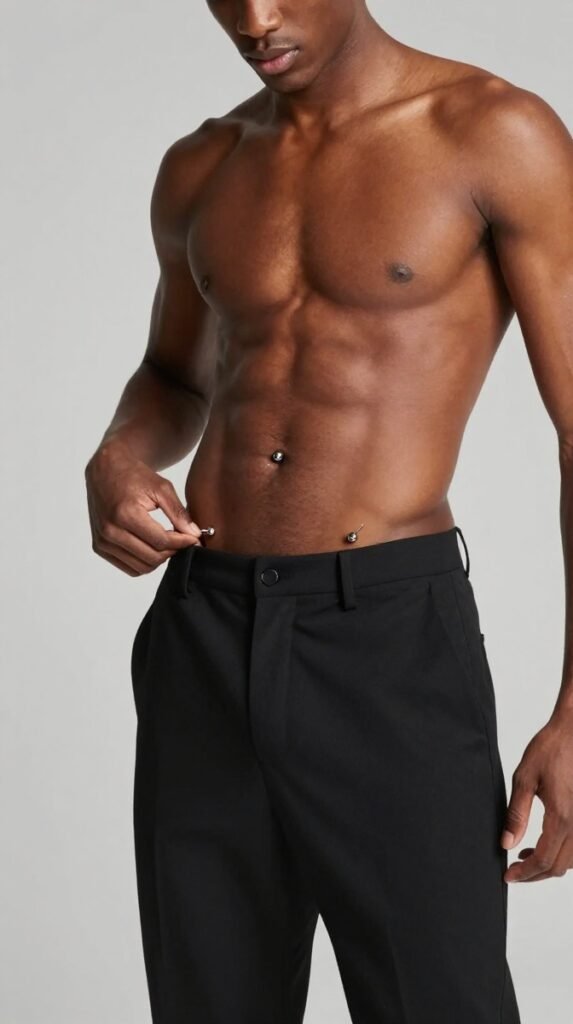
Two dermals placed along the natural V-line where the hip meets the lower abdomen create a subtle directional accent that draws the eye downward. This placement is distinct from chest or back dermals because it follows a muscular line rather than a bone structure, giving it a different visual logic entirely. The two points are usually spaced a few inches apart, following the angle of the V rather than a straight horizontal or vertical line, a layout approach sometimes called anatomical tracking.
This idea tends to appeal to men who want a piece that highlights that physique without needing a large tattoo. It’s a placement that photographs well specifically in shirtless or swimwear settings, making it a favorite for warm-weather reveals.
Tip
Ask for “hip dermal pair, following the V, angled not straight” so the piercer follows your natural muscle line instead of a generic diagonal.
Placement Note
Entirely hidden under regular clothing, this pairing is a swimwear and shirtless-specific placement, rarely seen outside of intentional reveal moments.
9. Behind-the-Ear Dermal With a Micro Stud
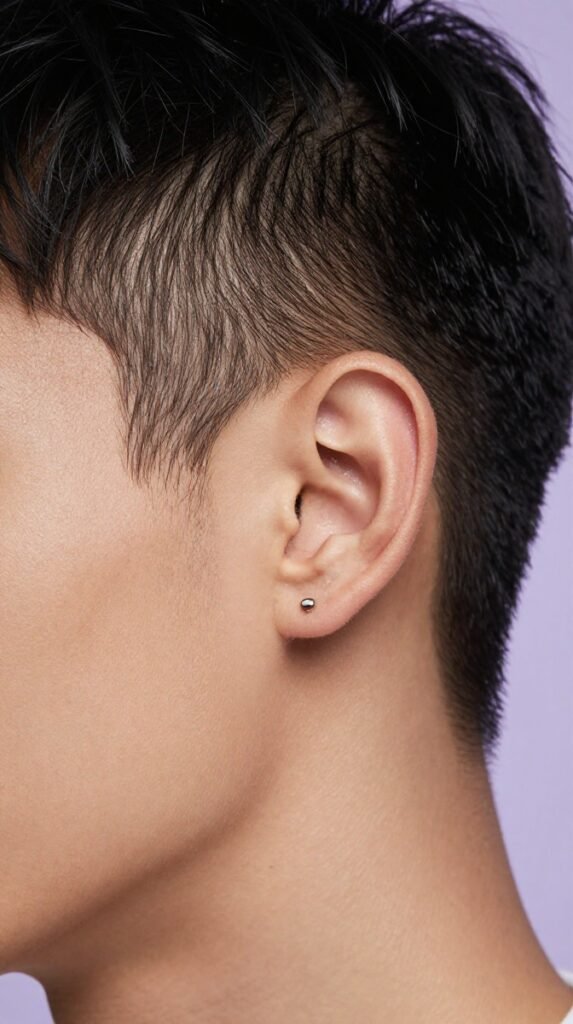
A tiny dermal placed just behind the ear, close to where the ear meets the scalp, offers one of the most discreet options on this list. The micro stud top is barely raised, giving a look that’s almost like a freckle of jewelry rather than a statement piece. This spot is anatomically forgiving for most head shapes, since the skin behind the ear is relatively flat and stable, making it a common starter placement in dermal anchoring.
This idea suits men who want to test out dermal piercing without a bold visual commitment, or who work in environments where facial or neck piercings aren’t practical. It’s often the first dermal men choose before moving on to bigger placements like the chest or back.
Tip
Request the smallest available flat-top stud specifically for this spot, since anything larger can look bulky given how little space there is behind the ear.
Placement Note
This placement is nearly invisible with any hair covering the ears, and only becomes noticeable with very short hair or when hair is tucked back.
10. Sternum Center Dermal With a Black Onyx Top
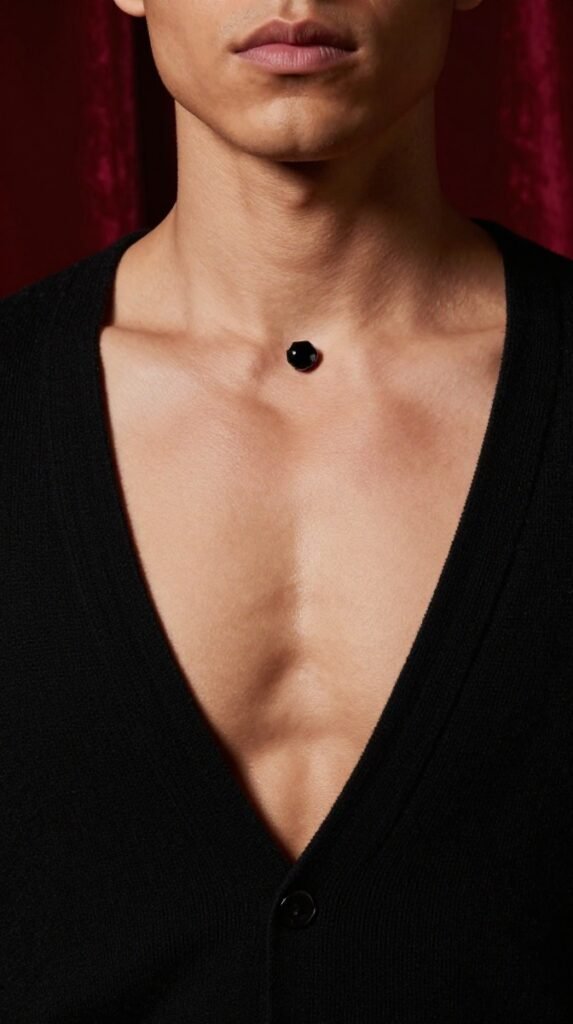
A single, centered dermal at the sternum with a black onyx top offers a bolder alternative to the paired chest dermals mentioned earlier. Instead of framing the chest with two points, this design commits to one strong focal point directly in the middle, often positioned an inch or two below the collarbones. The dark stone contrasts against most skin tones, giving it a more graphic, high-contrast look compared to a clear or silver top, a styling choice piercers sometimes call a solitaire setting.
This works well for men who want a single statement piece rather than a paired or clustered design, and it tends to look best on its own without additional chest piercings nearby. It’s a more minimal chest option in terms of piece count, even though the visual impact is strong.
Tip
Ask for “centered sternum dermal, one inch below the collarbone line, dark stone top” to keep the placement and color choice clear from the start.
Placement Note
Like other chest dermals, this is a reveal-specific placement, generally hidden by shirts and most visible shirtless, at the pool, or with an open jacket.
11. Forearm Dermal Trio in a Diagonal Line
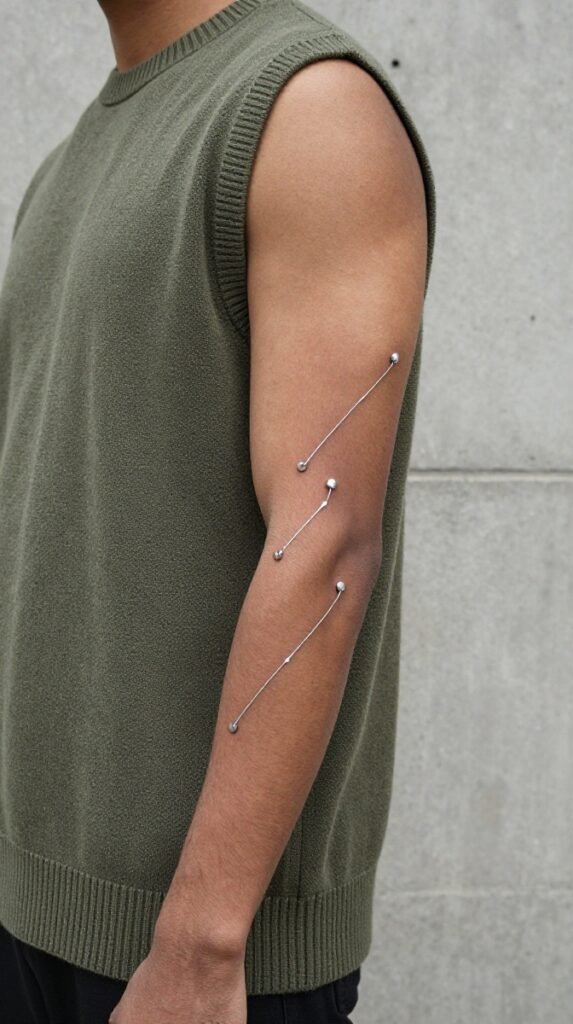
Three dermals arranged in a diagonal line along the outer forearm create a different geometry than the straight wrist line covered earlier — the diagonal angle gives it a more dynamic, in-motion feel rather than a static bracelet look. Spacing is usually wider than the wrist line, often half an inch to an inch between each point, running from the outer wrist toward the elbow in what’s sometimes called a directional array. This placement gives more room to work with than the wrist, allowing for a longer visual line.
This idea is a strong option for men who already have forearm tattoos and want the dermals to interact with existing linework, following or crossing an existing design. On bare skin, it also works as a standalone piece that adds texture to an otherwise plain forearm.
Tip
Ask for “diagonal three-point forearm line, evenly spaced” and bring a photo if you want it to intersect with an existing tattoo.
Placement Note
This is a highly visible placement in short sleeves and fully covered with long sleeves, making it easy to switch between subtle and bold depending on your outfit.
12. Jawline Dermal Along the Mandible
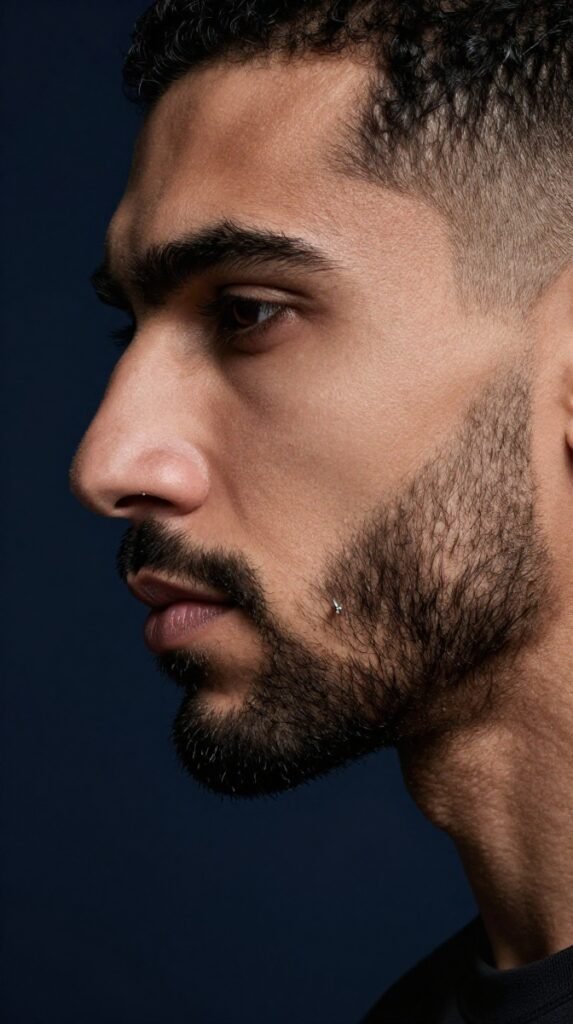
A single dermal placed along the jawline, following the mandible bone rather than sitting on the cheek, gives a sharper, more angular accent to the face. This differs from the cheekbone placement by sitting lower and closer to the jaw’s edge, which tends to emphasize bone structure rather than draw attention to the eyes. It’s typically placed where the jawline is most defined, a few inches back from the chin, along what piercers often call the mandibular ridge.
This look is especially popular among men with a strong or square jaw shape, since the piercing follows and highlights that natural angle. It also works well alongside a short beard, since the piercing sits along the jaw rather than in the middle of a full beard area.
Tip
Ask your piercer to mark the spot while your jaw is clenched, so they can find the most defined point of the bone before placing the anchor.
Placement Note
This is a highly visible facial placement, generally unaffected by facial hair length, and it reads as a bold, near-permanent facial accent similar to the cheekbone option.
13. Shoulder Blade Dermal Pair Mirroring Tattoo Wings
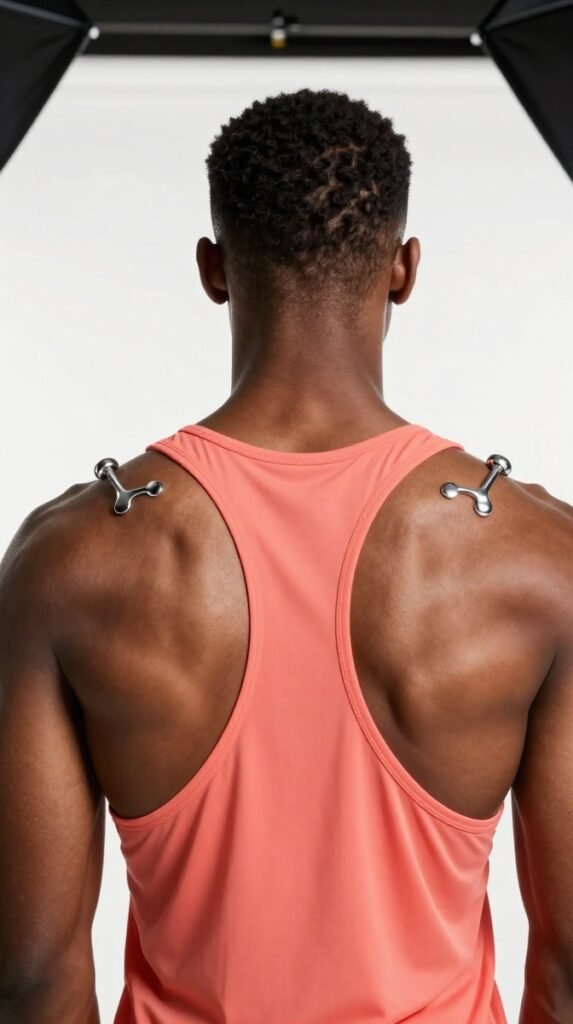
Two dermals placed symmetrically on the upper shoulder blades, positioned to mirror or accent an existing back tattoo, offer a different back option than the spine constellation covered earlier. Rather than following the spine’s centerline, this placement sits laterally, one on each scapula, often used to punctuate the top edge of a larger tattoo piece. The symmetry here is more architectural than the scattered constellation style.
This idea works particularly well for men with wing, angel, or large symmetrical back tattoos, since the dermals act almost like a finishing touch or highlight rather than a standalone piece. Without a tattoo, it also works as a clean, symmetrical back accent on its own.
Tip
If you have an existing back tattoo, bring photos so the piercer can match the exact symmetry points to your design before marking anything.
Placement Note
Fully hidden under clothing, this placement is another reveal-only option, most visible shirtless, swimming, or in tank tops during warmer months.
14. Chest-to-Collarbone Ascending Dermal Line
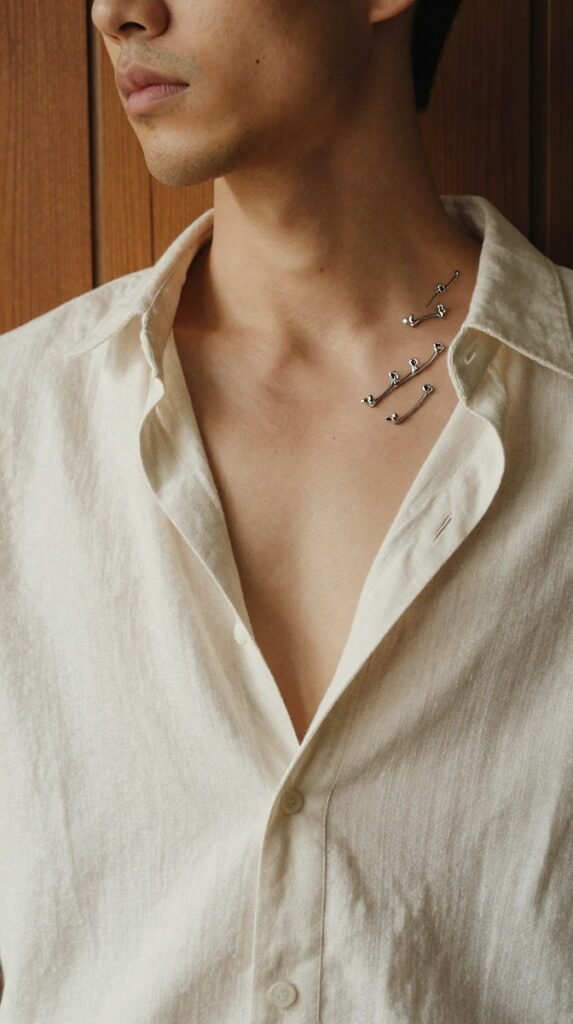
An ascending line of three or four dermals running from the upper chest up toward the collarbone creates a directional, almost architectural line distinct from the horizontal chest pairing or the centered sternum piece. Unlike those flatter layouts, this design moves diagonally, drawing the eye upward and outward toward the shoulder in a graduated formation. Spacing typically increases slightly as the line ascends, giving it a subtle sense of motion.
This works well for men who want a more graphic, editorial-style piercing rather than a simple pair or single point, and it tends to look most balanced on a broader chest and shoulder frame. It’s a more involved placement in terms of piece count, so it usually gets planned out fully before the first session.
Tip
Ask for a “three-to-four point ascending line from chest to collarbone” and request the piercer sketch the line on your skin first so you can approve the angle.
Placement Note
This is a reveal-specific placement like the other chest options, invisible under most clothing and most visible shirtless or with a deep V-neck.
15. Ankle Dermal Pair Above the Anklebone
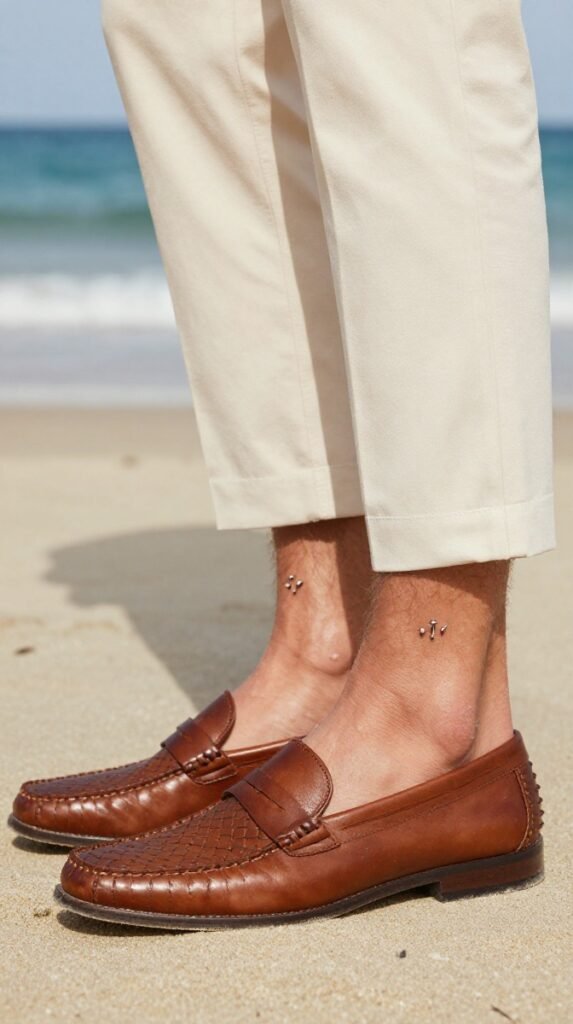
A pair of small dermals placed just above the anklebone offers a placement option entirely below the waist that hasn’t been covered by any idea above. The two points sit close together, usually within an inch of each other, following the curve just above where the ankle widens. This gives a subtle accent that’s rarely seen on men compared to the more common chest or facial placements.
This idea suits men who spend a lot of time in shorts, at the beach, or in settings where ankle jewelry would naturally be visible, giving the piece regular opportunities to be seen without needing a deliberate reveal. It’s a quieter placement overall, often chosen by men who want something personal rather than attention-grabbing.
Tip
Ask for “close-set ankle pair, just above the bone, not on top of it” to avoid placement directly on a joint area that sees a lot of movement.
Placement Note
This placement is visible in shorts, sandals, or swimwear, and fully covered by regular pants, socks, or shoes.
16. Upper Back Neck Single Dermal With a Titanium Top
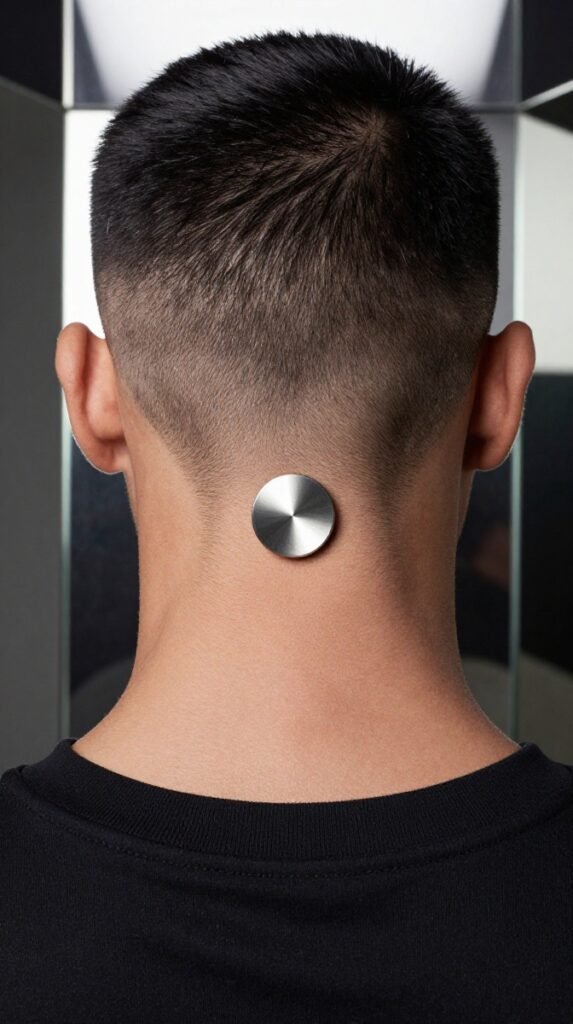
A single dermal placed at the base of the neck, just above where the shoulders meet, offers a different back-area option than the nape cluster or shoulder blade pair covered earlier. This spot sits lower and more centered than the nape cluster, and a titanium top gives it a subtle, almost industrial finish compared to a gemstone or onyx top. It’s a single-point piece rather than a cluster or pair, keeping the design simple.
This look works well for men with shorter haircuts or fades, since the piece stays visible without needing hair moved out of the way, unlike the nape cluster which relies on hair length for its reveal. It also pairs well with collared shirts, since the placement sits just at or below where most collars land.
Tip
Ask for “base of neck, centered, titanium flat top” to keep the material and placement distinct from other neck or nape piercings.
Placement Note
This placement sits at a medium visibility level depending on collar style and haircut, often visible with shorter hair and increasingly hidden as hair grows out.
17. Bicep Dermal Line Wrapping the Outer Arm
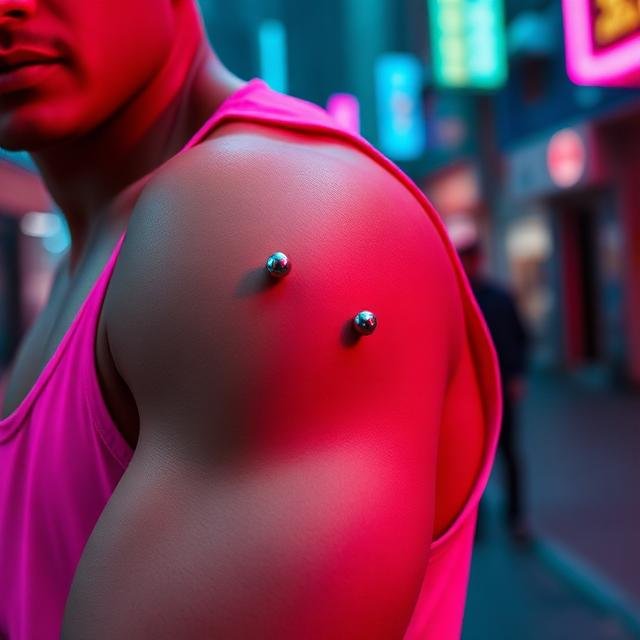
A curved line of three to four dermals wrapping partially around the outer bicep offers a more three-dimensional placement than the flat forearm or wrist lines covered earlier. Rather than sitting on a flat plane, this design follows the natural curve of the muscle in what’s sometimes called a contour-wrap layout, which means the piercer has to account for how the anchors will sit as the arm moves and flexes. The wrap effect gives a sense of the piercing following the body’s shape rather than sitting on top of it.
This idea is a strong fit for men who want the piercing to emphasize a defined bicep, and it tends to look most intentional when the spacing follows the muscle’s natural curve rather than a straight geometric line. It’s a more advanced placement conversation, since curvature and movement both factor into planning.
Tip
Ask your piercer to mark the points while your arm is both relaxed and flexed, so the spacing still looks correct in both positions.
Placement Note
This is a highly visible placement in short sleeves or tank tops, and completely covered by long sleeves, giving it strong flexibility between bold and low-key depending on your outfit.
Popular Dermal Piercing Placements For Men
Dermal piercings can be placed in different areas depending on how visible or expressive you want the final look to be.
Facial Dermal Piercings
Popular examples include:
- Cheekbone
- Temple
- Jawline
- Behind the ear
These placements create stronger facial definition and are usually chosen by men who want a noticeable style element.
Chest And Collarbone Dermal Piercings
Chest placements are often chosen for a more private style. They remain hidden under clothing but become visible with open shirts, beachwear, or fitness looks.
Arm And Wrist Dermal Piercings
Arm placements create a jewelry-like effect and work well with watches, rings, and tattoos.
Back And Neck Dermal Piercings
These are usually reveal-based placements that allow more creative designs, including clusters, lines, and symmetrical layouts
Dermal Piercing Healing And Long-Term Factors
Dermal piercings require patience because the anchor sits beneath the skin rather than passing completely through tissue. Healing time varies depending on placement, individual response, and how much movement or pressure the area experiences.
Important factors include:
Avoid Pressure And Friction
Areas exposed to clothing friction, sleeping pressure, or repeated movement may require extra attention.
Choose Jewelry Carefully
Low-profile jewelry reduces catching and keeps the design cleaner.
Professional Assessment Matters
A professional piercer should evaluate anatomy before choosing placement because not every area is suitable for a dermal anchor.
Dermals Are Not Always Permanent
Dermal piercings can change over time because the body may gradually move or reject the anchor depending on placement and individual healing.
Frequently Asked Questions
What is a dermal piercing for men?
A dermal piercing is a single-point piercing where an anchor sits beneath the skin and holds a decorative jewelry top. Men often choose dermals for areas like the face, chest, neck, and arms.
Are dermal piercings permanent?
Dermal piercings are designed to last long-term, but they are not guaranteed to remain forever. Placement, aftercare, and individual skin response affect how long they last.
Do dermal piercings leave scars?
Some people may experience a small mark after removal. The appearance depends on placement, healing, and how the piercing was removed.
Which dermal piercing placement looks best on men?
The best placement depends on personal style. Cheekbone and jawline placements create bold facial looks, while collarbone, chest, and wrist placements offer more subtle styling.
Are dermal piercings good for first-time piercings?
Some people choose dermals as their first piercing, but understanding placement, healing, and maintenance is important before deciding.
How do I choose a dermal piercing near me?
Look for a professional piercer with experience in dermal anchors, strong portfolio examples, and clear information about placement and jewelry options.
Final Thoughts
Dermal piercing for men offers one of the most customizable ways to wear body jewelry. The strongest designs are not always the biggest or most noticeable. They are the ones where placement, jewelry size, and personal style work together.
A small titanium stud behind the ear can create the same intentional effect as a bold cheekbone or chest placement when it matches the person wearing it. Before choosing a design, consider your lifestyle, visibility preference, and the type of look you want to create.
Whether you prefer a minimal single point, a symmetrical pair, or a creative dermal arrangement, the right placement can turn a simple piece of jewelry into a signature style detail