An easy Viking hairstyle is a modern look built on small braids, texture, and hair kept off the face. These 10 ideas are for women who want that bold, practical feel without a complicated routine or a haircut, and each one works for everyday wear, not only costume days.
Direct evidence for how Norse women styled their hair is thin. A small figurine from Harby, Denmark shows a knotted, pulled-back ponytail, which suggests bound hair was normal, while the shaved side look comes largely from television. These are modern Viking inspired styles, not historical replicas.
Where to start: begin with Idea 1, which uses only two small side braids, so you learn tension and finish before trying a crown or fishtail. Very fine, freshly washed hair can slip, so texture and small elastics matter more than speed.
1. Half-Up Double Side Braids

This is the simplest entry point in the set: two small braids on each side, gathered half-up, with the rest of the hair left in loose waves. It reads as Viking because of the side braids, and it stays soft because the length is not pulled tight.
How small should the braids be?
Keep each braid about finger width. Wider braids can look like a standard school style, while very thin braids can disappear into waves.
Where should they join?
Gather them at the back of the crown, not at the nape. A crown join keeps the front braids visible from the side, which is the whole point of the style.
For more braid-first shapes, see these cute braid hairstyles that use the same small braid logic in softer finishes.
2. Dutch Crown Braid

A Dutch crown braid runs around the head like a band, with the braid sitting on top of the hair rather than inside it. It is the most polished idea here, and it suits workdays when loose hair would get in the way.
What if your hair is not very long?
Braid only to the ear on each side, then pin the tails flat under the crown. The crown shape matters more than one long, continuous braid.
- Start above one ear and braid toward the other side.
- Keep tension even, so the crown does not dip at the back.
- Pin the tail under the braid, not on top of it.
3. Two Rope Twists for Easy Viking Hairstyles

If braiding feels slow, try rope twists instead. Twist two strands in one direction, then twist them together in the opposite direction, and the twist locks itself. Two front twists give a Viking feel in a few minutes, with no three strand braiding at all.
Why do rope twists hold?
The opposite twist directions create friction, so the twist resists unravelling. If a twist loosens, it usually means both strands were twisted the same way.
4. Side Fishtail with Face-Framing Braids

This idea pairs a loose side fishtail with two tiny braids near the face. The fishtail gives texture, while the small braids add the Viking detail without a full head of braids.
How do you keep a fishtail from looking messy?
Work with small outer strands and keep the fishtail over one shoulder, so the pattern stays visible. A fishtail worn down the back can hide its own texture.
Should the face braids be tight?
Yes, at the top only. Tight roots keep the detail in place, while looser ends keep the face soft.
5. Low Braided Bun with Side Accents

A low bun becomes Viking with two changes: small braids on each side leading into the bun, and a slightly textured finish instead of a sleek one. It is the best idea here for long days, because the bun sits at the nape and does not pull.
For other low bun shapes that pair well with braids, see these low bun hairstyles and adapt the bun height to your own day.
What keeps the bun from slipping?
Pin in an X shape, with two pins crossing, rather than pushing pins straight in. Crossed pins grip more hair with less bulk.
6. Bubble Ponytail with Mini Braids
A bubble ponytail is a high ponytail divided by elastics, with each section gently pulled out to form a bubble. Two mini braids at the front give it the Viking edge, while the bubbles give volume without backcombing the whole head.
How many bubbles work best?
Three or four bubbles suit most lengths. More bubbles can shorten the look, because each section takes up length.
- Space the elastics evenly, so no bubble looks squashed.
- Pull each bubble out a little, not a lot, to keep the shape even.
- Hide the front elastics under the mini braids where you can.
7. Half-Up Fishtail Crown
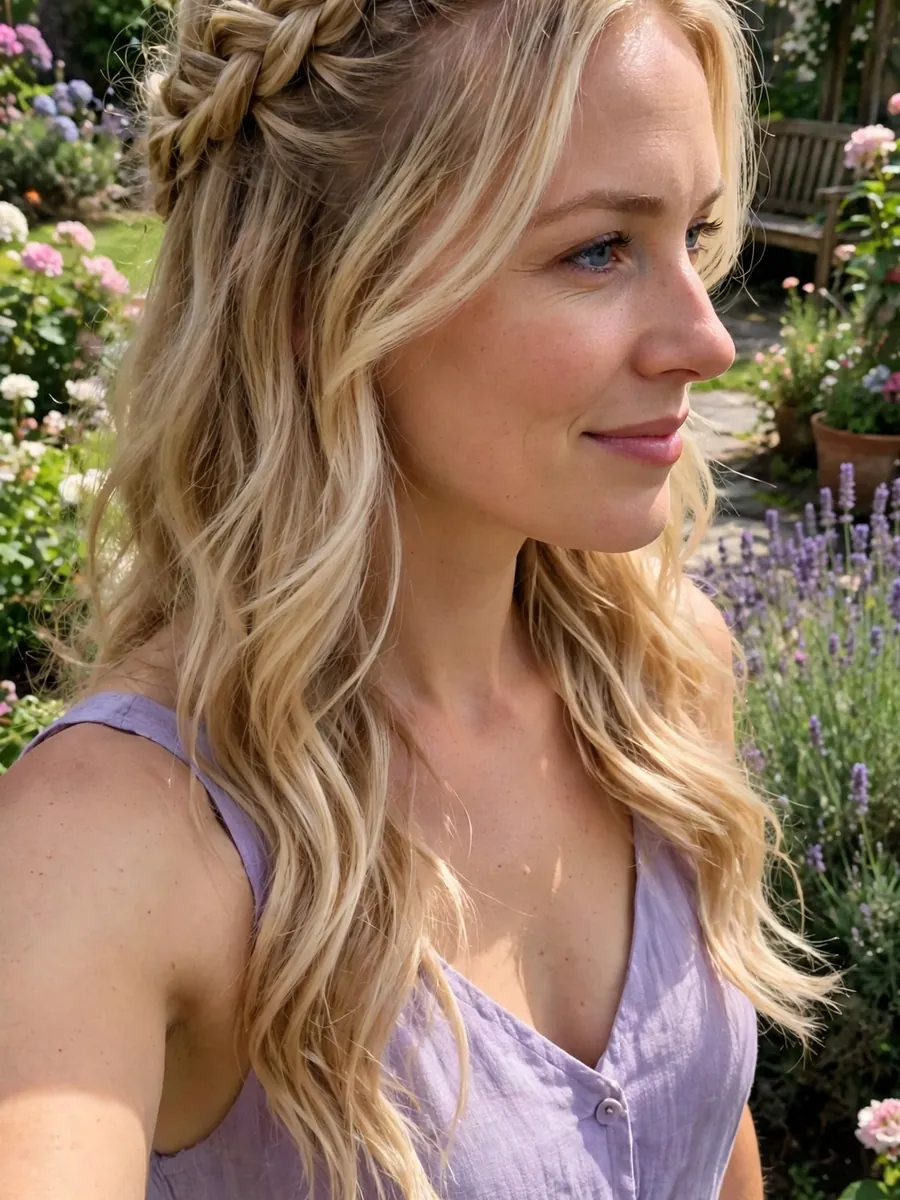
This style uses a short fishtail across the crown, joined at the back, with the rest of the hair loose. It is softer than a full crown braid and faster than a full fishtail, which makes it a good middle step if Idea 2 felt too involved.
Where should the fishtail start and stop?
Start above one temple and stop above the other, then join the tails. A fishtail that runs too far down the back stops reading as a crown.
Half-up shapes like this also appear in half-up half-down hairstyles, where the same join point changes a casual style into a dressed up one.
8. Twin French Braids into a Low Ponytail
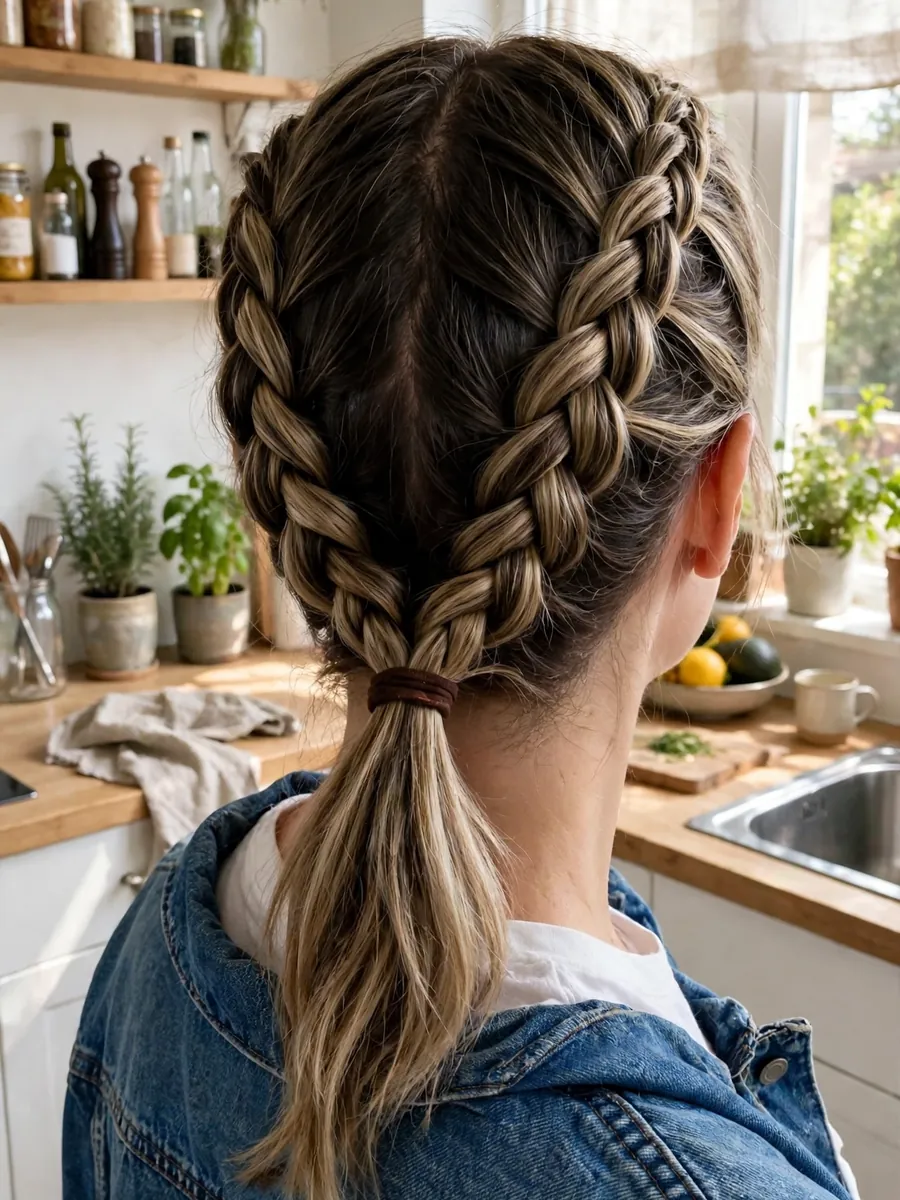
Twin French braids down each side, joined into one low ponytail, give the most secure style in this collection. It keeps hair fully off the face and neck, which suits workouts, cooking, and windy days.
How do you keep the part straight?
Part with the tail of a comb, not with fingers, and braid each side immediately after parting it. A part that drifts in the middle makes the twin braids look uneven from behind.
9. Messy Top Knot with Temple Braids

A messy top knot with two small braids at the temples is the fastest bold option here. The knot gives height, the braids give direction, and the messy finish means small imperfections read as texture rather than mistakes.
What if the knot looks too neat?
Pull a few short pieces loose around the knot, but leave the temple braids tight. Contrast between a loose knot and tight braids is what makes the style look deliberate. For another bold, everyday hairstyle with braids and waves, see these pirate hairstyles.
10. Loose Waves with a Braided Headband

For days when you want almost no styling, braid one thin section across the crown like a headband and leave the rest in loose waves. The single braid does all the Viking work, and the waves keep the look soft and everyday.
How do you hide the braid ends?
Pin each end behind the ear, under the waves. Ends left hanging at the sides can look like stray braids rather than a headband.
Easy Viking Hairstyles Tutorial
This tutorial makes the signature look from Idea 1: two small side braids gathered half-up, with loose waves below. You need only a brush, a comb, small elastics, and bobby pins. No heat tools are required, and the whole style takes about ten minutes once you know the steps.
Tutorial Step 1: Brush and Add Texture
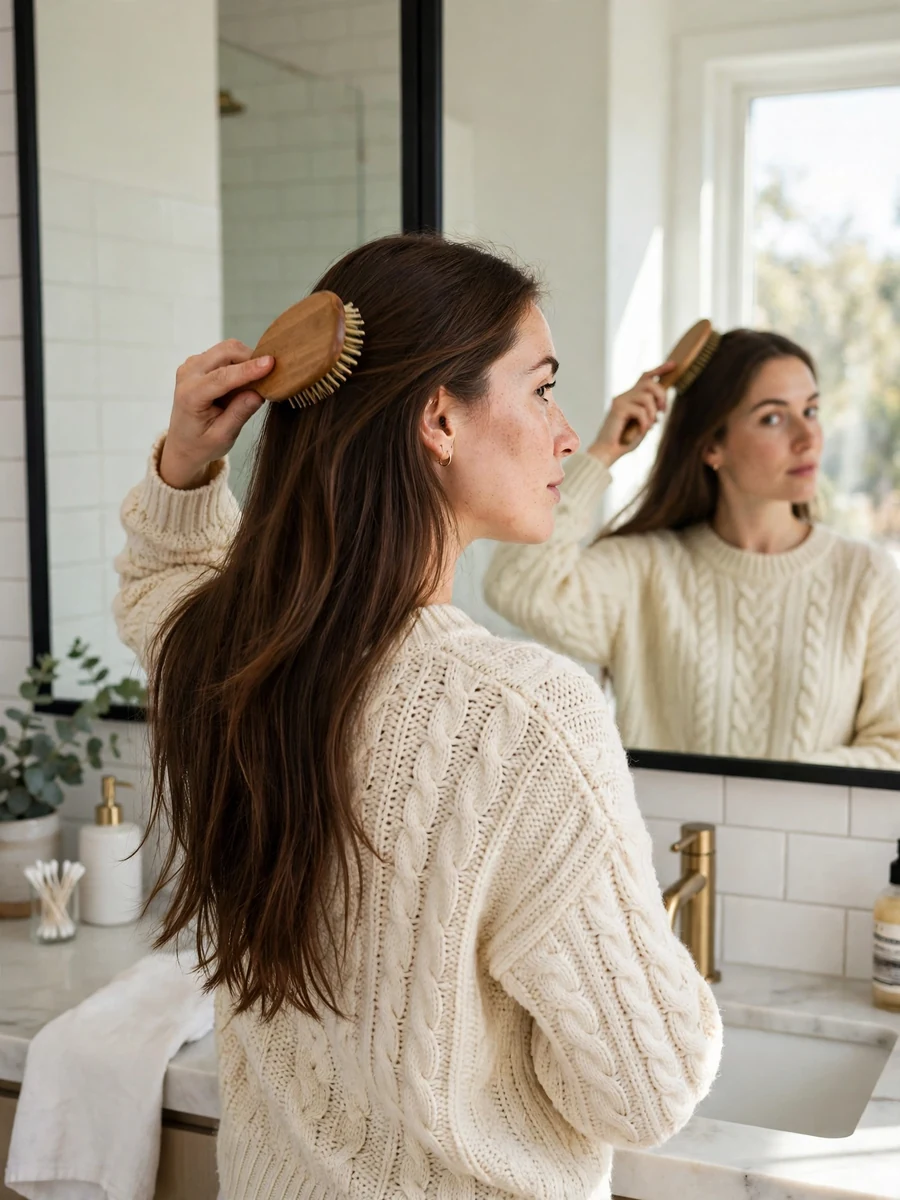
Brush the hair smooth, then add light texture if the hair is very fine or freshly washed. Second day hair often holds braids better, because it has natural grip. Work in small sections and keep the brush strokes gentle, so the hair stays smooth rather than fluffy.
Tutorial Step 2: Part and Section the Sides

Part the hair down the centre with a comb. On each side, take a small section near the temple, about finger width, and clip the rest of the hair back. Small sections braid more cleanly than wide ones, and they are easier to join later.
Tutorial Step 3: Braid the First Side
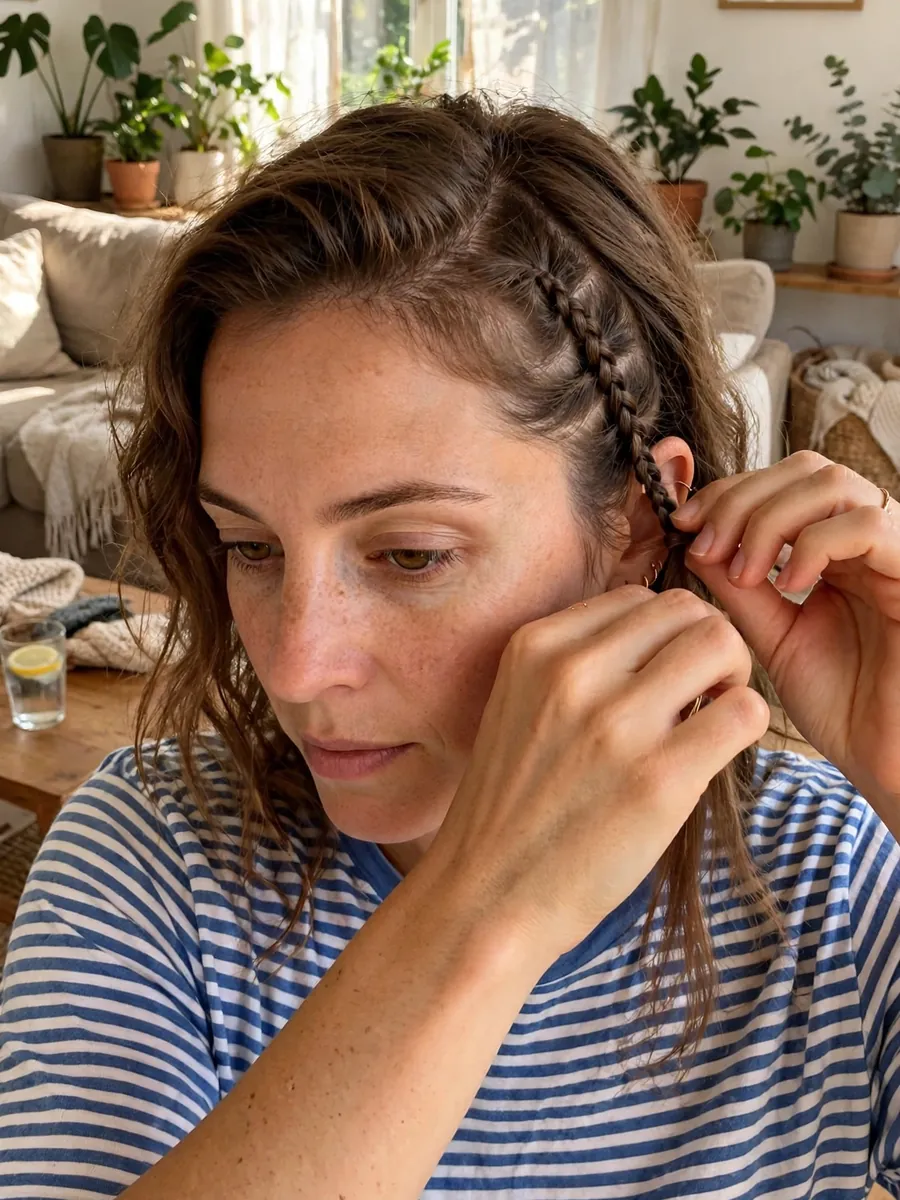
Braid the first side section in a simple three strand braid, keeping the first few crosses tight against the head. Braid to about halfway down the length, then secure with a small elastic. Do not braid to the very ends yet, because the tails will be gathered in Step 5.
Tutorial Step 4: Repeat on the Other Side

Repeat the same braid on the other side, matching the width and the tightness of the first one. Check both braids in a mirror from the side: matching braids look planned, while one tight and one loose braid can look unfinished.
Tutorial Step 5: Gather Half-Up and Secure
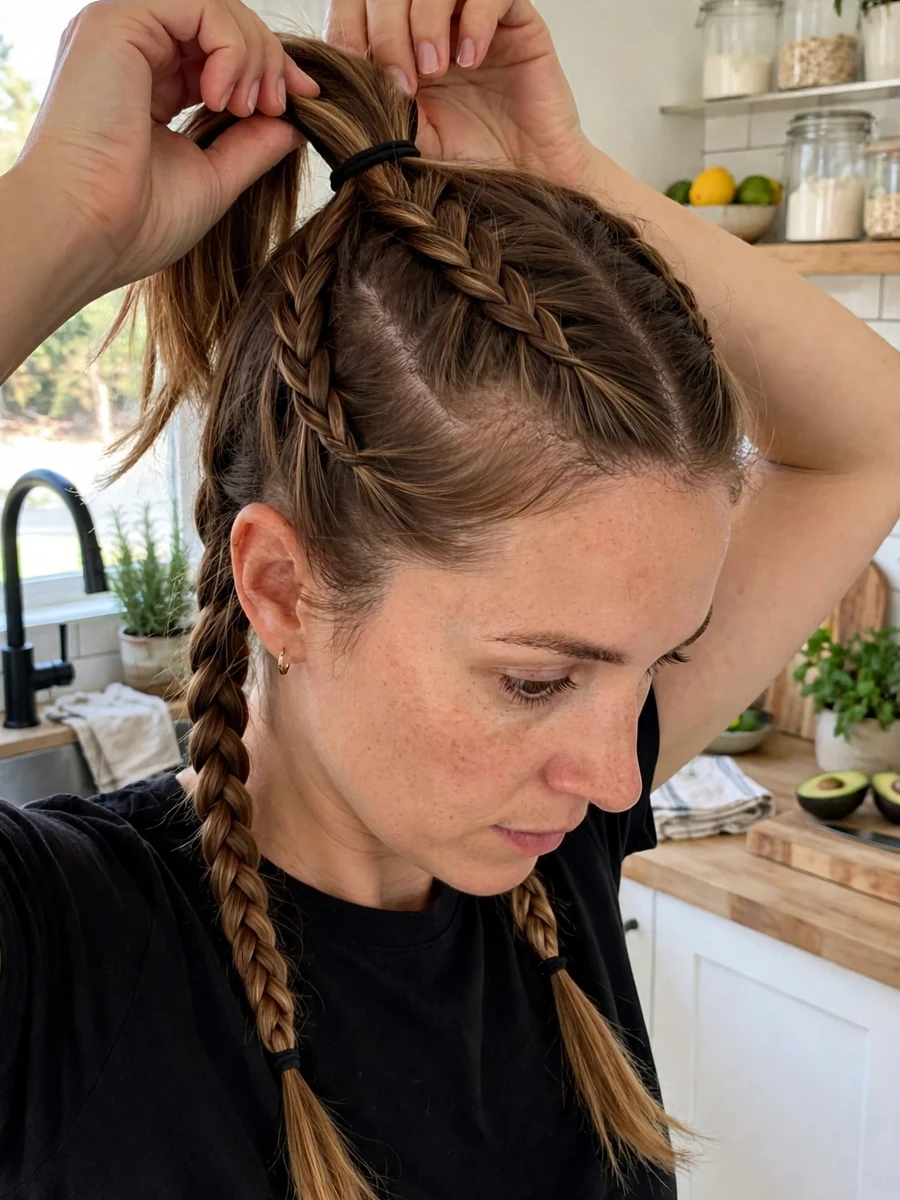
Gather both braids plus a small section of top hair at the back of the crown and secure with a hair tie. Leave the rest of the hair loose. Pin any braid tails that stick out, and tuck the hair tie under a small wrapped section if you want a cleaner finish.
Tutorial Step 6: Loosen and Finish

Gently pull the edges of each braid outward, a little at a time, to soften the braids and add fullness. Leave the waves loose, check the join from the side, and add one or two bobby pins only where a braid lifts. Stop while the style still looks soft: over loosening can undo the braid pattern.
How to Choose
Start with time, not just the photo. A crown braid suits a calm morning, while temple braids and a top knot suit a rushed one. Think about hold: how much movement your day involves, how much hair you want off your face, and whether you want room to restyle later without starting again.
- Choose a small braid style, such as Ideas 1, 3, or 10, if you want a first Viking look with low commitment.
- Choose a medium braid style, such as Ideas 2, 4, or 7, if you want the reference to be clear without a full head of braids.
- Choose a fully secured style, such as Ideas 5 or 8, if you need hair to stay put all day.
- Match the finish to the day: loose waves for soft days, tight roots for active days.
If you like bold, character inspired styling in general, the same restraint applies in Nesta Archeron tattoo ideas, where one clear motif carries the design better than several crowded ones.
Mistakes to Avoid
- Starting with a full crown braid. A crown braid is a good goal, but it is a hard first braid. Learn side braids first, then build up.
- Braiding freshly washed, very fine hair with no texture. Slippery hair unravels faster, so texture or second day hair helps.
- Making every braid the same width. Mixed widths look more Viking than uniform braids, because contrast is part of the style.
- Pulling everything tight. Tight roots are useful, but tight ends and tight waves can look stiff and uncomfortable.
- Treating a TV style as a historical fact. These are modern inspired looks, so present them as styling choices, not as exact Viking history.
Designs Compared
| Design | Best For and Effort | Style Note |
|---|---|---|
| Half-up double side braids | Beginners, everyday, quick | Two small side braids, loose waves |
| Dutch crown braid | Workdays, polished finish, medium | Braid sits on top, full crown shape |
| Two rope twists | Beginners, fast mornings, quick | No three strand braiding needed |
| Side fishtail with face braids | Soft days, medium effort | Loose fishtail, tiny face braids |
| Low braided bun | Long days, secure, medium | Side braids leading into a nape bun |
| Bubble ponytail with mini braids | Volume, playful days, quick | Bubbles plus tiny front braids |
| Half-up fishtail crown | Middle step, soft finish, medium | Short fishtail crown, loose length |
| Twin French braids, low ponytail | Active days, secure, medium | Two French braids, one ponytail |
| Messy top knot, temple braids | Rushed days, bold, quick | Loose knot, tight temple braids |
| Loose waves, braided headband | Minimal styling, soft days, quick | One thin crown braid, loose waves |
FAQ
Are easy viking hairstyles suitable for short hair?
Some are, with adjustment. Temple braids, a braided headband, and small side braids work on shorter lengths, because they use small sections. Full crown braids and long fishtails need more length, so they suit medium to long hair better.
Do easy viking hairstyles need an undercut?
No. Tight side braids create a similar visual contrast without a haircut. An undercut is a separate styling choice, not a requirement for any idea in this collection.
How long do these braids usually hold?
Hold varies with hair type, texture, and activity, so no fixed result can be promised. Small elastics, crossed pins, and textured hair generally help a style last longer through a normal day.
Can I wear a Viking braid to work?
Yes, if you choose a tidy version. A Dutch crown, a low braided bun, or twin French braids read as neat and practical, while looser, messier versions suit casual days better.
Conclusion
Beyond choosing one style, it helps to think about which braid skill you want to build next. Side braids lead naturally to crown braids, rope twists lead to fishtails, and a low bun leads to more secure updos. Keeping one style as your reliable default, and one as your next step to practise, makes Viking styling a habit rather than a one off experiment. The strongest result is often the simplest one repeated well: a small braid, placed cleanly, that you can do without a mirror check every hour.