An industrial piercing is different from many other ear piercings because the jewelry does not simply sit in one place. It connects two separate cartilage points and turns them into one complete visual design. The bar, chain, or decorative piece becomes part of the ear’s overall composition.
While the traditional industrial piercing uses a straight metal bar between two upper ear points, modern styles have expanded into many different interpretations. Some designs focus on clean minimalism, while others use chains, charms, mixed metals, or unique shapes to create a completely different personality.
The important thing about industrial piercing is that the design choice cannot be separated from the ear itself. The same jewelry can look completely different depending on placement, spacing, and the natural structure of the ear. This is why choosing an industrial style is less about following a trend and more about finding a design that works with your individual ear shape and personal style.
Understanding the Industrial Piercing Structure
Unlike a standard cartilage piercing, an industrial piercing creates a relationship between two locations. The jewelry must connect both points correctly so the final result appears balanced rather than forced.
The classic industrial style usually uses a straight barbell connecting the upper helix areas of the ear, creating the recognizable diagonal line associated with this piercing. However, modern variations have changed how the style can look, allowing softer, darker, elegant, or more artistic interpretations.
The structure itself is what makes industrial piercing unique. A hoop can highlight one area of the ear, but an industrial bar creates a visual path across the ear.
Choosing an Industrial Piercing Style
The right industrial piercing style depends on the feeling someone wants the ear design to create.
A plain bar gives a sharp and minimal appearance, while decorative pieces can make the piercing feel more expressive. Some people prefer the industrial piercing to be the main feature of their ear, while others use it as one part of a larger jewelry arrangement.
Before selecting a design, consider:
The visual weight of the jewelry: Larger details attract more attention, while thinner designs create a quieter effect.
The relationship with existing piercings: An industrial bar should work with the rest of the ear instead of making every piece compete.
The overall style direction: Minimal, romantic, alternative, and statement designs create completely different impressions even with the same placement.
1. Fine Chain Industrial Piercing With a Single Accent Charm
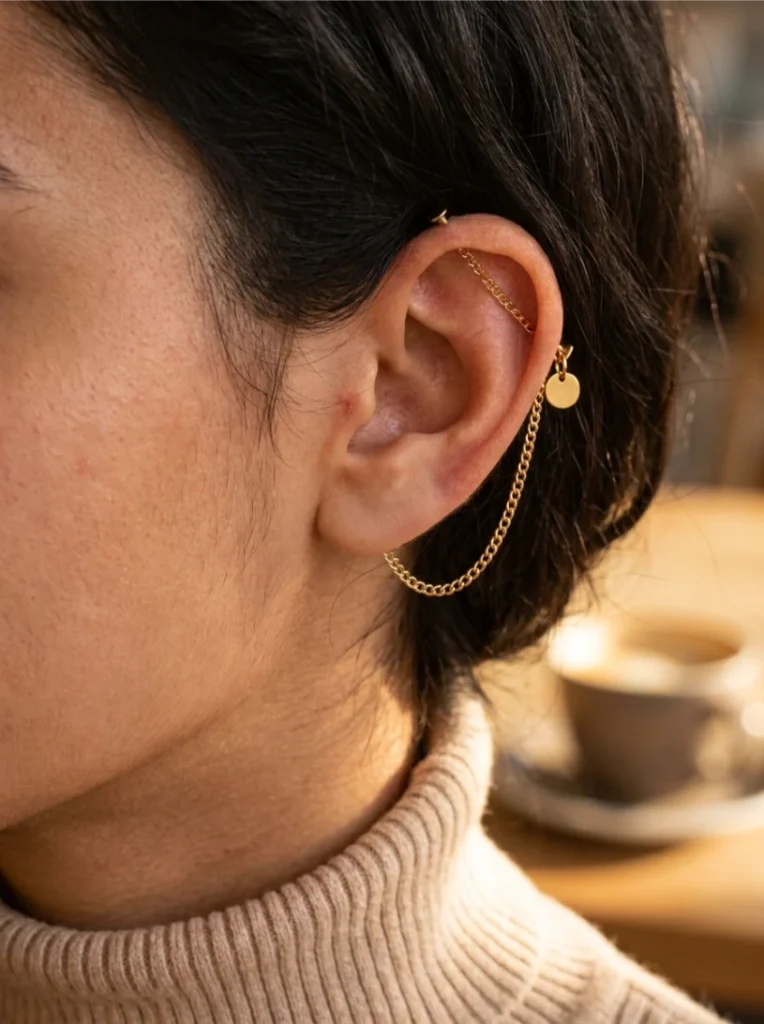
A fine chain industrial piercing changes the personality of the classic design completely. Instead of the strong geometric appearance created by a traditional bar, the chain introduces movement, softness, and a more jewelry-focused look.
The small accent charm becomes the visual detail that catches attention, while the chain keeps the connection between both piercing points visible. This creates a balance between the structured nature of an industrial piercing and the delicate appearance of fine jewelry.
This design works especially well for people who like the idea of an industrial piercing but want something less bold than a solid metal bar. The chain creates a lighter appearance and allows the ear to feel more decorative without losing the identity of the piercing.
The main consideration with this style is that the chain becomes part of the movement of the ear. A loose chain can create a softer look, but it also requires more attention because it interacts differently with hair, clothing, and daily activities.
2. Sleek Single Bar Industrial Piercing With No Embellishment
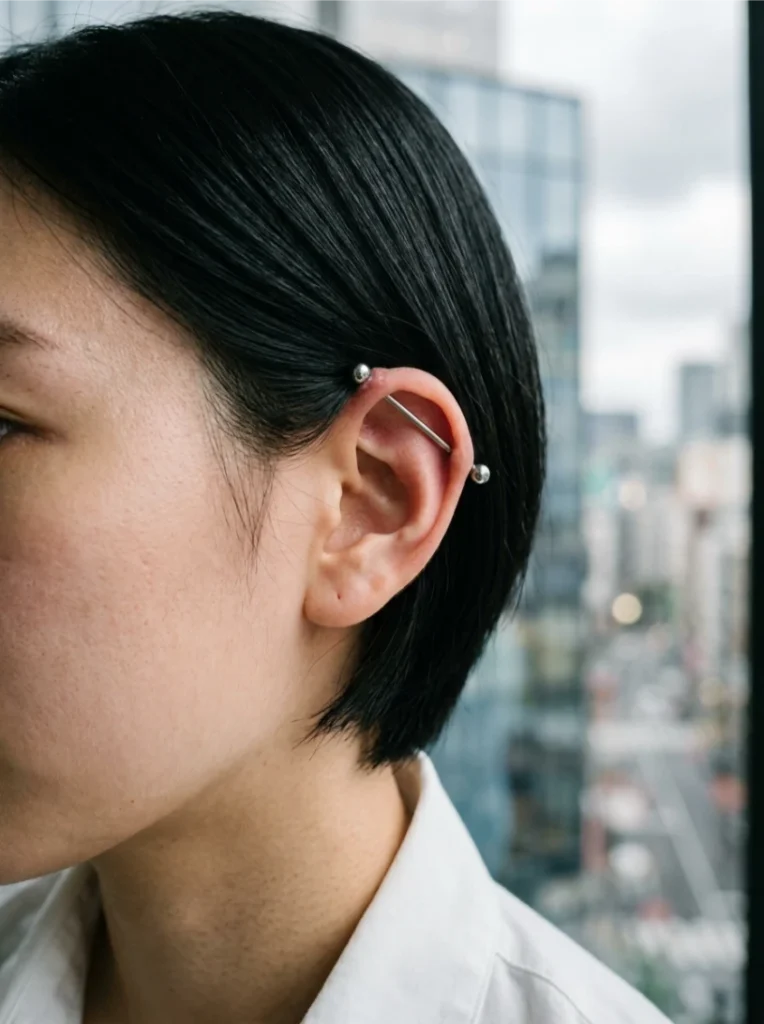
The classic single bar industrial piercing remains popular because it allows the structure of the piercing itself to become the focus.
Without charms, stones, or additional decoration, this style creates a clean architectural line across the ear. The simplicity makes it one of the most recognizable industrial looks and allows it to pair easily with other ear jewelry.
This design shows why industrial piercing does not always need extra details to stand out. The connection between the two points already creates enough visual interest.
A simple bar is often chosen by people who prefer a timeless appearance because it does not depend on a specific trend or decorative style. The result is a more balanced ear design where the shape of the piercing becomes the statement.
3. Butterfly Cluster Industrial Piercing
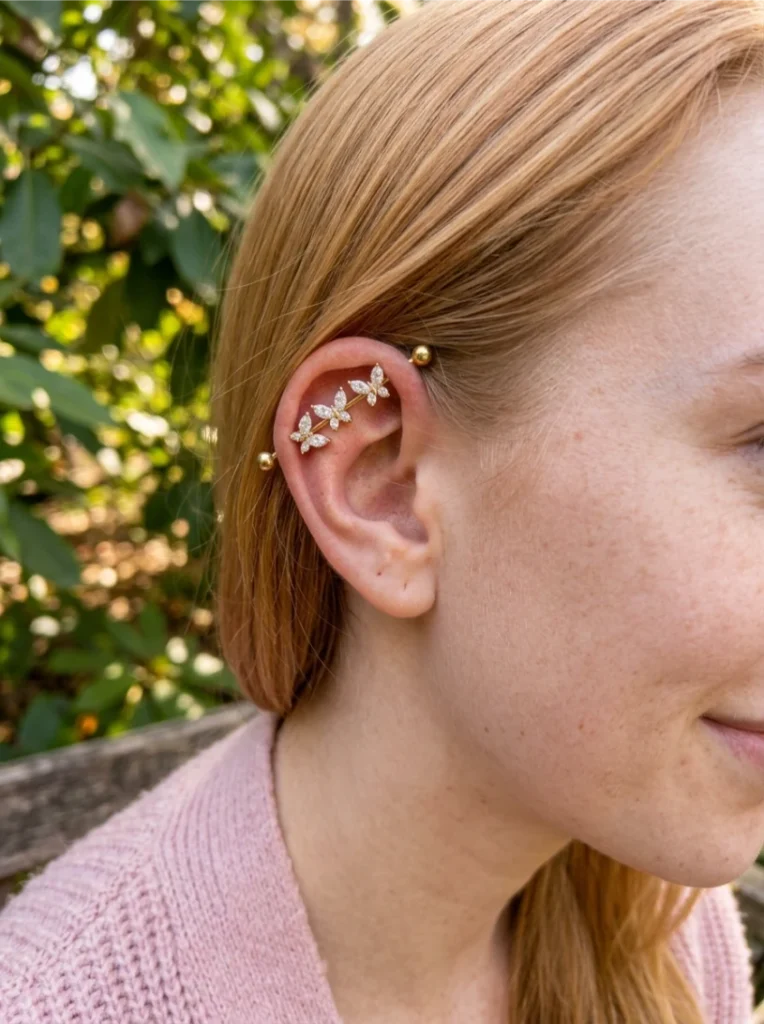
The butterfly cluster industrial piercing adds a softer artistic element to a style that is usually known for its sharper appearance.
Instead of focusing only on the straight line created by the bar, this design introduces small decorative butterfly details that change the mood of the entire piercing. The result feels more playful and expressive while keeping the industrial structure underneath.
The success of this style depends on proportion. Small details can create an elegant effect, while oversized decorations can make the ear design feel visually crowded.
This option works best for someone who wants their industrial piercing to feel more personal rather than purely minimal. The butterfly element transforms the piercing from a simple metal connection into a piece of wearable design.
4. Pavé Bar Industrial Piercing With a Detachable Drop Chain
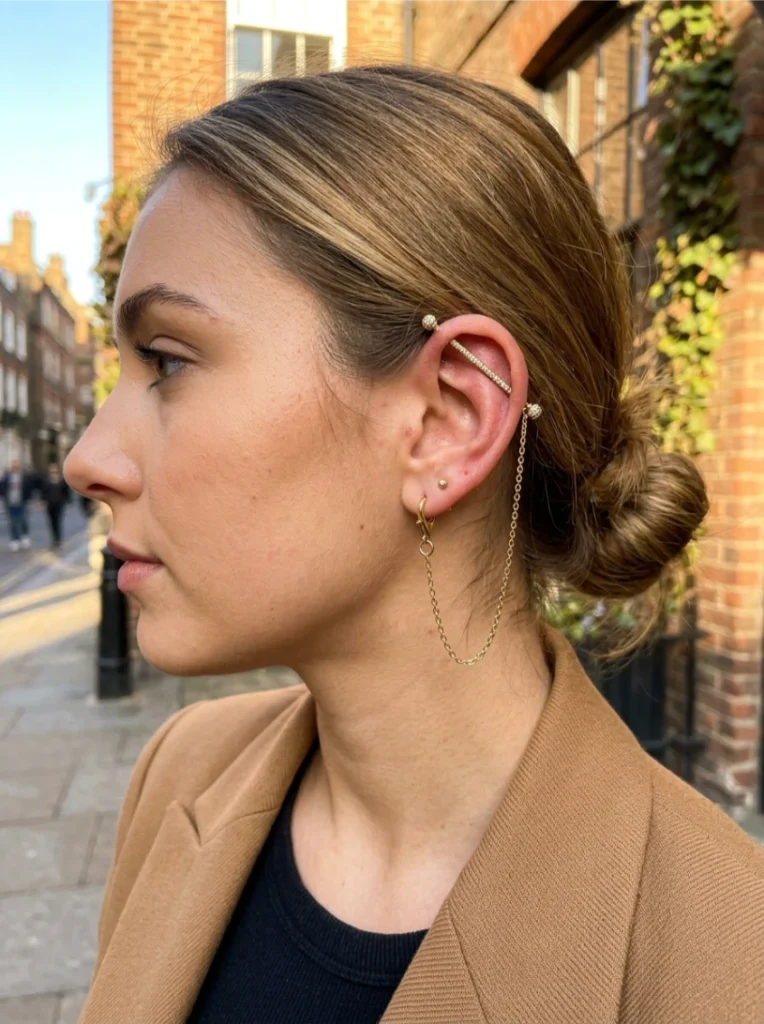
A pavé bar industrial piercing takes the classic structure of the traditional bar and adds a more decorative direction. Instead of a plain metal surface, small stone details cover the bar to create a brighter and more jewelry-like appearance.
The detachable drop chain changes the design even further by adding movement below the main bar. This creates a layered effect where the industrial piercing becomes more than a straight connection between two points.
What makes this style interesting is its flexibility. The pavé bar can create an elegant look on its own, while the additional chain adds a more dramatic effect when someone wants a stronger statement.
This style is better suited for someone who already understands how they want their industrial piercing to look because the extra detail changes the overall balance of the ear. The bar remains the foundation, but the decorative elements decide the personality of the design.
5. Matte Black Titanium Industrial Piercing

A matte black industrial piercing creates a completely different mood from traditional silver or gold jewelry. Instead of reflecting light, the darker finish gives the bar a stronger, more modern, and slightly alternative appearance.
The appeal of this design comes from contrast. A black bar creates a sharper visual line across the ear, especially when paired with other dark jewelry or a minimalist ear arrangement.
Unlike decorative industrial styles that rely on charms or stones, this version focuses entirely on the finish of the material itself. The result is simple but noticeable because the color changes how the entire piercing is perceived.
This design works well for people who prefer an industrial piercing that feels more understated but still has a clear identity. The difference comes from the finish, not the shape.
See Also: 15 Stunning Neck Piercing Ideas Worth Trying Today
6. Asymmetric Star and Bar Industrial Piercing
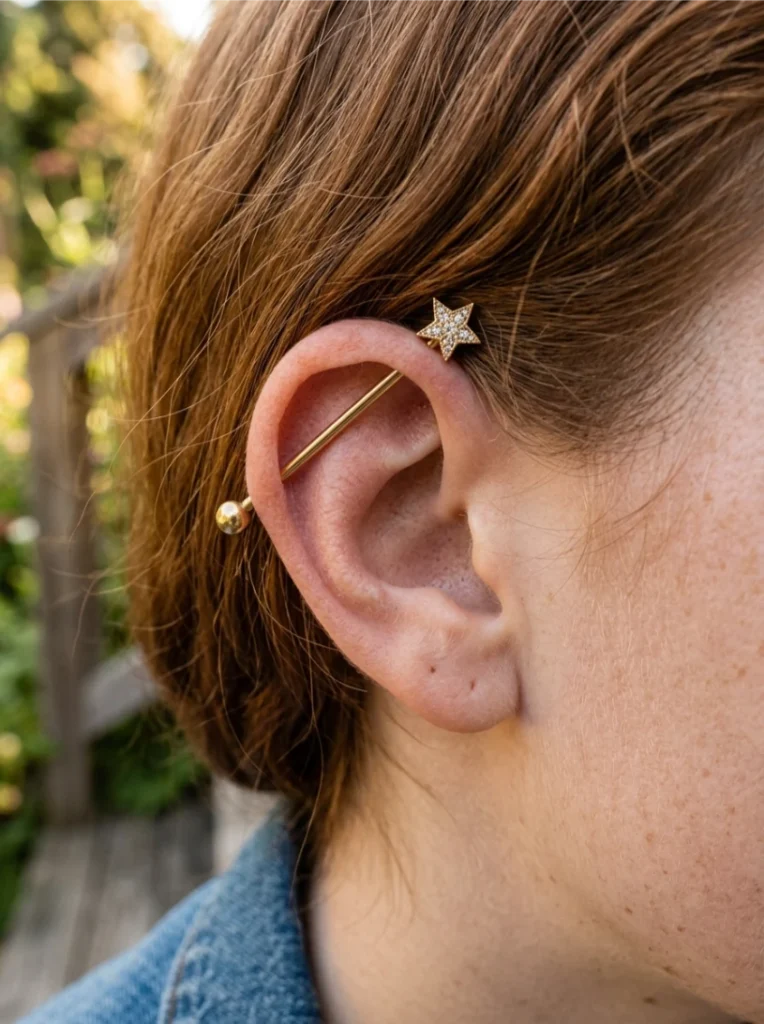
The asymmetric star and bar industrial piercing moves away from the traditional idea that both ends of the jewelry need to match perfectly.
One side features a decorative star element while the other keeps a simpler appearance. This creates intentional imbalance, making the piercing feel more customized rather than following a standard symmetrical design.
The strength of this style is subtlety. It does not completely change the industrial piercing structure, but it adds a small visual surprise that becomes noticeable when someone looks closer.
This approach works especially well for people who like personalized jewelry but do not want a heavily decorated ear. The design shows that a small change in one detail can completely change the character of a classic piercing.
7. Two-Tone Industrial Piercing Bar
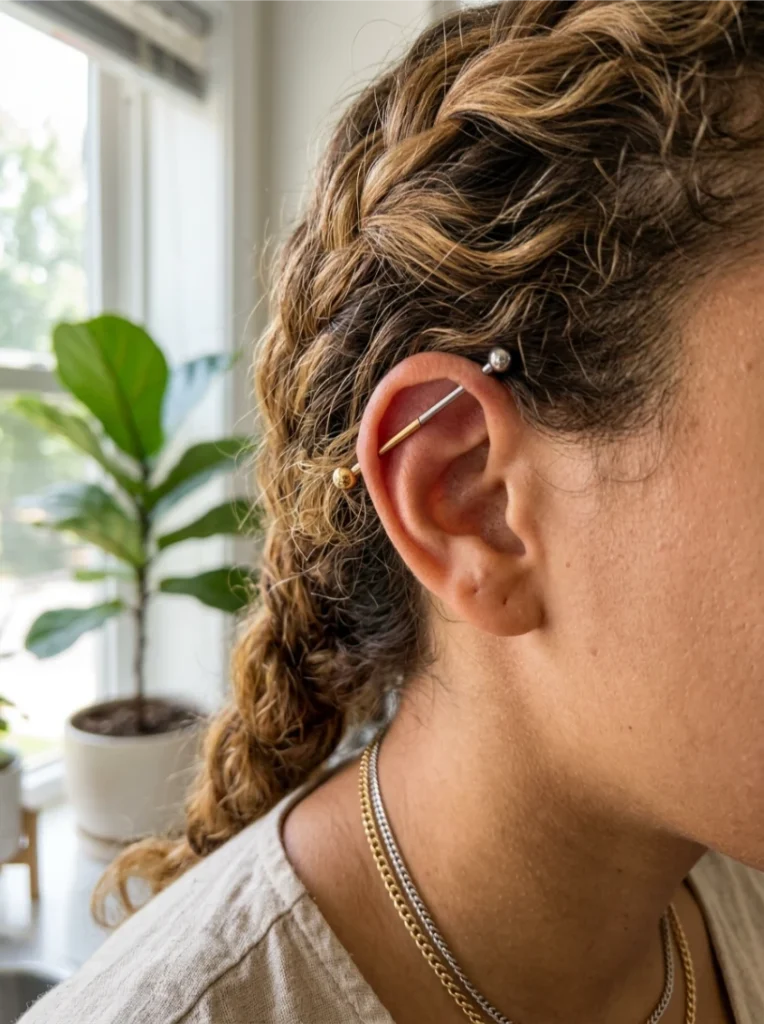
A two-tone industrial piercing bar uses different metal colors within the same piece of jewelry, creating contrast without adding extra shapes or decorations.
The combination of tones gives the piercing a more collected and styled appearance, especially for people who already mix different jewelry finishes in their everyday accessories.
Unlike a fully decorated bar, this design keeps the clean structure of an industrial piercing while adding visual depth through color. The eye follows the connection between the two shades, making the bar itself the main feature.
This style is ideal for someone who wants something different from a traditional silver bar but still prefers a refined look. The contrast comes from material choice rather than extra decoration.
8. Opal Ended Industrial Piercing Bar
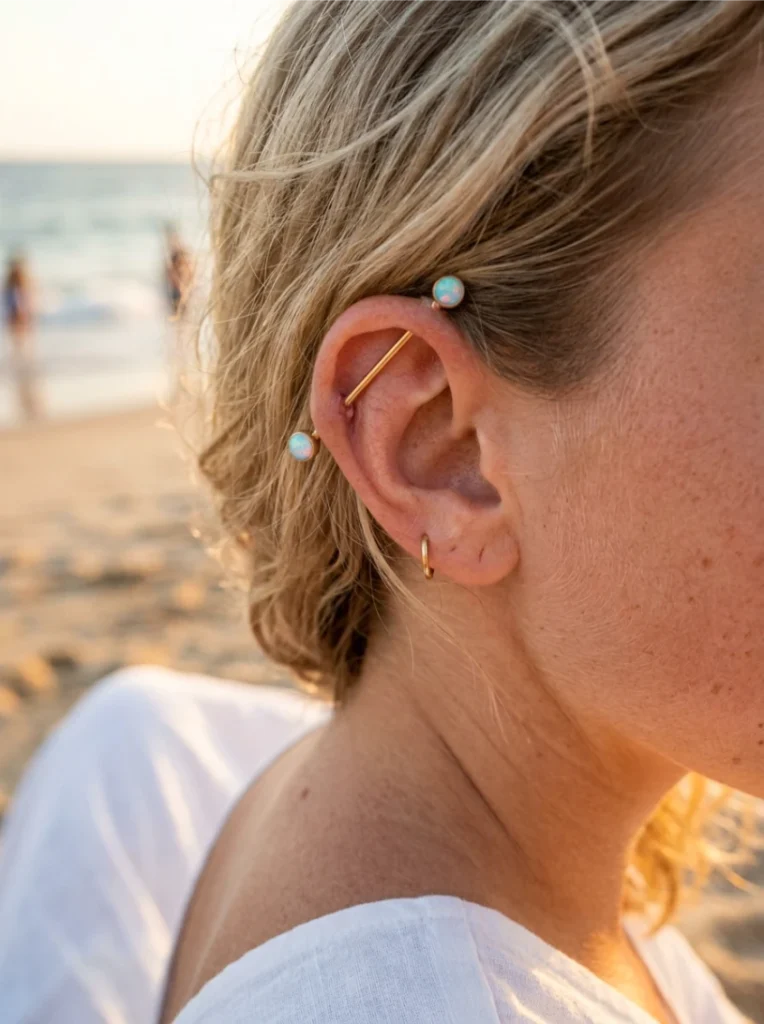
An opal-ended industrial piercing creates a softer interpretation of a style that is usually associated with bold metal designs.
The small opal details add a subtle color shift and a lighter visual feeling compared with standard metal ball ends. Instead of creating a strong industrial appearance, this design introduces a more delicate and artistic quality.
The appeal of this style is the balance between structure and softness. The bar maintains the recognizable industrial shape, while the opal details make the jewelry feel more personal.
This option works well for someone who wants the uniqueness of an industrial piercing without making the ear look overly sharp or heavy.
9. Layered Industrial Piercing Over an Existing Helix Stack
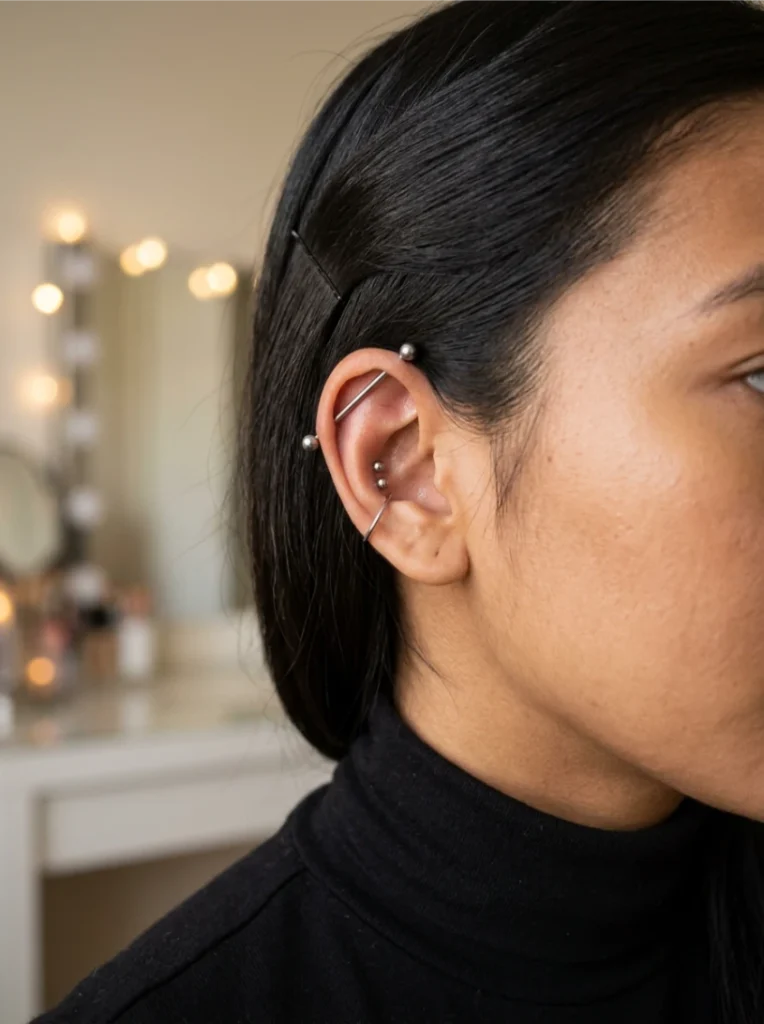
A layered industrial piercing is not only about the bar itself. It is about how the industrial design interacts with the rest of the ear.
This approach places the industrial piercing as part of a larger ear composition, where existing helix jewelry creates additional levels and visual balance.
The industrial bar becomes the upper structure, while smaller studs or hoops below create depth. The result feels more like a carefully planned ear arrangement rather than one isolated piercing.
This style is especially appealing for people who enjoy building a curated ear because the industrial piercing becomes the anchor that connects the entire jewelry layout together.
10. Curved Bar Industrial Piercing
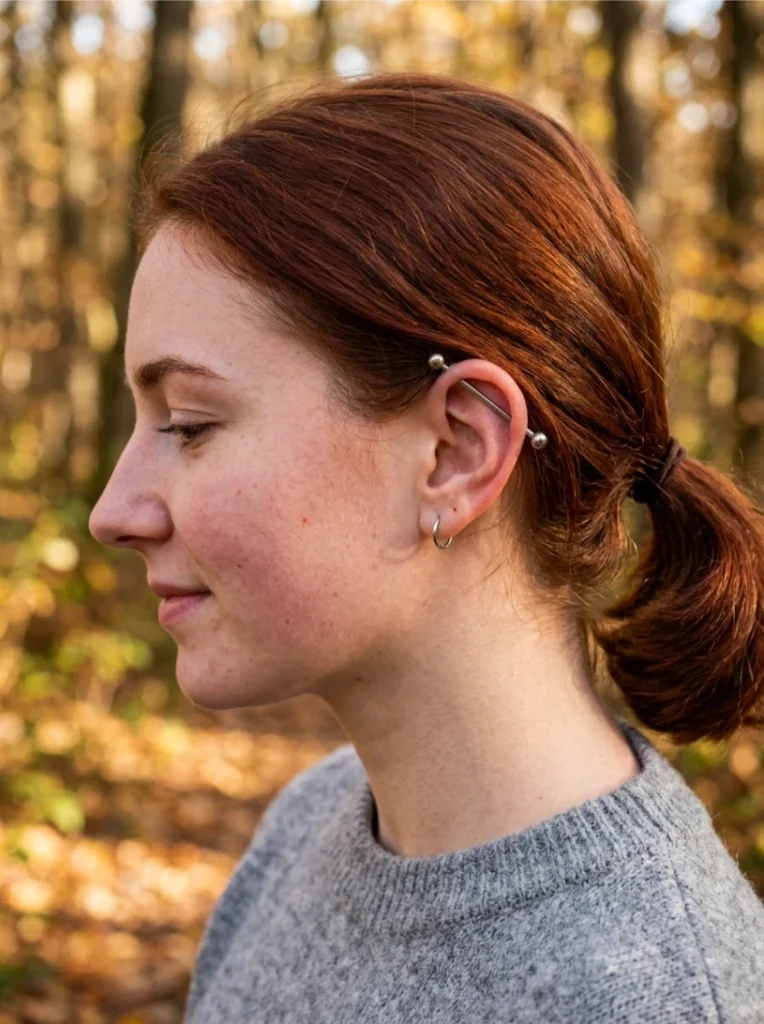
A curved bar industrial piercing changes the traditional straight-line appearance by following the natural shape of the ear more closely.
While the classic industrial is known for its sharp diagonal bar, a curved design creates a softer silhouette that follows the ear’s natural contour. This gives the piercing a different visual effect while keeping the connected two-point structure.
The curved bar is not simply a trend variation. It represents how industrial jewelry can be adapted to create a better relationship between the jewelry and the individual ear.
This style highlights an important idea about industrial piercings: the best design is not always the most traditional one. The jewelry should work with the ear rather than forcing every ear into the same shape.
How Much Is an Industrial Piercing?
The cost of an industrial piercing depends on several factors, including the studio location, the experience of the piercer, and the type of initial jewelry selected.
A simple industrial bar usually costs less than a custom design with decorative details, gemstones, or unique finishes. However, price should not be the only factor when choosing this type of piercing because industrial placement requires accuracy between two separate points.
The final cost may also change depending on the jewelry material and design complexity. A classic bar, a chain style, and a custom decorative piece can all have different price ranges.
When planning an industrial piercing, it is useful to consider the overall quality of the experience, including professional placement, suitable jewelry selection, and proper assessment of the ear structure.
How Long Does an Industrial Piercing Take to Heal?
An industrial piercing usually takes longer to heal than many single ear piercings because it involves two cartilage points connected by one piece of jewelry.
Healing experiences vary between individuals, but many industrial piercings require several months before they feel fully settled. Some may take around six months to a year or longer, depending on factors such as personal healing response, jewelry fit, and daily pressure on the ear.
The connected design is one reason industrial piercings need patience. Movement or pressure affecting one side can influence the entire bar because both points are linked together.
A piercing may appear improved on the outside before the deeper tissue has fully recovered. Healing should be judged individually rather than only by a specific timeline.
What Gauge Is an Industrial Piercing?
The gauge refers to the thickness of the jewelry used for the piercing. Industrial jewelry is commonly thicker than standard lobe jewelry because the bar needs to create a strong visual structure across two cartilage points.
A common industrial piercing size is 14 gauge, although the appropriate size can vary depending on jewelry preference, anatomy, and professional assessment.
The gauge affects the overall appearance of the piercing. A thicker bar creates a stronger and more noticeable look, while a thinner option creates a lighter appearance.
Choosing a gauge is not only about style. The jewelry size should also work comfortably with the individual piercing placement and long-term design goals.
Does Every Ear Work for an Industrial Piercing?
An industrial piercing is one of the styles where ear anatomy plays a major role in the final result. Unlike a simple stud or hoop that can be placed in many areas, an industrial requires two piercing points to align correctly so the jewelry can connect them naturally.
The upper ear needs enough suitable cartilage space for the bar to sit comfortably. Some ears may naturally support the traditional straight industrial style, while others may work better with alternative jewelry designs or different placements.
This does not mean one ear shape is better than another. It simply means industrial piercing designs need to be chosen around the structure of the ear rather than copied directly from a photo.
A professional piercer can assess factors such as the available space, natural angles, and how the jewelry will sit before deciding whether a particular industrial style is suitable.
Industrial Piercing vs Double Helix Piercing
Although industrial and double helix piercings can appear similar at first glance, they create very different ear designs.
| Feature | Industrial Piercing | Double Helix Piercing |
|---|---|---|
| Jewelry style | Usually connected by one bar | Usually uses two separate pieces of jewelry |
| Main visual effect | Creates one continuous line across the ear | Creates two individual points along the helix |
| Design focus | Connection between two locations | Separate jewelry placement |
| Overall appearance | More structured and architectural | More flexible and layered |
The biggest difference is the relationship between the two piercings. An industrial piercing turns two points into one design, while a double helix keeps them separate.
This is why an industrial often feels more like a single statement piece, whereas a double helix offers more freedom to change each jewelry piece independently.
Industrial Piercing vs Orbital Piercing
Industrial and orbital piercings are sometimes compared because both connect two piercing points, but their structures are different.
An industrial piercing uses a straight bar that creates a direct connection between two points. An orbital piercing usually uses a ring that passes through two separate piercings, creating a circular connection instead.
The difference changes the overall appearance:
Industrial piercing: sharp lines, structured design, stronger geometric appearance.
Orbital piercing: curved movement, softer shape, circular design.
Both create unique ear compositions, but they communicate different styles.
Quick Comparison
| Style | Overall Appearance | Best Feature |
|---|---|---|
| Fine Chain Industrial | Soft and delicate | Adds movement instead of a rigid line |
| Classic Single Bar | Clean and timeless | Keeps focus on the industrial structure |
| Butterfly Cluster | Decorative and playful | Adds personality through details |
| Pavé Bar With Chain | Elegant and eye-catching | Combines sparkle with movement |
| Matte Black Titanium | Dark and modern | Changes the mood through finish |
| Asymmetric Star Bar | Custom and artistic | Uses imbalance as a design feature |
| Two-Tone Bar | Refined and stylish | Creates contrast through color |
| Opal Ended Bar | Soft and subtle | Adds a lighter jewelry feel |
| Layered Industrial | Curated and complex | Works with existing ear designs |
| Curved Bar | Natural and adaptive | Follows the ear’s shape |
Frequently Asked Questions
Is an industrial piercing more painful than a regular ear piercing?
An industrial piercing involves two cartilage piercing points, which can make the experience feel different from a single ear piercing. However, pain perception varies from person to person depending on individual sensitivity and the placement itself.
Can anyone get an industrial piercing?
Not every ear has the same structure for a traditional industrial bar. The placement depends on the shape and available cartilage of the individual ear. A professional assessment can help determine whether a specific style is suitable.
Can you change an industrial piercing design?
Once an industrial piercing has properly healed, different jewelry styles can be explored, including decorative bars, chains, and alternative designs. The timing for changing jewelry depends on the healing progress of the individual piercing.
What jewelry is usually used for an industrial piercing?
The classic choice is a straight barbell, but modern industrial styles include chains, curved bars, decorative ends, mixed metals, and other artistic variations.
Why does an industrial piercing take longer to heal?
Industrial piercings involve two connected cartilage points, meaning both areas need to settle while working together with one piece of jewelry. This connected structure can make the healing process more involved compared with simpler piercings.
Final Thoughts
An industrial piercing is not defined only by the bar that connects two points. Its real appeal comes from how the jewelry interacts with the entire ear.
A classic straight bar creates a bold and structured appearance, while chains, finishes, charms, and curved designs allow the same piercing placement to express completely different styles.
The most successful industrial designs are not always the biggest or most decorative. They are the ones that consider the relationship between ear structure, jewelry choice, and personal style.
Whether someone prefers a minimal bar, a softer chain design, or a more artistic statement piece, the industrial piercing offers many ways to create a unique ear composition. The key is choosing a style that feels intentional rather than simply following a saved image.