A Jestrum piercing is a vertical upper lip piercing that places a curved barbell through the center of the philtrum, creating a balanced look with visible jewelry ends above and on the lip. Unlike a Medusa piercing, both ends remain outside the mouth, making the style visually unique.
The beauty of a Jestrum piercing comes from the jewelry choice. From simple titanium beads to gemstones, gold finishes, and bold designs, each style creates a different personality and appearance.
What Is a Jestrum Piercing?
A Jestrum piercing is placed vertically through the philtrum area, the small groove between the nose and upper lip. The jewelry used is usually a curved barbell, with one decorative end sitting in the philtrum and the second end appearing on the upper lip.
This placement creates a straight visual line through the center of the face. Because the jewelry remains visible on both sides, the Jestrum has a more balanced and decorative appearance compared with other upper lip piercings.
The final look depends on:
- Jewelry size
- Metal choice
- End design
- Placement accuracy
- How it matches your overall style
A small bead creates a clean everyday appearance, while gemstone or decorative ends make the piercing a stronger fashion statement.
10 Jestrum Piercing Styles
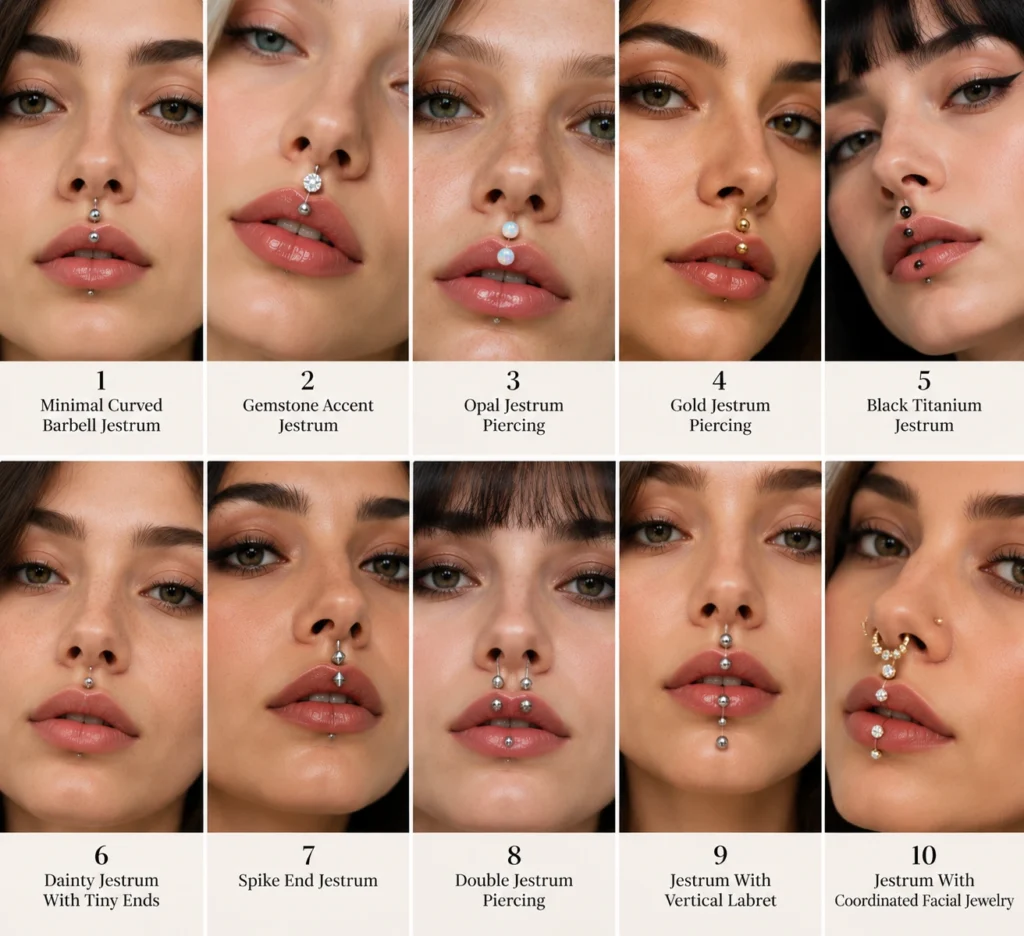
1. Minimal Curved Barbell Jestrum for a Clean Everyday Look
The minimal curved barbell Jestrum is the most classic version of this piercing. It uses a simple curved barbell with matching small beads or flat ends, allowing the natural placement of the piercing to become the main feature.
This style works well because it does not depend on extra decoration. The symmetry of the two visible ends creates a polished appearance that feels modern, simple, and easy to wear.
Jewelry Choice
Implant-grade titanium is one of the most practical options for a healing Jestrum because it is lightweight and commonly used for body jewelry.
Small beads around 3mm to 4mm usually create a balanced look. Larger ends can make the piercing more noticeable, while smaller ends give a more subtle appearance.
Best Styling Pairings
A minimal Jestrum looks best with:
- A simple septum ring
- Small nostril studs
- Minimal ear jewelry
- Matching silver or titanium accessories
Keeping other jewelry controlled helps the centered lip piercing remain the focus.
Who This Style Works For
This design is ideal for people who want:
- Their first Jestrum piercing
- A simple daily style
- Jewelry that matches different outfits
- A look that can be upgraded later
The minimal curved barbell shows that a Jestrum does not need heavy decoration to create a strong visual impact.
2. Gemstone Accent Jestrum for a Refined Look
A gemstone accent Jestrum replaces the traditional metal bead with a small decorative stone, adding brightness while keeping the overall style elegant.
This design focuses attention on the upper jewelry end, where the gemstone catches light and creates a subtle highlight above the lip. It offers a more luxurious appearance without becoming too dramatic.
Choosing the Right Gemstone Style
Popular options include:
- Clear cubic zirconia for a classic sparkle
- Moissanite for extra brilliance
- Colored stones for a more personalized appearance
A bezel setting is usually a practical choice because it protects the stone and keeps the design smoother for everyday wear.
Creating a Balanced Jewelry Look
A gemstone Jestrum works best when the rest of the jewelry supports the design instead of competing with it.
Good combinations include:
- Matching gemstone earrings
- A simple nose stud
- A delicate septum ring
The goal is to create a coordinated appearance where the gemstone becomes the highlight.
3. Opal Jestrum Piercing for a Soft Statement Style
An opal Jestrum piercing creates a softer alternative to traditional gemstones. Instead of sharp sparkle, opal produces a changing glow that shifts depending on lighting and movement.
This style is popular among people who want their piercing to feel artistic and unique while still maintaining an elegant appearance.
Why Opal Creates a Different Appearance
Opal jewelry gives the Jestrum a softer personality because of its:
- Milky color effect
- Subtle shine
- Dreamy appearance
White opal creates a clean look, while colored opals provide more personality.
Styling and Care Considerations
Opal ends work beautifully with:
- Gold jewelry for a warmer appearance
- Silver jewelry for a cooler style
- Other opal accessories for a coordinated setup
For daily wear, synthetic opal is often preferred because it provides a similar appearance with better durability.
This style is ideal for someone who wants a Jestrum piercing that feels elegant, creative, and different from standard metal jewelry.
4. Gold Jestrum Piercing for a Luxury Appearance
A gold Jestrum piercing changes the overall mood of the style through its warm metallic finish. While the shape of the curved barbell remains simple, gold creates a more refined and jewelry-focused appearance compared with standard silver or titanium options.
This style is popular among people who want their facial piercing to feel more like a carefully selected accessory rather than only an alternative fashion choice. The warm tone naturally draws attention to the center of the face without requiring large or decorative jewelry ends.
Choosing the Right Gold Jewelry
The quality of gold matters, especially for a piercing that stays in contact with sensitive tissue.
Common options include:
- 14K solid gold for a balance of durability and appearance
- 18K solid gold for a richer color
- Gold-tone titanium for a lightweight alternative
Avoid low-quality gold-plated jewelry for a healing piercing because the outer layer can wear away and expose less suitable base metals.
Creating a Coordinated Gold Style
A gold Jestrum looks most polished when paired with other warm-toned accessories, such as:
- Gold nostril jewelry
- Gold earrings
- Minimal gold necklaces
The goal is not to make every accessory identical but to create a connected style where the piercing feels intentional.
A gold Jestrum works especially well for someone who wants a luxury, elegant, and timeless facial jewelry look.
5. Black Titanium Jestrum for an Alternative Style
A black titanium Jestrum creates a completely different appearance from traditional silver or gold jewelry. The darker finish gives the piercing a modern, bold, and slightly alternative personality without needing large decorative ends.
Instead of reflecting light like polished metals, black jewelry creates stronger contrast against the skin. This makes the two visible ends of the curved barbell stand out while maintaining a clean design.
Why Black Jewelry Changes the Look
The darker finish gives the Jestrum:
- A sharper visual presence
- A modern alternative aesthetic
- A more minimal but noticeable appearance
This style is often chosen by people who prefer darker clothing, monochrome outfits, or other black jewelry pieces.
Best Pairings for Black Jestrum Jewelry
A black Jestrum works well with:
- Black septum rings
- Dark ear jewelry
- Matte metal accessories
- Minimal facial piercings
Because the jewelry already creates contrast, keeping the rest of the setup simple usually produces the strongest result.
This style is ideal for someone who wants a Jestrum that feels confident, modern, and slightly edgy.
See Also: 13 Flawless Reverse Navel Piercing Ideas With Expert Tips
6. Dainty Jestrum With Tiny Ends for a Minimal Appearance
A dainty Jestrum with tiny ends focuses on subtle styling rather than making the piercing the first thing people notice. Small beads or flat ends create a softer appearance while keeping the centered placement of the piercing.
This style proves that a Jestrum does not always need bold jewelry to create personality. The vertical placement itself provides enough structure, while the smaller ends keep the overall look refined.
Choosing the Right Jewelry Size
The size of the ends plays an important role in the final appearance.
Smaller ends create:
- A cleaner everyday style
- A more professional appearance
- A lightweight visual effect
However, choosing jewelry that is too small can make the design lose balance. The ends should still be visible enough to complement the natural shape of the upper lip.
Who Should Choose This Style?
A dainty Jestrum is suitable for people who want:
- A subtle facial piercing
- A simple first jewelry style
- A design that works with different outfits
- Less attention on the jewelry itself
This is one of the easiest Jestrum styles to wear daily because it blends naturally with different aesthetics.
7. Spike End Jestrum for an Edgy Appearance
A spike end Jestrum replaces traditional rounded beads with pointed or cone-shaped jewelry ends. This small change completely transforms the personality of the piercing, creating a sharper and more expressive appearance.
While a simple bead feels classic and balanced, spike ends introduce stronger lines and a more alternative fashion direction.
Choosing Comfortable Spike Shapes
Not every spike design works equally well for daily wear. The most practical options usually have:
- Smooth edges
- Comfortable proportions
- A balanced length
- Secure threading
Extremely long spikes may look dramatic but can become uncomfortable during everyday activities.
Styling Without Overcrowding the Face
Because spike jewelry already creates a strong visual effect, it usually works best with simpler accessories.
Good combinations include:
- A plain septum ring
- Minimal ear jewelry
- Dark metal accessories
A spike Jestrum is best for someone who wants their piercing to represent a stronger personal style rather than a subtle decoration.
8. Double Jestrum Piercing for a Bold Symmetrical Look
A double Jestrum piercing uses two separate vertical piercings placed near the center of the upper lip instead of one single piercing. This creates a more dramatic and symmetrical appearance with multiple visible jewelry points.
Unlike a standard Jestrum, this style requires more planning because the spacing between both piercings must be carefully measured. The philtrum area needs enough room for both pieces to sit comfortably without appearing crowded.
Why Placement Precision Matters
The success of a double Jestrum depends heavily on:
- Correct spacing
- Facial symmetry
- Professional placement
- Suitable anatomy
A skilled piercer will usually mark the positions while checking natural facial movement, including smiling and speaking.
Who Should Consider This Style?
A double Jestrum works best for people who want:
- A high-impact facial piercing
- A unique alternative appearance
- A stronger jewelry-focused style
Since this design naturally attracts attention, it usually works best when the rest of the facial jewelry remains balanced.
9. Jestrum Combined With Vertical Labret for a Center Lip Stack
A Jestrum combined with a vertical labret creates a complete vertical jewelry arrangement through both the upper and lower lips. Instead of focusing only on the upper lip, this setup creates a connected line that runs through the center of the mouth area.
This combination is popular among people who want a more curated facial piercing style. The upper Jestrum creates the first focal point, while the vertical labret adds balance below it, creating a symmetrical appearance.
Unlike adding random facial piercings together, this combination works because both placements follow the same central direction.
Creating Balance Between Upper and Lower Lip Jewelry
The success of this look depends on coordination between both piercings.
Important details include:
- Matching jewelry sizes
- Similar metal finishes
- Balanced spacing between ends
- A consistent overall style
For example, small titanium beads on both piercings create a clean minimalist appearance, while gold or gemstone ends create a more decorative fashion look.
When This Combination Works Best
A Jestrum and vertical labret combination is best for someone who wants:
- A strong facial jewelry statement
- A symmetrical center-face design
- A more advanced piercing style
- A complete alternative aesthetic
Because both areas attract attention, keeping additional facial jewelry minimal often creates the most professional result.
10. Jestrum With Coordinated Facial Jewelry for a Complete Style
A Jestrum with coordinated facial jewelry focuses on how the piercing works as part of a larger personal style rather than as a single accessory.
The Jestrum naturally sits in the center of the face, which makes it a strong foundation for combining other jewelry choices. A carefully planned setup can include a septum ring, nostril studs, or matching ear jewelry while still maintaining balance.
The key is not adding more pieces but making every element work together.
Building a Balanced Piercing Setup
A coordinated look usually considers:
- Metal consistency
- Jewelry size
- Placement balance
- Overall style direction
For example, a gold Jestrum paired with small gold hoops creates a warm, connected appearance, while black titanium jewelry can create a darker alternative style.
Avoiding Too Many Competing Details
Since the Jestrum already sits at the center of attention, additional jewelry should support the look rather than overpower it.
A balanced setup usually includes:
- One main statement piece
- Smaller supporting jewelry
- Similar finishes or materials
The strongest facial jewelry styles feel intentional. Each piece should add to the overall appearance instead of making the face look visually crowded.
How Much Does a Jestrum Piercing Hurt?
The discomfort of a Jestrum piercing varies from person to person, but many people describe it as a quick sharp sensation followed by pressure.
Compared with other facial piercings, it is usually considered moderate because the philtrum area contains sensitive tissue but does not involve cartilage.
Factors that influence the experience include:
- Individual pain tolerance
- Piercer technique
- Placement accuracy
- Jewelry size
The actual procedure is usually very quick, but the area may feel swollen or tender during the early healing period.
How Long Does a Jestrum Piercing Take to Heal?
A Jestrum piercing healing time is different for every person. The outer tissue often begins settling within several weeks, but complete healing can take longer depending on lifestyle and aftercare.
Factors that can affect healing include:
- Jewelry quality
- Proper placement
- Daily habits
- Avoiding unnecessary movement
- Following professional aftercare guidance
Changing jewelry too early can irritate the piercing channel, so decorative upgrades are usually better saved until the piercing has properly healed.
What Jewelry Is Best for a Jestrum Piercing?
The most suitable jewelry for a Jestrum is usually a curved barbell, because the shape follows the natural vertical pathway of the piercing.
Popular materials include:
Implant-Grade Titanium
Titanium is lightweight, durable, and commonly selected for healing piercings because it is well tolerated by many people.
Solid Gold
14K or 18K solid gold provides a luxury appearance and works well for healed piercings when properly selected.
Decorative Ends
Once healed, Jestrum jewelry can be customized with:
- Gemstones
- Opals
- Gold beads
- Spike ends
- Decorative shapes
The best jewelry choice depends on both personal style and comfort.
How To Clean and Care for a Jestrum Piercing
Proper care helps reduce irritation and supports healthy healing.
Important habits include:
Keep the Area Clean
Use suitable cleaning methods recommended by your piercer and avoid touching the jewelry unnecessarily.
Avoid Changing Jewelry Too Soon
Switching styles before healing is complete can create irritation and delay recovery.
Be Careful With Daily Activities
Eating, applying makeup, and facial skincare can affect the area, especially during the early healing stage.
A simple routine is usually better than using too many products or constantly adjusting the jewelry.
Common Jestrum Piercing Mistakes
Choosing Jewelry Based Only on Appearance
A design may look attractive online but may not suit your anatomy or daily lifestyle.
Using Poor Quality Jewelry
Cheap metals and low-quality finishes can create unnecessary irritation.
Ignoring Proper Placement
Because the Jestrum sits in the center of the face, incorrect placement is more noticeable than many other piercings.
Changing Jewelry Too Early
Waiting until the piercing is properly settled makes future styling changes safer and easier.
Frequently Asked Questions
What is a Jestrum piercing?
A Jestrum piercing is a vertical upper lip piercing placed through the philtrum area using a curved barbell, with visible jewelry ends above and on the upper lip.
Is a Jestrum piercing painful?
Pain levels vary, but most people describe it as moderate discomfort with a quick sharp sensation during the procedure.
What is the difference between a Jestrum and Medusa piercing?
A Medusa piercing sits horizontally through the philtrum with one visible end, while a Jestrum passes vertically through the upper lip with two visible ends.
Can you change Jestrum jewelry?
Yes, but jewelry changes should be done after proper healing. A professional piercer can help with the first change.
How long does a Jestrum piercing take to heal?
Healing varies between individuals, but many people need several weeks to months before the piercing feels fully settled.
Final Thoughts
A Jestrum piercing offers a unique way to style the center of the face, and the jewelry choice completely changes the final appearance. Minimal beads create a clean everyday look, while gemstones, gold, and decorative ends allow more personal expression.
The best Jestrum style is not always the biggest or most noticeable option. It is the one that matches your features, lifestyle, and personal aesthetic while remaining comfortable to wear.
Start with a well-fitted curved barbell and upgrade the jewelry later once healed. The right design can turn a simple piercing into a signature part of your overall style.