Fulani braids are a protective hairstyle built around one or more center cornrows running from the front hairline to the back, with the rest of the hair braided into thinner plaits that frame the face. The style traces back to the Fulani people of West Africa and has stayed a Pinterest staple because it works across hair lengths, textures, and occasions. Right now, curly ends, beaded accents, and color placement are the details doing most of the work in updated versions of the look.
1. Classic Fulani Braids With a Center Cornrow and Beaded Ends
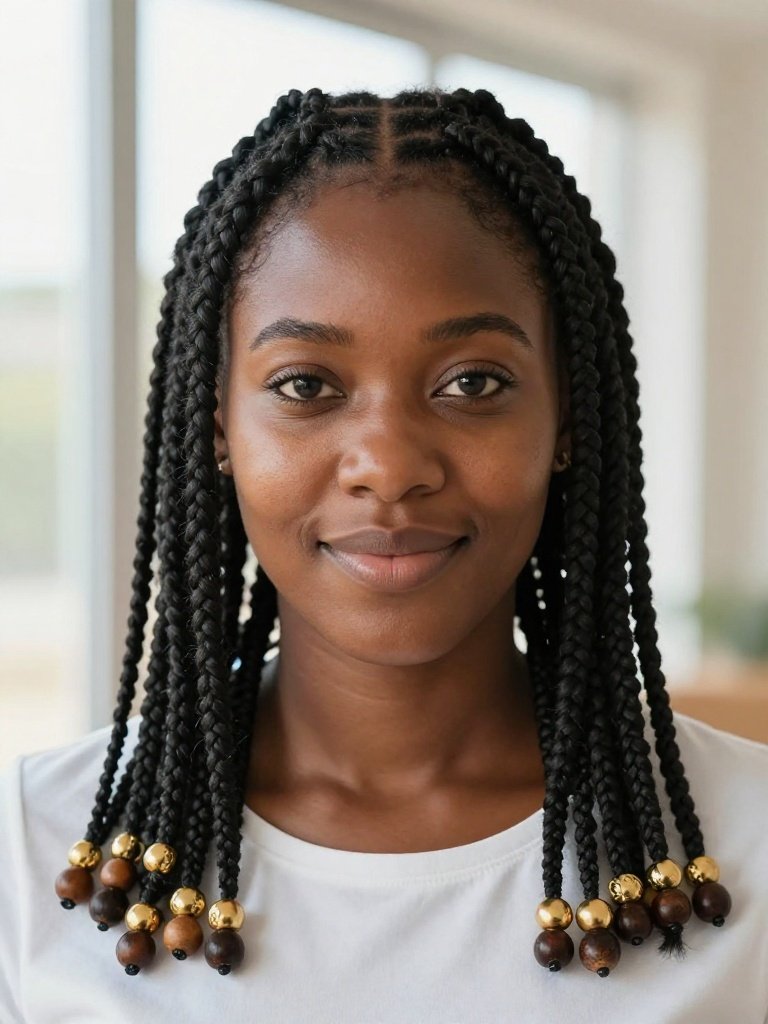
The defining feature here is a single thick cornrow running straight down the middle of the head. Two symmetrical cornrows flank it on either side, framing the face, while the remaining hair is braided into medium-width Fulani braids that fall past the shoulders. Small gold or wooden beads are threaded onto the last two inches of select braids, usually every third or fourth one, so the accent reads as intentional rather than scattered.
This version is the one most stylists point to as the reference for the whole category. The center part keeps the face open while the beads add movement without weighing the ends down. It does take longer in the chair than a plain braid-out, mostly because of the bead threading, so budget an extra hour or so if you’re going this route.
Tip
Bring a photo showing exactly how many beads you want and where — stylists usually charge per bead, so a clear count avoids surprises at checkout.
Face Shape Match
The straight center part is especially flattering on round and oval faces, since it visually lengthens the face.
2. Fulani Braids With Loose Curly Ends
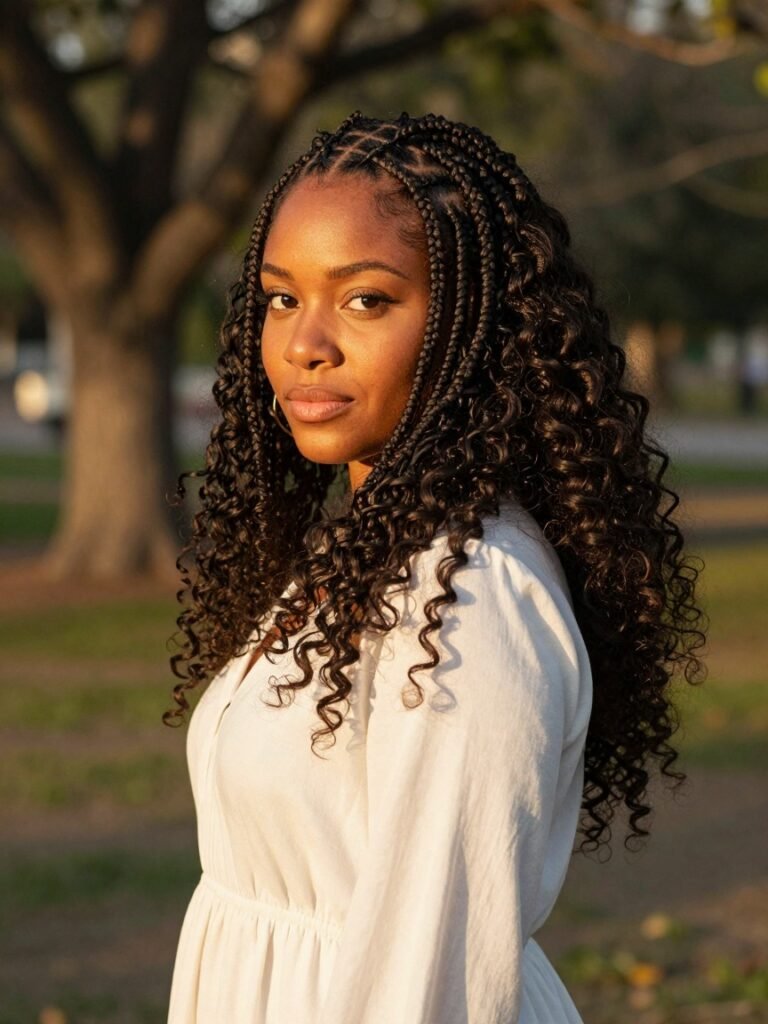
Instead of braiding all the way to the tip, the plaits here stop three to four inches before the end. The remaining hair is left as a loose, defined curl using pre-curled braiding hair, usually a Marley or Freetress texture designed to hold a spring pattern without heat. The contrast between the tight cornrow base and the soft, springy ends is the whole point of this variation.
It reads softer and more romantic than a fully braided style, which makes it a common pick for weddings or dressier events. The trade-off is upkeep: the curled sections frizz faster than fully braided hair, so they usually need a light refresh with a curling wand or perm rods every week or two to keep their shape.
Tip
Ask for the curl to start at least three to four inches above the braid end — starting it too early makes the transition look uneven instead of intentional.
Face Shape Match
The volume at the ends softens angular jawlines, making this a strong choice for square or heart-shaped faces.
3. Short Fulani Bob Braids
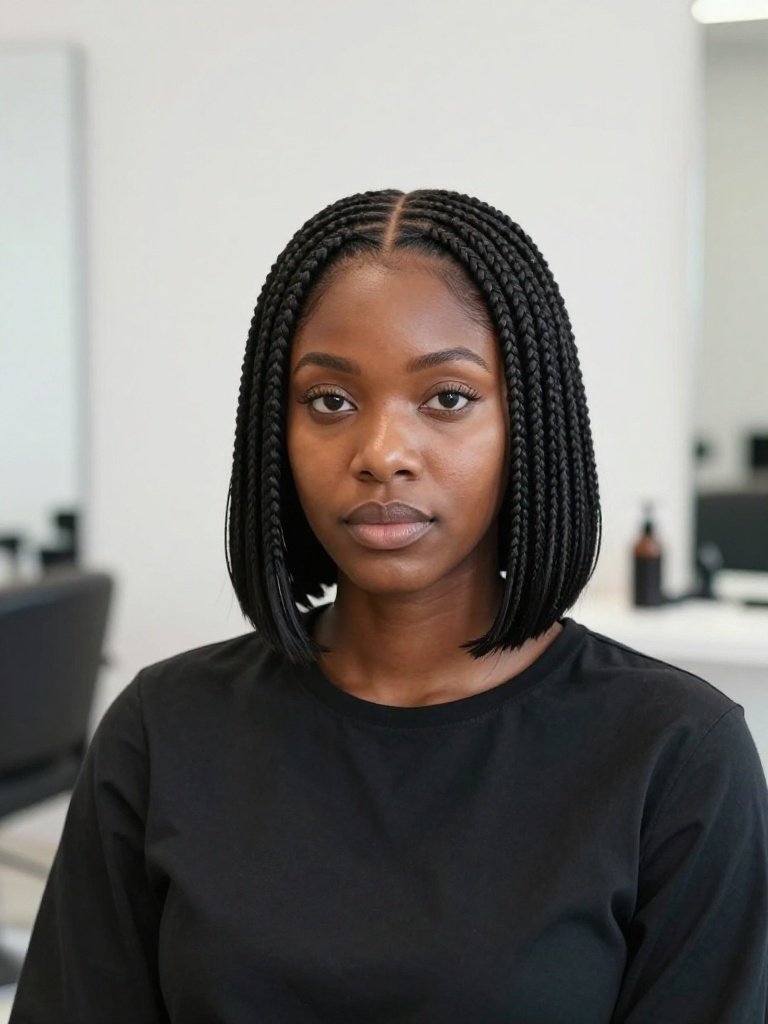
This version keeps everything at chin or collarbone length. The center cornrow is usually thinner than in the classic style, since a shorter length doesn’t need as much structural weight up top. The braids are cut blunt across the bottom rather than left uneven, giving the whole shape a clean, rounded edge that grazes the collarbone.
There’s less hair to manage overall, so this is often the fastest Fulani option to install and one of the lightest to wear day to day. It won’t have the same dramatic swing as a longer version. It suits someone who wants the pattern and texture of Fulani braids without the length commitment.
Tip
A blunt cut works better on this length than layered ends — layers tend to make short braids look thin and patchy rather than full.
Face Shape Match
The chin-length blunt edge draws attention to the jawline, so it favors oval and long face shapes that can handle the added width at the bottom.
4. Side-Swept Fulani Braids With Gold Cuffs
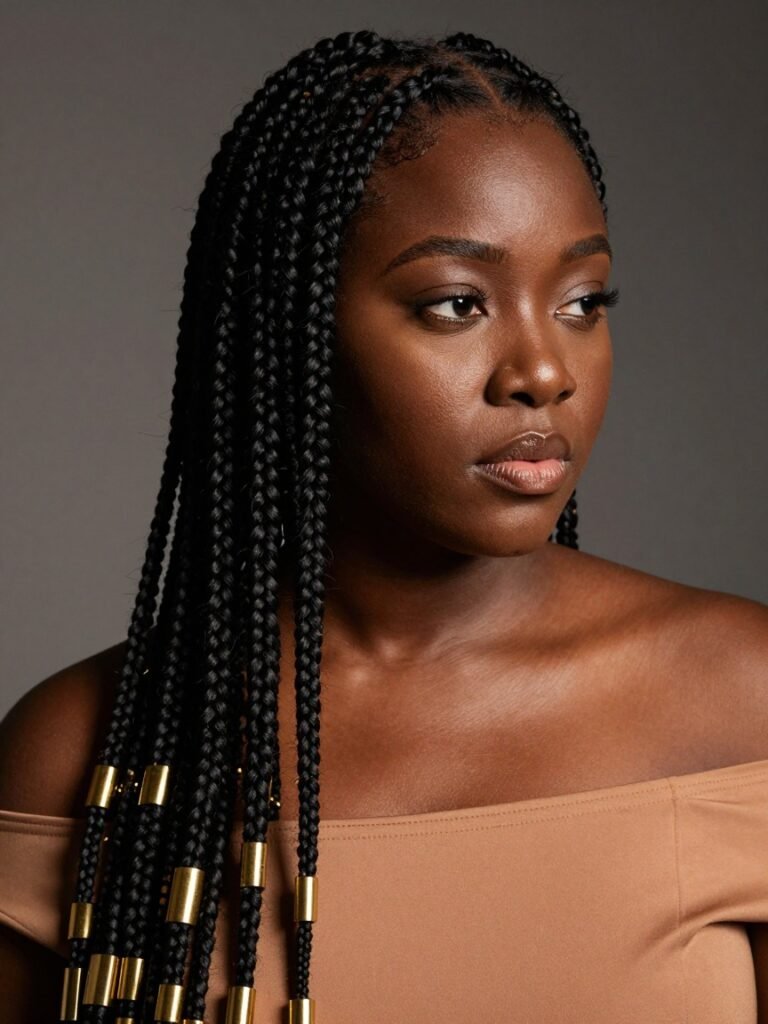
Here the part shifts off-center, with most of the braids pulled to fall over one shoulder. Small metal hair cuffs, usually brass or gold-toned aluminum, are slid onto individual strands to hold the sweep in place. The asymmetry is the main departure from the classic center-part version.
The cuffs are the detail that separates this from a plain side-swept braid — they catch light and give the style a slightly dressier, more finished look without adding beads throughout. It’s a strong option if you want something a little more elevated for photos without going as elaborate as a fully beaded style.
Tip
Slide the cuffs on before the ends are trimmed so you can position them exactly where you want along the braid rather than guessing at placement afterward.
Face Shape Match
Sweeping the volume to one side works well for round faces, since it breaks up symmetry and adds a slight angle to the overall silhouette.
5. Fulani Braids With a Twisted Halo Crown
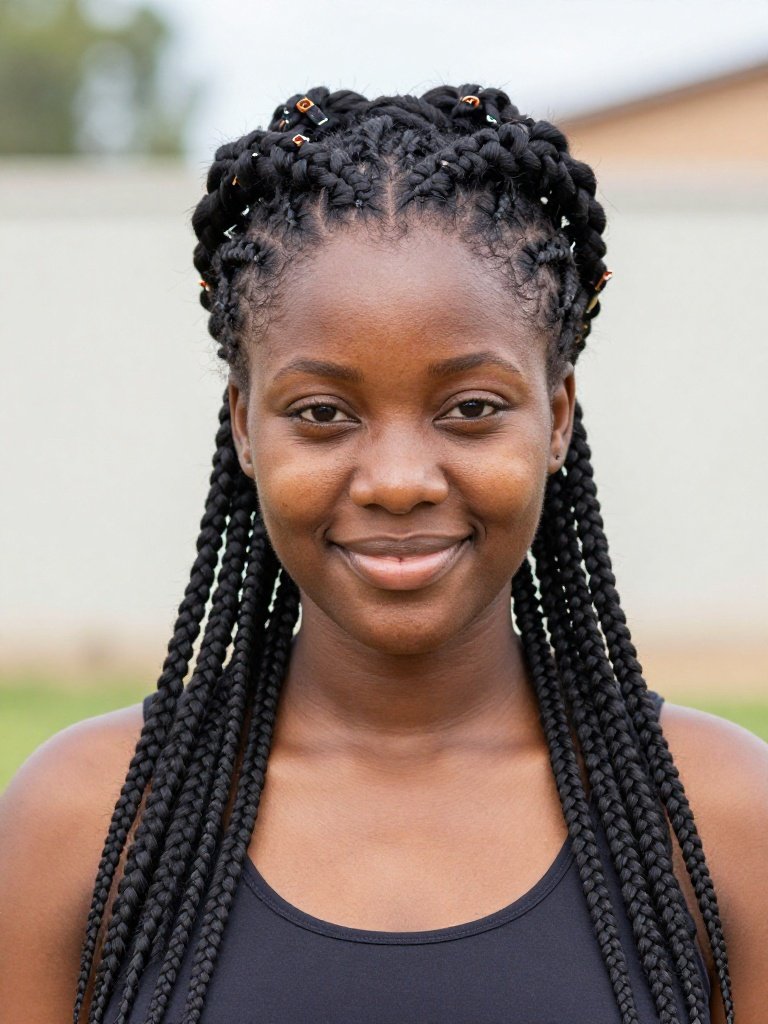
This one wraps two of the front-facing braids around the crown of the head like a halo. They’re pinned or tucked in at the back, while the rest of the Fulani braids hang loose underneath. It’s essentially a styling technique layered on top of a standard install rather than a different base pattern.
The braided halo keeps hair off the face entirely, which makes it a genuinely practical option for humid weather or active days, not just a decorative choice. Because the crown section stays visible, any unevenness in the original cornrow pattern shows more here than in styles where hair falls loose. It’s worth having the base pattern done cleanly before styling it this way.
Tip
Use small, flat bobby pins that match your hair color to secure the halo — bulky clips tend to create visible bumps under the wrapped section.
Face Shape Match
Pulling hair back and up elongates a round or square face, making this a good pick if you want a slimming effect around the cheeks.
6. Jumbo Fulani Braids With Wrapped Baby Hair
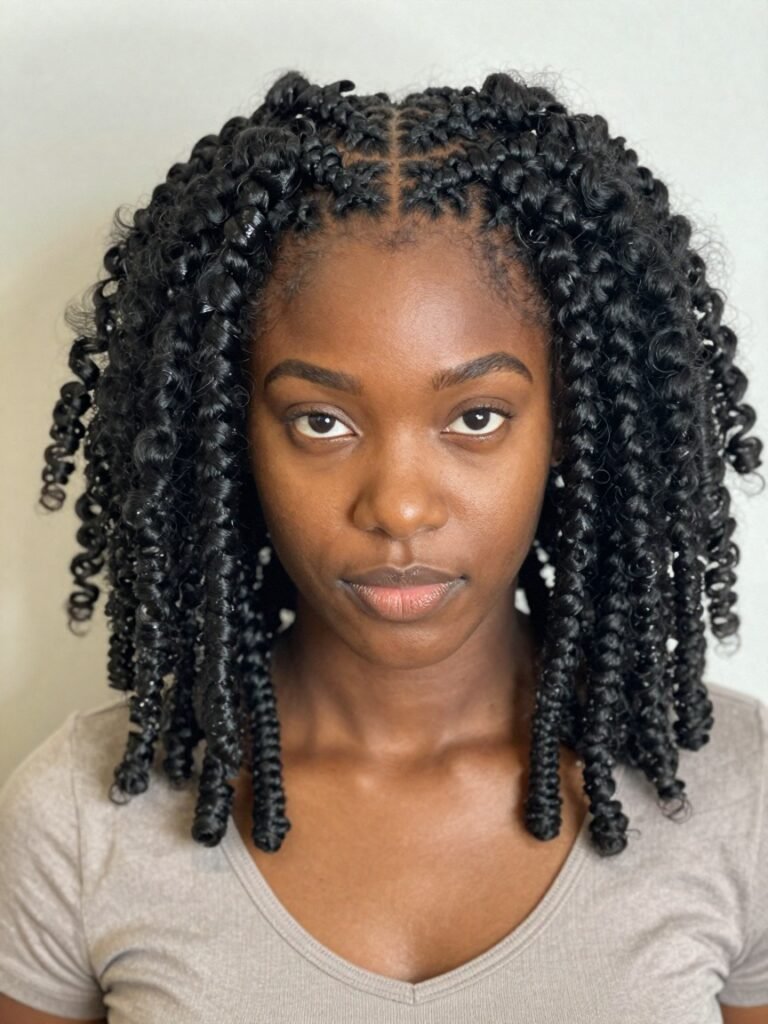
This version scales the whole pattern up, using thick, jumbo-width braids instead of the medium plaits seen in most Fulani styles. The front hairline is styled into small, gel-slicked baby hair curls along the edges, usually held with an edge brush and a firm-hold gel rather than mousse. The scale change gives it a bolder, more graphic look overall.
Fewer, thicker braids also mean a noticeably shorter time in the chair compared to thinner variations, since there are far fewer individual plaits to complete. The trade-off is that jumbo braids show scalp more at the roots as new growth comes in, so they typically need a touch-up sooner than thinner versions.
Tip
Ask your stylist to leave slightly more root space between braids than usual — jumbo sections need more room to lie flat without pulling.
Face Shape Match
The bold scale balances out a smaller face shape and works especially well on heart-shaped faces with narrower chins.
7. Fulani Braids With a Shaved Side Accent
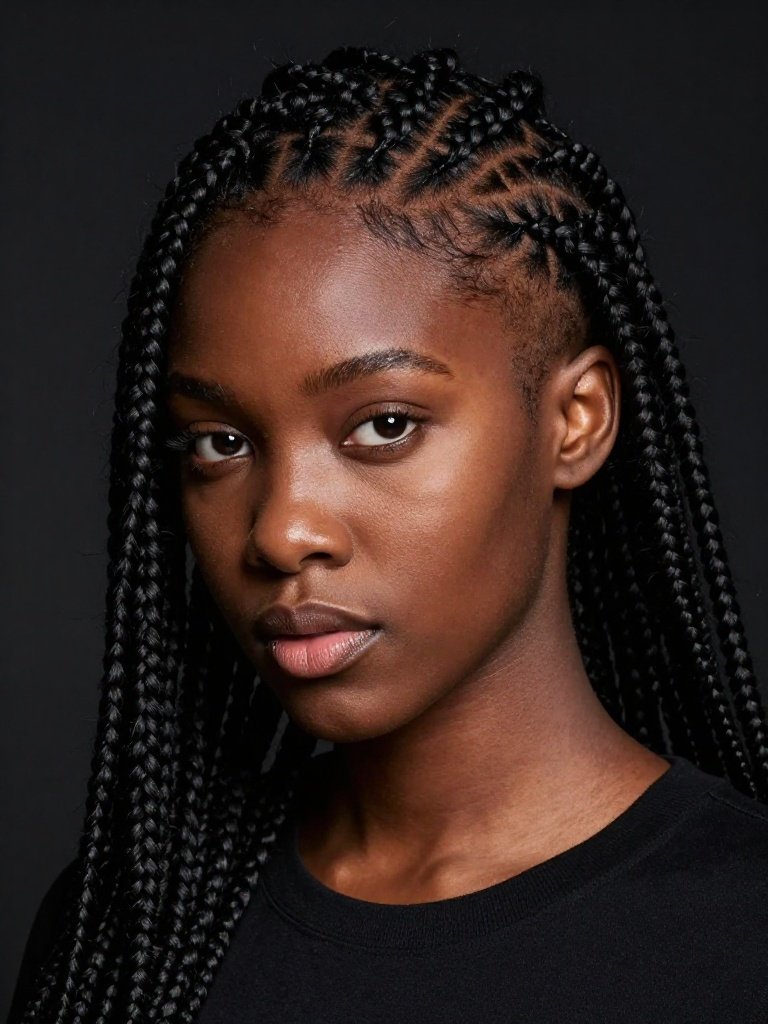
One or both sides above the ear are shaved into a close fade or a thin geometric line. The rest of the head keeps the standard center-cornrow Fulani pattern. The shaved section is left bare rather than braided, creating deliberate contrast between smooth skin and dense braid texture.
This is one of the more editorial takes on the style, and it reads as a genuine commitment rather than a subtle tweak, so it’s worth sitting with the idea before booking it. It pairs especially well with an undercut you already have, since it uses length you’d otherwise be hiding under the braids.
Tip
Have the shaved section refreshed every two to three weeks separately from the braid install to keep the line crisp against the growing braid pattern.
Face Shape Match
The exposed hairline works best on oval and long face shapes, where the added visual width at the temple keeps proportions balanced.
8. Ombre Fulani Braids From Dark Roots to Honey Blonde
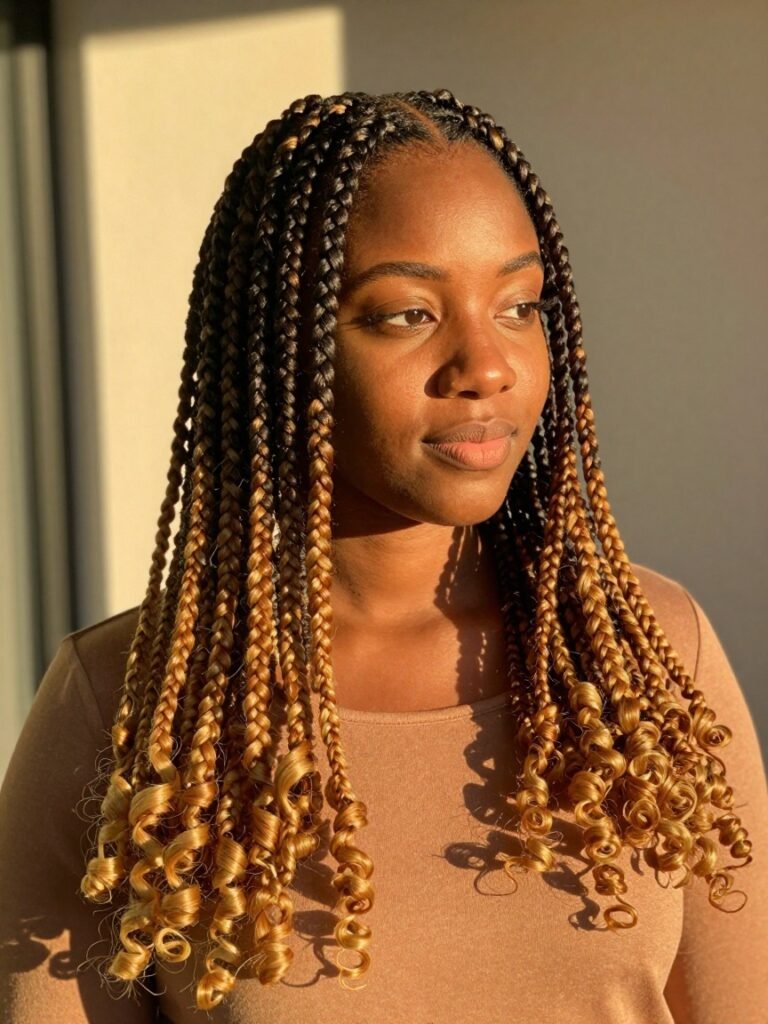
The color does the heavy lifting in this variation. Braiding hair is chosen in a two-tone blend, staying close to the natural root color for the first several inches before transitioning into a warm honey or caramel blonde toward the ends. The braid pattern itself stays classic and center-parted, letting the gradient carry the visual interest.
Because the transition happens gradually rather than in one hard line, it looks more like sun-lightened hair than an obvious dye job, which is part of why it’s held up well as a trend rather than fading fast. Lighter ends show wear and fraying more visibly than a single dark color, so the tips tend to need trimming or re-braiding a little earlier than an all-one-color install.
Tip
Bring a swatch of braiding hair in daylight before committing — synthetic blonde tones can look noticeably more yellow or brassy under indoor lighting than they do in the package.
Face Shape Match
Lighter ends draw the eye downward and outward, which softens a longer face by adding visual width near the jaw.
See Also: 17 Gorgeous Braid Hairstyles Cute Trending Ideas to Save
9. Fulani Braids Styled Into a High Ponytail
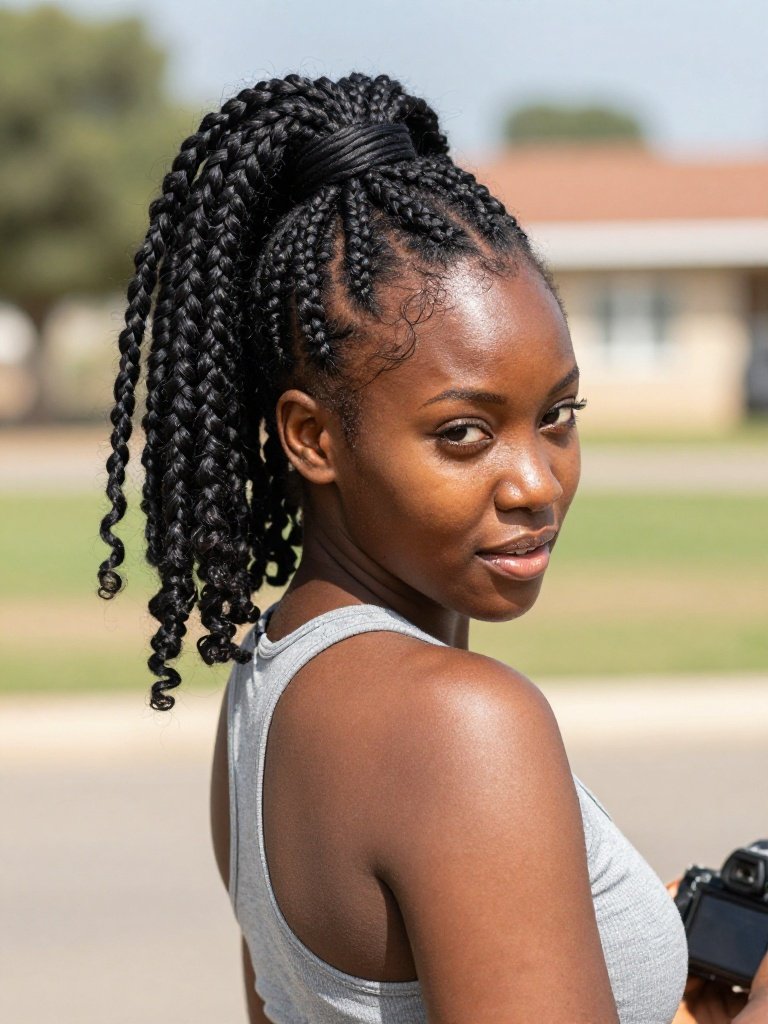
All the individual Fulani braids are gathered and secured into one high ponytail at the crown. The front cornrow pattern still shows where it meets the base of the tail, and the ends are left loose to fan out or lightly curled for extra volume.
This is a practical variation for anyone who wants the detail of a Fulani part without the daily weight and movement of fully loose braids. Everything stays contained but the front pattern still shows. It’s an easy switch-up from the loose version too, since it doesn’t require redoing the base braids, just restyling how they’re worn.
Tip
Wrap a small section of braiding hair around the base elastic to hide it completely, rather than relying on the hair tie alone.
Face Shape Match
Pulling everything up and back is especially flattering on square faces, since it softens the jawline by drawing focus toward the cheekbones.
10. Fulani Braids With a Box Braid Body
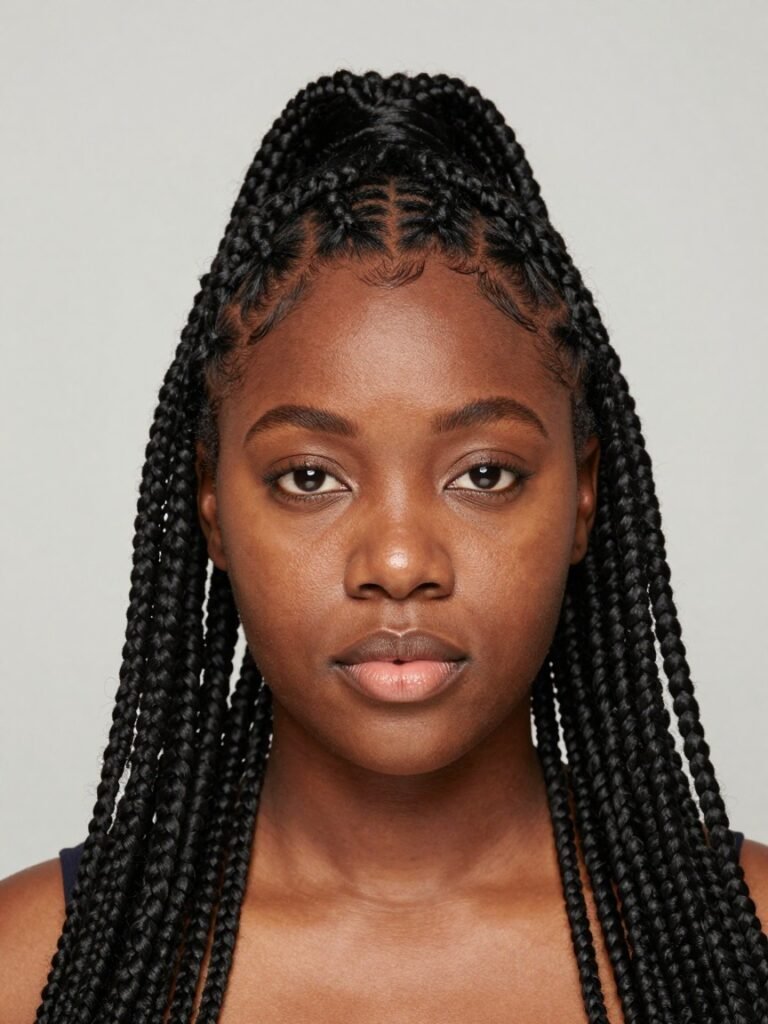
This hybrid keeps the signature center and side cornrows at the front but switches to standard box braids for the rest of the head. The front third reads as unmistakably Fulani, usually finished in a three- to four-inch cornrow section, while the bulk of the style behaves like a classic box braid set.
It’s a popular middle-ground choice for people who love the Fulani part but find fully braiding an entire head in the thinner Fulani width too time-consuming or too heavy to wear comfortably for weeks at a time. The box braid section also holds up a little longer before frizzing since the strands are thicker and less exposed than fine Fulani plaits.
Tip
Match the box braid width to roughly double the width of the front cornrows so the transition between the two sections looks proportional rather than abrupt.
Face Shape Match
This combination suits most face shapes well since the face-framing detail stays concentrated at the front, but it’s a particularly easy fit for round faces thanks to the slimming center part.
11. Fulani Twist Braids
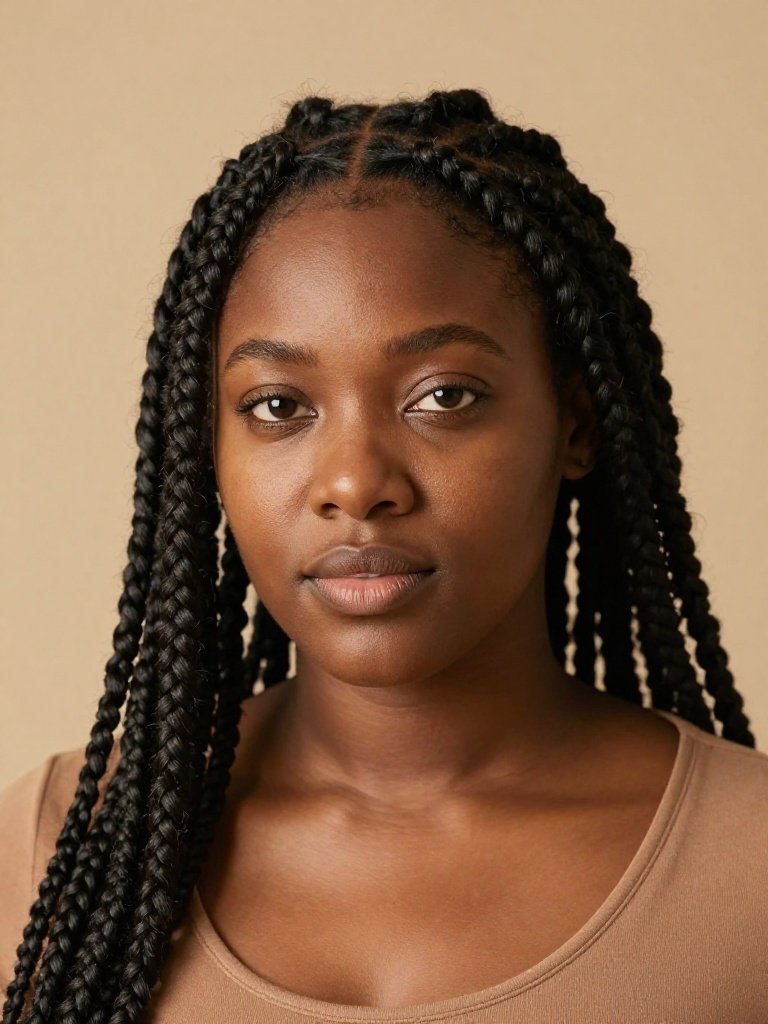
Two-strand twists replace the outer braided sections entirely here, while the signature center and side cornrows stay intact at the front. The twisted texture reads chunkier and slightly more casual than a smooth braid, using a rope-like double-strand technique instead of a standard three-strand plait.
Twists also tend to hold up a bit longer against unraveling at the ends than thin braids do, since the twisted strands lock into each other more securely. It’s a good option for anyone who’s found that fine Fulani braids come loose too quickly on their hair texture.
Tip
Ask specifically for a two-strand twist rather than a three-strand braid when booking — some stylists use the terms loosely, and the finished texture is genuinely different.
Face Shape Match
The slightly bulkier twist texture adds fullness that flatters narrower, oblong face shapes.
12. Fulani Braids With Cowrie Shell and Colorful Bead Accents
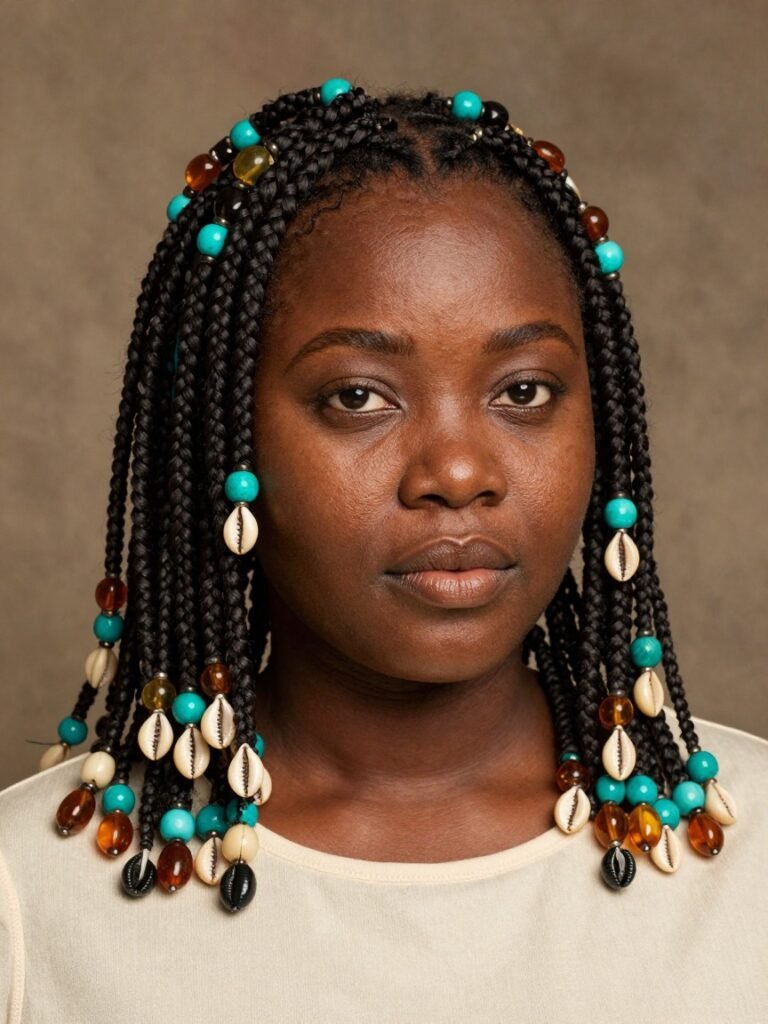
Rather than sticking to one metal tone, this version mixes small cowrie shells with beads in two or three colors, clustered mostly along the front cornrows and a handful of the face-framing braids. Turquoise, amber, and cream tend to pair well with the natural cream tone of the shells. The mixed materials give it a more layered, tactile finish than a single-bead approach.
Cowrie shells specifically nod to the style’s West African roots, and pairing them with color makes the accents feel curated rather than random. A heavier mix of shells and beads adds real weight to the front section, and some people notice slight tension along the hairline by the end of a long day.
Tip
Cluster the shells and beads on three or four braids total instead of spreading a few onto every braid — clustering reads as more deliberate and photographs better.
Face Shape Match
The concentrated detail at the front works well on most face shapes, though it’s an especially good frame for round faces since it draws the eye vertically along the center part.
13. Fulani Braids Pulled Into a Sleek Low Bun
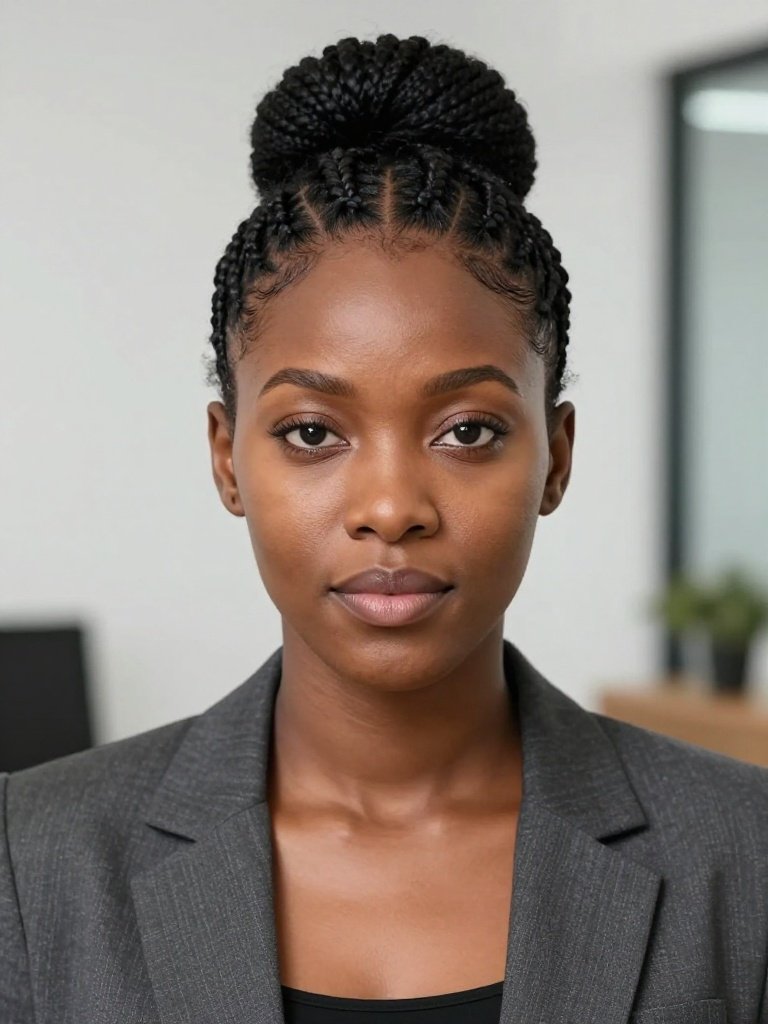
The classic center-cornrow pattern stays visible at the front, but the braids are gathered low at the nape and wrapped into a smooth, flat bun rather than left hanging or pulled high. Edges are usually laid with a boar-bristle brush and gel for a polished, finished line along the hairline.
This is one of the more office- or event-appropriate ways to wear Fulani braids, since it keeps everything neat and off the shoulders without sacrificing the visible braid pattern up front. The bun does hide most of the braid detail from behind, so it’s really a front-facing style more than anything.
Tip
Wrap the bun in the same direction the braids naturally fall to avoid visible strain at the base, which can create small bumps under the wrap.
Face Shape Match
A low, sleek bun elongates round and square faces by keeping the sides smooth and the vertical line at the center uninterrupted.
14. Fulani Braids With a Zigzag Parting
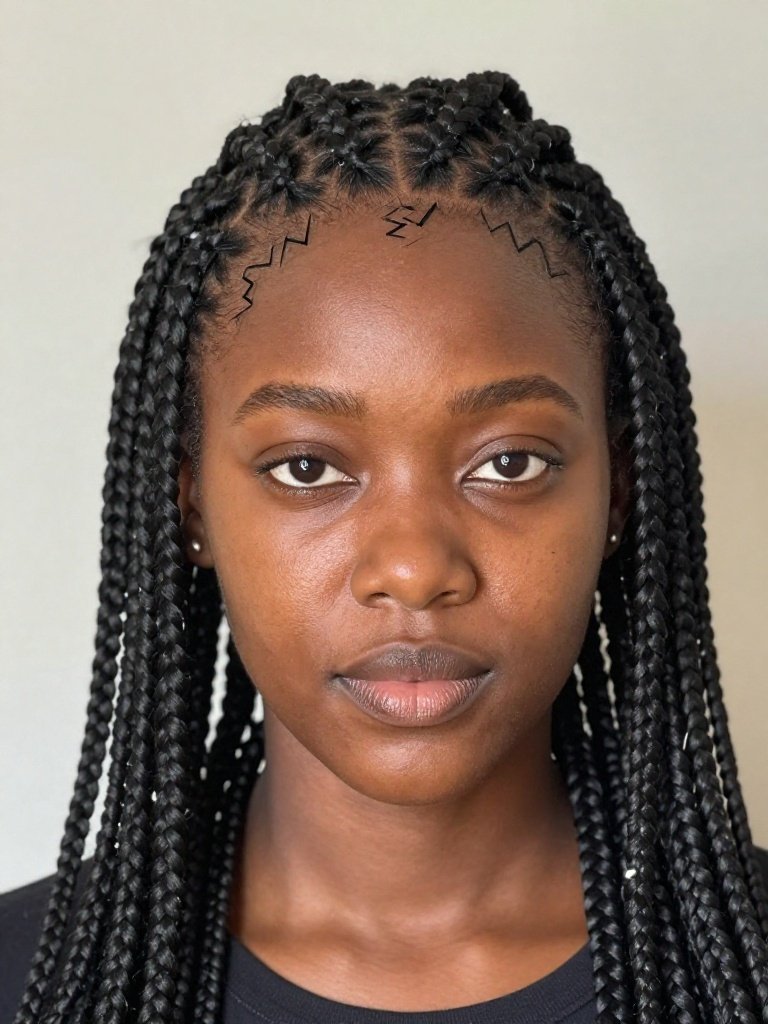
The front sections are parted in a sharp zigzag pattern before being braided, so the visible skin between rows forms a lightning-bolt shape rather than a straight line. The rest of the head continues in standard Fulani braids, keeping the zigzag as the one structural twist on an otherwise classic base.
It’s a small technical change that makes a noticeably bigger visual difference than people expect, since the eye follows the broken line rather than a flat part. The zigzag takes a stylist a bit longer to section cleanly than a straight part, so it’s worth mentioning upfront when booking your appointment time.
Tip
Ask your stylist to keep the zigzag points wide rather than tight and jagged — wider angles hold their shape better as new growth comes in.
Face Shape Match
The broken, angular line works particularly well on oval faces, where a straight part can sometimes look plain by comparison.
15. Fulani Braids With a Curly Fringe
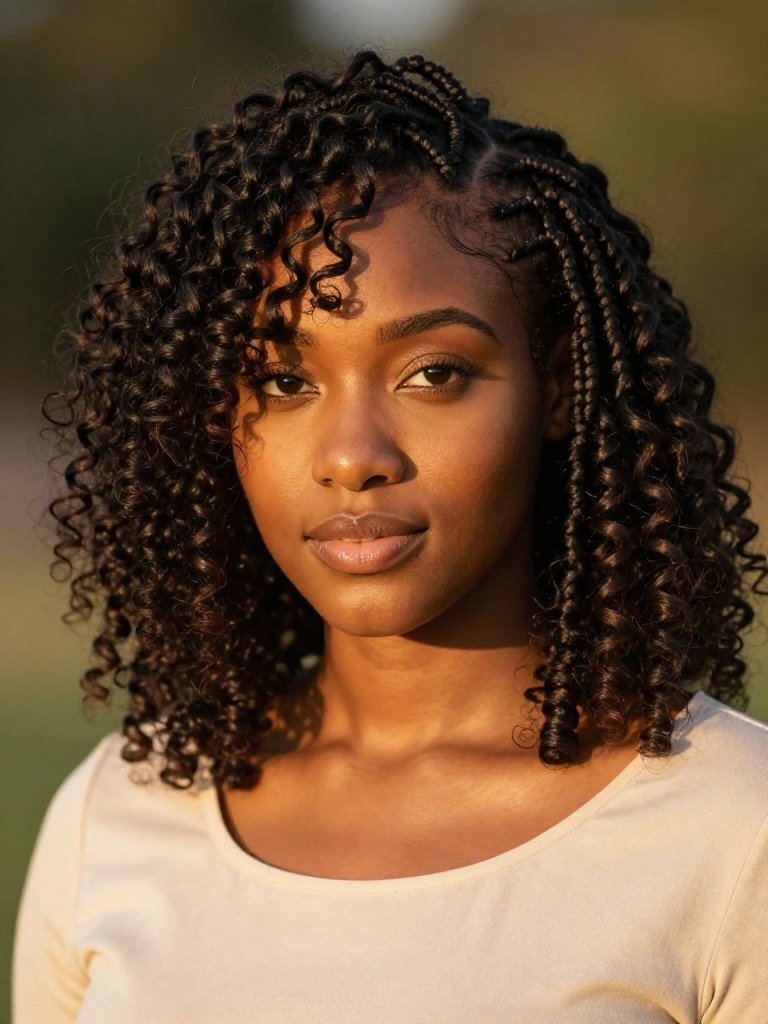
The front hairline is left out of the braid pattern entirely and styled into loose, defined curls that fall across the forehead like bangs. The rest of the head keeps the classic Fulani cornrow-and-braid combination, and the fringe is usually set with perm rods or a curling wand to hold its shape.
This softens the whole look around the face in a way the fully braided front doesn’t, and it gives you a way to change your part or styling day to day since that section isn’t locked into a fixed pattern. The curly fringe needs the most day-to-day attention of any element in this list, since it’s the one section not protected by braiding and will need occasional re-curling.
Tip
Have the fringe cut slightly longer than you think you want — curls shrink up visibly once set, so length that looks right straight will look short once curled.
Face Shape Match
A soft curled fringe is especially flattering on longer face shapes, since it visually shortens the forehead.
16. Thin Micro Fulani Braids
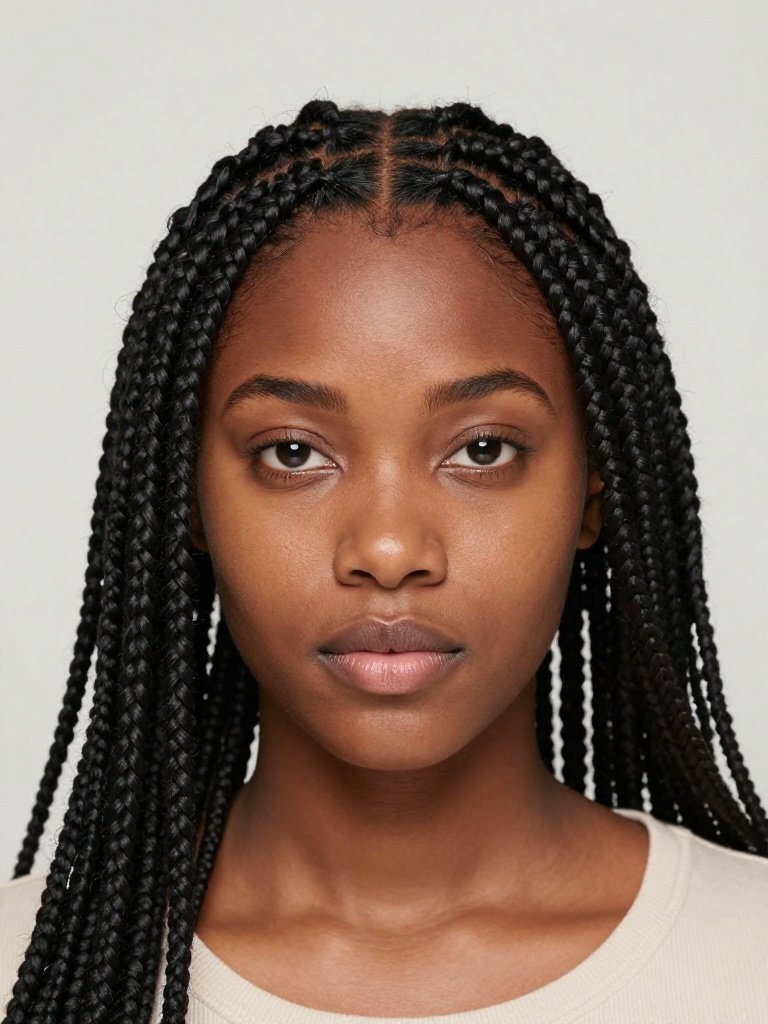
This variation scales the plait width down instead of up, using very fine, pencil-thin braids throughout while keeping the signature center and side cornrow structure at the front. The finer texture makes the overall silhouette fall closer to the head and move more fluidly than thicker versions, often requiring 200 or more individual braids for a full head.
Micro braids also tend to look fuller from a distance because there are simply more individual strands, even though each one is thinner. The honest downside is time: a full head of micro Fulani braids is one of the longest installs on this list, often running several hours longer than a medium or jumbo version.
Tip
Book a longer appointment window than you think you need, and plan to split the install across two sessions if your stylist offers that option.
Face Shape Match
The close, lightweight silhouette suits smaller or more delicate face shapes, since bulkier braids can sometimes overwhelm finer features.
17. Fulani Braids Blended With Faux Locs
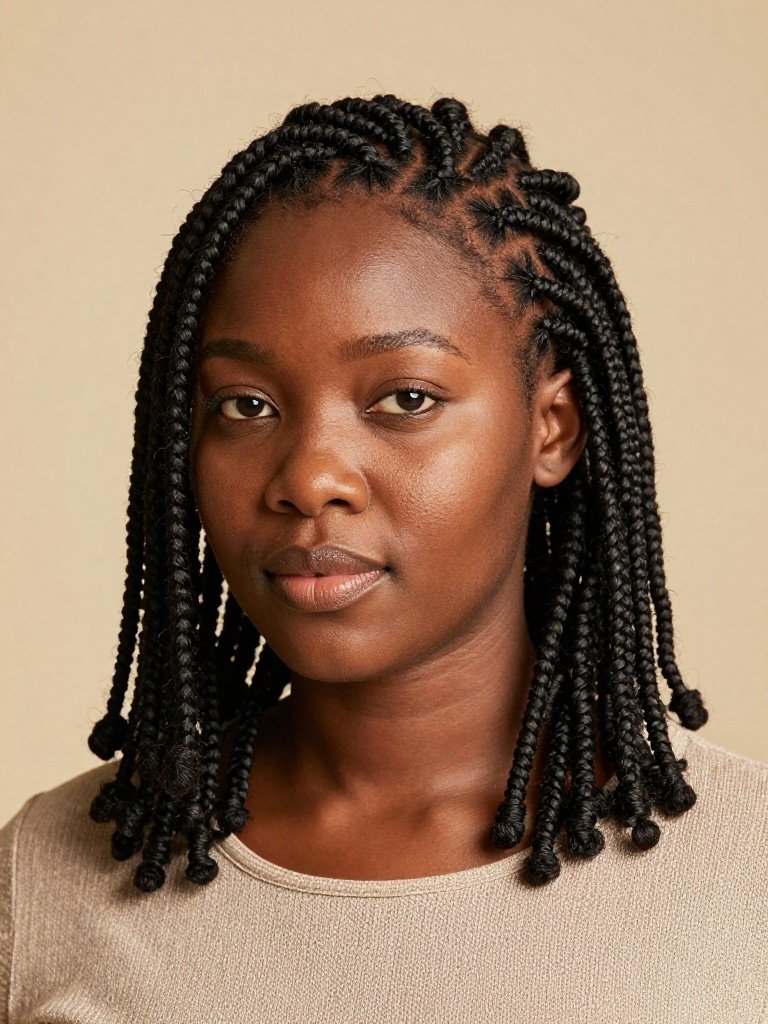
The front section keeps the classic Fulani cornrow pattern, but the rest of the head is done in faux locs instead of traditional braids. The wrapped or crocheted loc texture gives the style a thicker, more matte finish than smooth plaits, and the two textures meet cleanly where the front cornrows end.
Faux locs generally hold their shape longer than thin braids since the wrapped texture resists unraveling at the ends, which makes this a solid pick for anyone planning to keep the style in for six weeks or more. The heavier loc texture does add noticeably more weight than standard braiding hair, so it’s worth trying on a sample first if you’re sensitive to tension.
Tip
Ask for the loc diameter to roughly match the width of your side cornrows so the transition between sections doesn’t look mismatched.
Face Shape Match
The added thickness balances out narrower face shapes and works particularly well on oblong faces that can carry extra width well.
18. Fulani Braids With a Tribal Cornrow Pattern
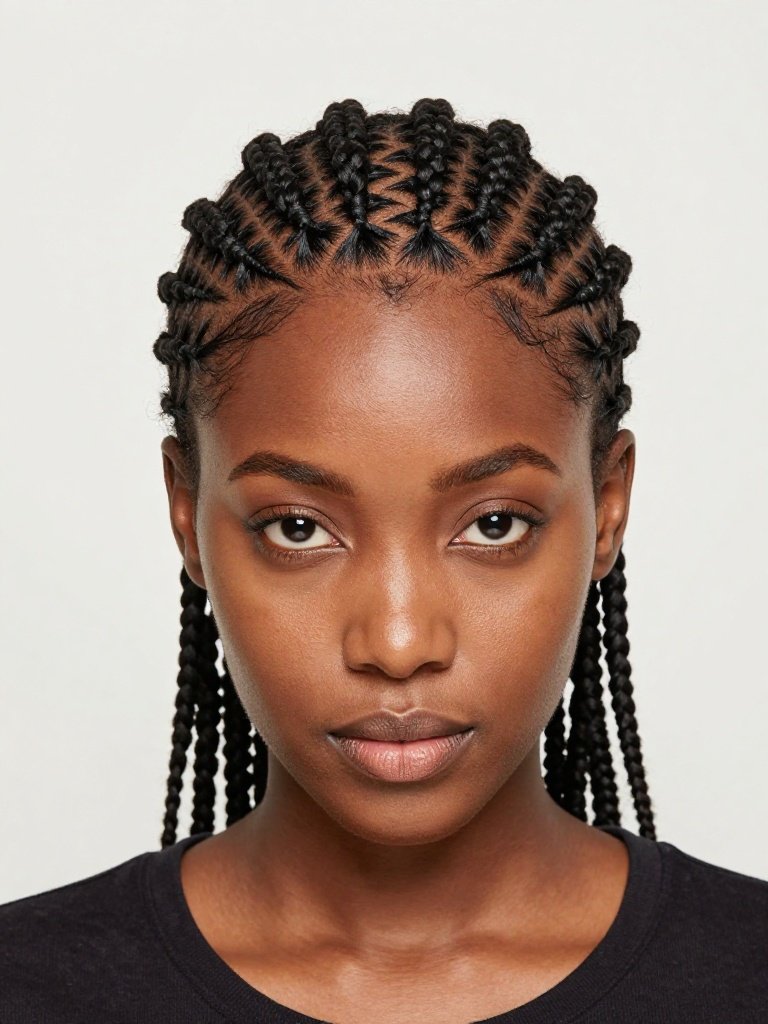
Rather than one or three straight cornrows, this version uses a full geometric pattern across the scalp — interlocking diamonds, chevrons, or curved lines — before transitioning into standard Fulani braids at the nape and sides. It’s the most intricate cornrow work on this list, closer to freehand parting than a repeated template.
The pattern itself becomes the main visual feature, so the braids that follow are usually kept simple and beadless to avoid competing with the design. This is genuinely the most time-intensive style in the group, since the cornrow artistry alone can take as long as an entire simpler braid install. It’s the one to book well ahead of an event rather than last minute.
Tip
Find a stylist with visible portfolio photos of intricate cornrow patterns specifically, since not every braider who does standard Fulani work also does freehand geometric parting.
Face Shape Match
Because the interest sits at the scalp rather than at the face-framing braids, this pattern flatters nearly every face shape, though it shows off best on those who keep their edges laid smooth.
Frequently Asked Questions
How long do Fulani braids usually last?
Most Fulani braid installs last four to six weeks with proper care, though thinner micro versions and heavier styles like faux loc blends can sometimes stretch closer to eight weeks before the roots need redoing.
Are Fulani braids the same as boho braids?
They’re related but not identical. Fulani braids are defined by the center cornrow structure, while boho braids specifically add loose, curly pieces throughout for a more undone look, which is closer to the curly-ends variation on this list.
Do Fulani braids work on natural 4C hair?
Yes, Fulani braids are a common protective style for 4C hair specifically because the cornrow base helps manage shrinkage and reduces daily manipulation of tightly coiled strands.
Can Fulani braids be styled without extensions?
Shorter or thicker natural hair can sometimes support a Fulani pattern without added hair, but most versions use braiding hair extensions for length, fullness, and to reduce tension on natural strands.
What size braids look best for Fulani braids?
It depends on the look you want: medium braids give the most classic, balanced Fulani silhouette, while jumbo sizes read bolder and micro sizes look more delicate — all three keep the same center-cornrow foundation.
Final Thoughts
If you’re trying to narrow eighteen options down to one, the classic center-cornrow style with beaded ends is the safest place to start, since it’s the most versatile and easiest to describe clearly to a stylist. From there, the biggest decision is really about maintenance. Curly ends, color, and shell accents all look beautiful but ask more of you between salon visits than a clean, single-tone braid does. Pick the version that matches how much upkeep you actually want to do, not just the one that photographs best.